Sourcing Guide
Wholesale Night Lights Supplier: Plug-In LED, MOQ and Pricing
Quick Answer: Buying wholesale night lights comes down to four numbers and one document: unit cost at your quantity, MOQ per model, lead time, and the mould or artwork cost if the model is custom, plus the certification file for the market you sell in. Unit price alone hides most of the real cost. Housing material, LED count, sensor type, plug standard, and packaging all move the price, and a cheaper quotation often means a smaller MOQ per model and a shorter warranty. Compare quotations on one written specification, then check who holds the certificate and what happens on a reorder.
Table of Contents
- Key Takeaways
- Why Plug-In LED Night Lights Are a Smart Wholesale Choice
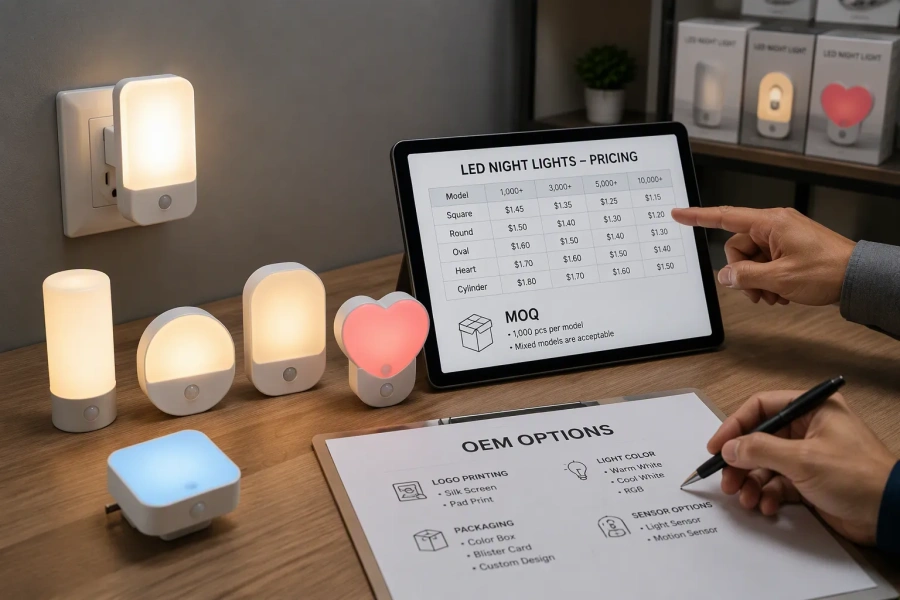
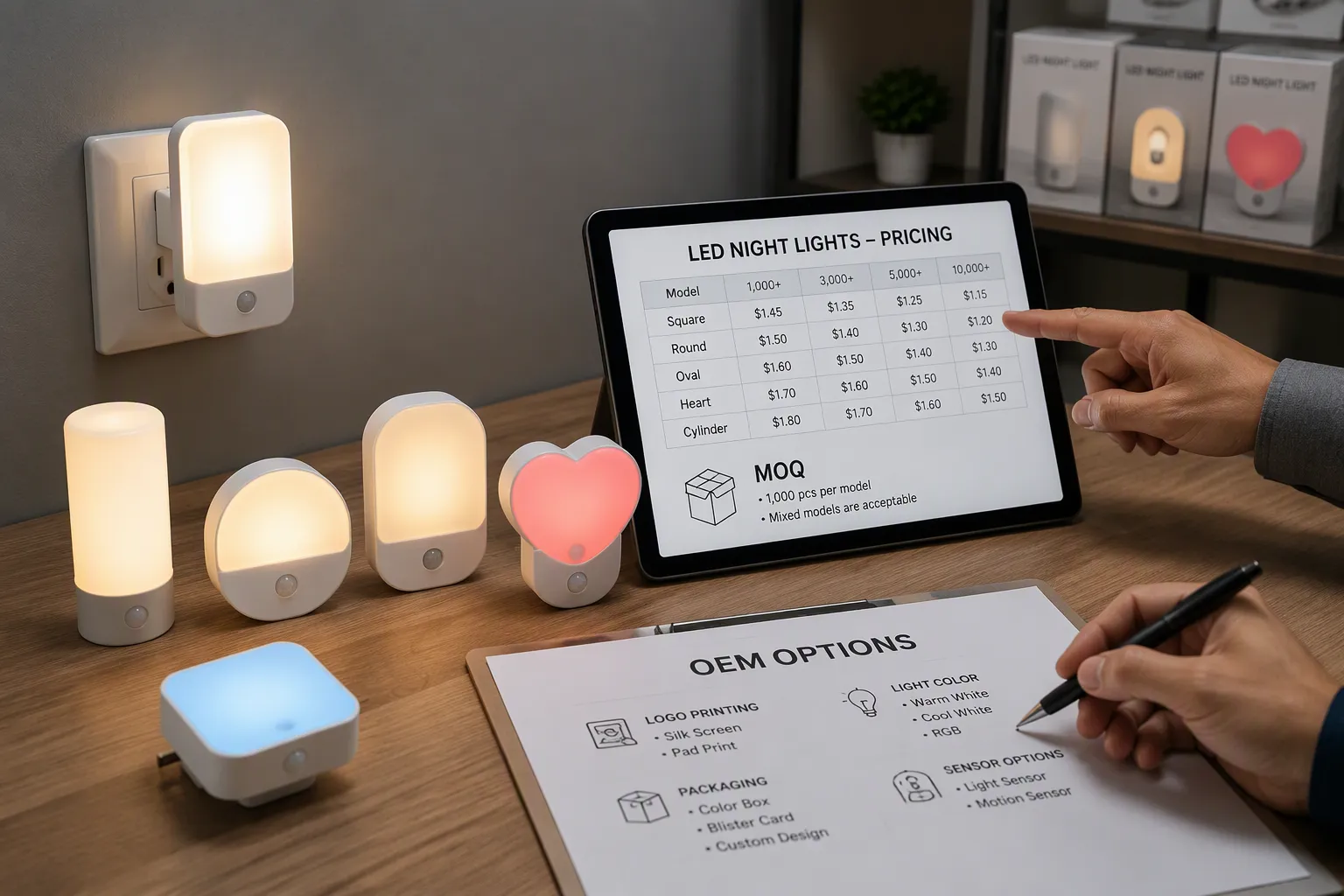
- Understanding MOQ for Plug-In LED Night Lights
- How Wholesale Pricing Works for Plug-In LED Night Lights
- OEM Options for Plug-In LED Night Lights
- How to Choose the Right Wholesale Night Lights Supplier
- Sources and References
Finding the right wholesale night lights supplier for plug-in LED models can feel overwhelming. You need to evaluate MOQ, pricing transparency, and OEM options. A trustworthy wholesale night lights supplier will offer clear pricing and low minimums. Plug-in LED night lights are a popular choice for retailers and distributors because they are energy-efficient and easy to install. Your sourcing decisions directly affect your profit margins and product lineup. Choose a reliable supplier to build a successful business.
Key Takeaways
- Choose a supplier with low minimum order quantities (MOQs) to test the market without risking too much cash.
- Compare total landed costs, not just unit prices, to avoid hidden fees that can destroy your profit.
- Use OEM options to customize your night lights with your logo, colors, and packaging for a unique brand.
- Always test production samples from different batches to ensure consistent quality and safety.
- Check supplier certifications and communication to avoid unreliable partners and ensure smooth business.
Why Plug-In LED Night Lights Are a Smart Wholesale Choice
Plug-in LED night lights sell fast for a good reason. They solve a simple problem for consumers. They also give you strong margins and steady repeat business. Here is why they deserve a spot in your product lineup.
Energy Efficiency and Long Lifespan
LED technology sips electricity compared to old incandescent bulbs. Your customers save money on every power bill. That savings story sells itself at the shelf. Longevity matters just as much. A typical LED night light runs for about 10 years. An incandescent model lasts only around 2 years. Check the numbers side by side:
| Metric | Value |
|---|---|
| Minimum efficiency standard lifespan | 25,000+ hours |
| Typical LED night light lifespan | 10 years |
| Incandescent night light lifespan (for comparison) | 2 years |
You can promise customers years of reliable service. Fewer replacements mean fewer returns for you.
Compact Design and Easy Installation
These units are small and lightweight. They ship in tight packaging, so you save on freight. Customers just plug them into any standard wall outlet. No tools, no wiring, no instructions needed. That instant setup appeals to renters, parents, and older shoppers. You move more units because nobody hesitates at the register.
Popular Consumer Features Like Dusk-to-Dawn Sensors
Dusk-to-dawn sensors are a top selling point. The light turns on at sunset and off at sunrise. It runs automatically, so customers never touch a switch. Many models also offer adjustable brightness and warm color tones. These features justify a higher retail price. They also reduce energy waste, which strengthens your marketing message. Stock models with sensors, and you give buyers a clear reason to choose your brand over the competition.
Common Use Cases for Retailers and Distributors
Plug-in LED night lights sell in more places than you might think. You can move them through DIY stores, online marketplaces, hotel supply chains, and even grocery checkout aisles. The key is matching your product to the right channel.
Look at how the biggest brands already distribute these lights. Each company targets different retail sectors. That tells you where the demand sits.
| Company | Retail Sectors |
|---|---|
| Signify (Philips) | Major DIY chains, North American big‑box retailers, premium hotel chains |
| GE Lighting | National home improvement chains, leading online retailers, U.S. grocery/drugstore channels |
| Acuity Brands | Electrical contractors, commercial facility managers, national builders (residential projects) |
| Eaton (Cooper) | Hospitals, educational institutions, large public infrastructure contractors |
| Osram (ams OSRAM) | European supermarket chains, regional lighting brands, OEM appliance manufacturers |
| Panasonic | Japanese homebuilders, Southeast Asian retail chains, regional online platforms |
| Opple Lighting | Major Chinese online marketplaces, regional wholesalers, private‑label programs for international retailers |
| Xiaomi | Online‑first consumers (China, India, Europe), Mi Home retail stores, ecosystem partners |
| Vont Lighting | Global Amazon shoppers, subscription‑box companies, hospitality operators (bulk online) |
| Aukey | Online buyers of bundled electronics, European e‑commerce platforms, tech‑focused retail chains |
This table shows you one thing clearly: no single channel owns the category. You have options.
If you run an online store, focus on Amazon or your own e-commerce site. Simple, low-cost models sell well there. If you supply hotels or hospitality businesses, offer bulk packs with dusk-to-dawn sensors. Those buyers value reliability and energy savings. If you target grocery or drugstore chains, stock basic plug-in units that shoppers grab on impulse.
You can also tap into private-label programs. Many regional retailers want branded night lights without managing their own manufacturing. That is where your wholesale supply and OEM options come together.
Your customers are out there across many channels. Pick one that fits your strengths. Match your product to the buyer, and you will see steady orders come in.
Factory evaluation criteria are set out in the night light manufacturer guide.
Understanding MOQ for Plug-In LED Night Lights
What MOQ Means for Wholesale Buyers
MOQ stands for minimum order quantity. It is the smallest number of units a supplier will sell you in one order. This number matters a lot for your business. A high MOQ ties up your cash in inventory. A low MOQ lets you test the market without big risk. You want a wholesale night lights supplier that offers flexible MOQs. That way, you can start small and scale up as demand grows.
Typical MOQ Ranges in the Industry
MOQ ranges vary widely across the market. Some suppliers ask for 500 units. Others want 5,000 or more. Your product type and customization level change the number. Here is a quick look at common ranges:
| Order Type | Typical MOQ Range |
|---|---|
| Stock models (no customization) | 100–500 units |
| Light customization (logo, color) | 500–1,000 units |
| Full OEM (custom design) | 1,000–5,000 units |
Smaller suppliers often accept lower MOQs. Larger factories may push for bigger commitments. Know your budget and storage limits before you commit.
Factors That Influence MOQ
Several things drive MOQ up or down. Custom tooling and molds cost money. Suppliers spread that cost across a bigger order. That raises your minimum. Raw material sourcing plays a role too. Specialized components may require bulk purchases. Your relationship with the supplier also matters. Repeat buyers often earn lower MOQs over time. Order frequency and payment terms can sway the number as well. Ask questions early. Negotiate before you sign anything.
Tips for Negotiating Lower MOQs
You do not have to accept the first MOQ a supplier quotes. Most factories build in wiggle room. Use these tactics to bring that number down.
Start with a trial order. Tell the supplier you want 100 units to test the market. Promise a larger follow-up order if the product sells well. Many suppliers say yes to this arrangement. They want long-term buyers, not one-time deals.
Mix stock and custom items in one order. A supplier may waive a high custom MOQ when you also buy standard models. This move helps both sides. You get variety on your shelves, and the factory fills its production line.
Ask about ready-to-ship inventory. Suppliers often hold excess stock from canceled orders. You can grab those units at a lower minimum. The price may even drop too.
Offer flexible payment terms. Paying a higher deposit or paying in full upfront reduces the supplier's risk. That reduced risk often translates into a lower MOQ for you.
Build a relationship before you push for discounts. Place a small order first. Pay on time. Communicate clearly. Suppliers reward reliable buyers with better terms over time.
Never agree to an MOQ that exceeds your storage capacity or your cash flow. A low price means nothing if the inventory sits in your warehouse for a year.
Finally, get every MOQ agreement in writing. Verbal promises disappear when a new sales rep takes over your account. A signed quote protects you.
Negotiation is a conversation, not a battle. Stay polite, stay firm, and know your walk-away number. Suppliers respect buyers who understand the business.
Rechargeable and motion-sensor models are grouped in the rechargeable light range.
How Wholesale Pricing Works for Plug-In LED Night Lights
Key Cost Drivers in Manufacturing
You need to know where your money goes. Raw materials drive most of the unit price. LED chips alone eat up 15% to 38% of the total cost. The driver adds another 10% to 22%. Housing and heat sinks can reach 30%. Even packaging takes 3% to 8%. Here is a quick breakdown of the main components:
| Component | Cost Share Range |
|---|---|
| LED Chips | 15-38% |
| Driver | 10-22% |
| Housing/Heat Sink | 8-30% |
| PCB Board | 4-8% |
| Optics/Lens/Diffuser | 3-15% |
| Wiring/Connectors | 2-6% |
| Packaging | 3-8% |
| Labor & Assembly | 7-18% |
| Testing & QC | 3-5% |
| Overhead & Margin | 8-12% |
A good wholesale night lights supplier will walk you through these numbers. Ask for a cost breakdown before you agree to anything.
Volume Discounts and Tiered Pricing
Order more, pay less per unit. That is the basic rule. Most factories set three or four price tiers. You might pay $3.50 per unit at 500 pieces. That price drops to $2.80 at 2,000 pieces. At 5,000 pieces, you could see $2.20. The savings add up fast. Always ask for the full tier sheet. Then calculate your break-even point. Do not overbuy just to hit a lower tier. Unsold inventory costs you money too.
Hidden Costs to Watch For
The unit price is not your final cost. Import duties and tariffs often surprise buyers. Lighting products usually fall under HS 9405. Duty rates range from 0% to over 10% depending on the country and fixture type. A wrong HS code means fines or delayed shipments. Certification adds more. For example, SASO certification for Saudi Arabia takes 3 to 4 weeks and costs $500 to $1,500. Bank fees for an L/C at sight run 0.1% to 0.3% of the L/C value. Budget for these extras before you place your order.
Always calculate your landed cost, not just the unit price. The difference can wipe out your profit margin.
Comparing Quotes from Multiple Suppliers
Never settle for the first quote you receive. Get at least three quotes from different suppliers. That gives you real leverage. It shows you what the market price actually looks like. More importantly, it reveals which supplier offers the best total value. The lowest unit price does not always win.
Compare these factors across every quote you receive:
- Unit price at your target order volume. Make sure each supplier quotes the same MOQ tier. A lower price at a higher MOQ does you no good if you cannot buy that many units.
- Landed cost. Ask every supplier for their incoterm. Is it FOB, CIF, or EXW? Then add shipping, insurance, import duties, and port fees yourself. The landed cost is what you really pay.
- Payment terms. Some suppliers ask for a 30% deposit. Others want 50%. A few offer net 30 if you have a strong relationship. Better terms free up your cash flow.
- Lead time. One supplier might ship in 15 days. Another might need 45 days. That delay can ruin your launch schedule.
- Certification status. Ask if the price includes certifications like UL, CE, or RoHS. Getting those tested separately can cost hundreds of dollars.
- Sample policy. Some suppliers send free samples. You only pay shipping. Others charge full price. Always request samples before you place a bulk order.
- Warranty terms. A one-year warranty protects you from chargebacks. A longer warranty signals higher quality.
Put all this information into a simple spreadsheet. Assign a score to each supplier for every factor. The supplier with the highest total score wins. Do not fall for the cheapest unit price alone.
The lowest quote almost never delivers the highest profit. Cheap parts break more often. Slow shipping delays your launch. Poor communication causes mistakes. Pay a little more for reliability. You will save money in the long run.
Sensor formats that move in volume sit in the PIR night light range.
OEM Options for Plug-In LED Night Lights
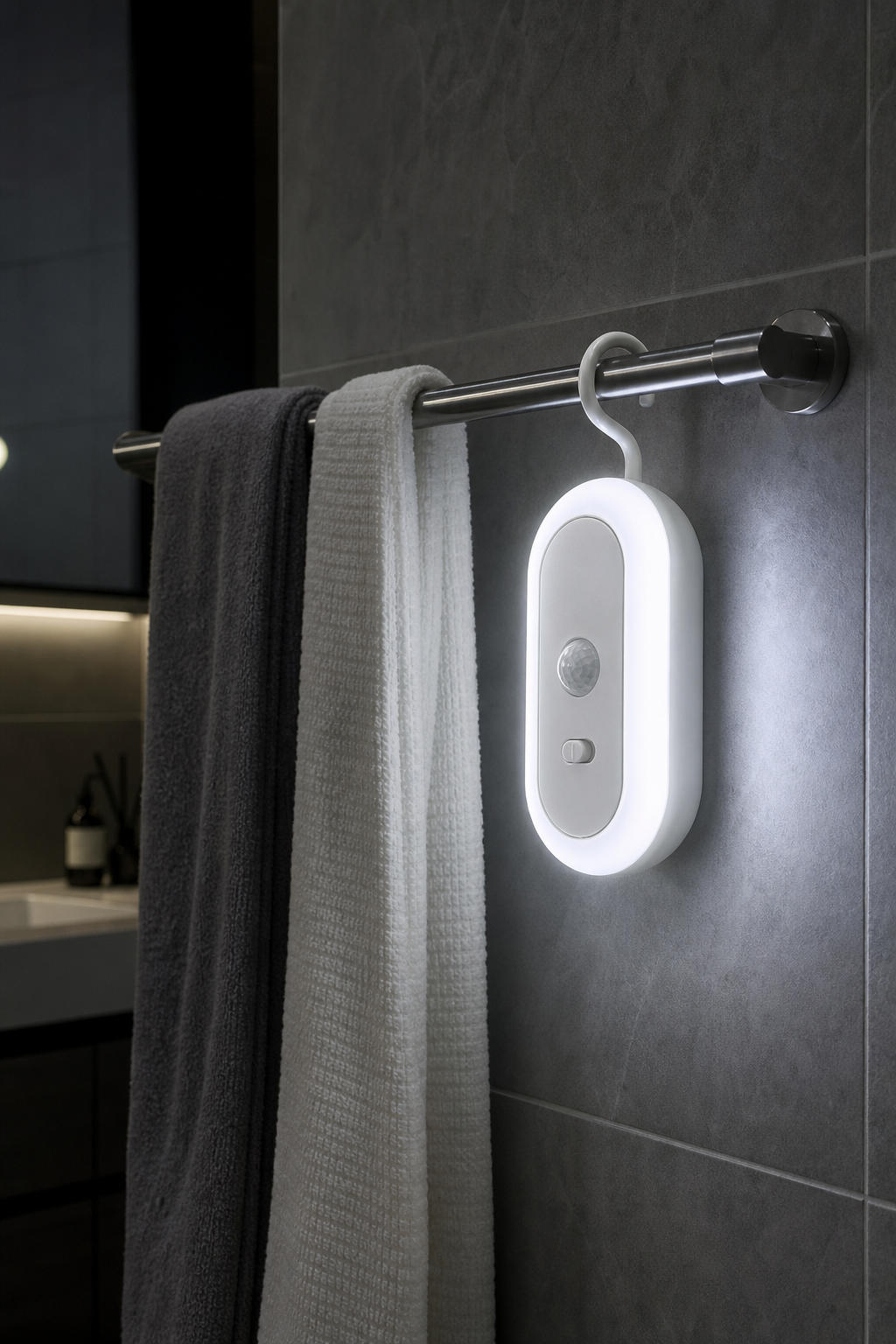
L02D Rechargeable PIR Motion Sensor Night Light
- Rechargeable battery with PIR motion sensing
- Hook and magnetic mounting options
- No socket required, suited to wardrobes and stairs
- Available for wholesale and OEM orders
OEM options give you control over every part of your product. You don't have to sell the same generic night light as everyone else. A good wholesale night lights supplier will offer you full OEM options. This means you get a product that matches your brand and your customers.
What OEM Customization Includes
OEM customization covers many parts of the product. You can change the look, the function, and the packaging. Here are some common customizations you can ask for.
| Customization Type | Description |
|---|---|
| Logo printing / branding | You can add your logo directly onto the plastic housing. This is private label branding. |
| Color options | You can match your brand colors exactly. Suppliers use Pantone standards to get the shade right. |
| Shape modifications | You can design unique shapes. Think of an animal, a star, or a character for kids' rooms. |
| Lighting modes | You can choose different light colors. Warm light works well for nurseries. RGB lights appeal to children. Touch dimming is popular too. |
| ODM modifications | You can start with an existing design and make small changes. Change the light color, the housing material, or the sensor sensitivity. |
Each option adds a personal touch that makes your product stand out.
Design and Branding Flexibility
You get a lot of flexibility in design. You can choose the shape that fits your target audience. A basic plug-in model works for hotels. A fun character shape sells well for children. Color is another powerful tool. You can pick any Pantone color to match your brand guide. This consistency builds trust with your buyers. You can also request different lighting modes. Warm light feels cozy. RGB colors create a fun atmosphere for kids. Touch dimming gives users control. All these options let you create a product that feels unique.
Packaging and Labeling Options
Packaging is your first chance to impress a buyer. You can customize the box with your logo and artwork. Your wholesale night lights supplier can also design custom inserts, instruction sheets, and hang tags. Proper packaging protects the light during shipping and tells your brand story. You can also add certification labels and barcodes directly to the box. This makes the product ready for retail shelves. Good packaging also reduces the risk of damage in transit. That means fewer returns and happier customers.
From Prototype to Production
You have picked your design, your colors, and your packaging. Now comes the exciting part. Your idea turns into a real product on a factory line. This journey follows a clear path. You start with a prototype. The supplier builds a sample based on your specs. You test it, hold it, and plug it in. Does the brightness feel right? Is the sensor working? You send feedback. The factory tweaks the design. Maybe the housing needs a small change. Maybe the light color needs adjusting. This back-and-forth usually takes two to four weeks. Once you approve the final sample, you pay your deposit. Then mass production begins. That stage runs about 20 to 30 days. From your first concept to finished goods, expect 10 to 16 weeks total.
| Manufacturing Stage | Duration |
|---|---|
| Sample approval and modifications | 2–4 weeks |
| Mass production (after deposit and sample approval) | 20–30 days |
| Total timeline (concept to mass production) | 10–16 weeks |
Stay involved during this process. Ask for progress photos. Request a pre-shipment inspection. A good wholesale night lights supplier welcomes your questions. They want you to feel confident in the final product. Your prototype is not just a sample. It is the blueprint for every unit you will sell. Treat it with care, and you will launch a product your customers love.
Private-label requirements are covered in OEM factory: private label and packaging.
How to Choose the Right Wholesale Night Lights Supplier
You have learned about MOQ, pricing, and OEM options. Now comes the final step. You need to pick a supplier you can trust. A bad choice costs you time and money. A good one builds your business. Here is how to separate the real factories from the risky ones.
Evaluating Supplier Reliability
You start with a simple question. Is this supplier who they say they are? Some manufacturers hide behind fancy websites and empty promises. You need to dig deeper.
Watch for these warning signs. Each one alone is not a dealbreaker. But when you see two or three together, slow down and pay attention.
- Reluctance to allow a factory visit or on-site audit. Repeated excuses or a showroom-only address is a major red flag.
- Company name mismatches across documents. The business license, invoices, and email signatures should all match. A pattern of name changes looks suspicious.
- Communication only through personal messaging apps. No professional company email domain often means no real infrastructure.
- High-pressure sales tactics. Artificial deadlines or pressure to skip your vetting steps are designed to rush you.
- Payment terms that skip the normal deposit structure. Demanding full payment upfront, especially through untraceable channels, is a serious flag.
- Pricing significantly below market rate with no clear explanation. That usually means cheap materials, skipped steps, or fake compliance.
- Vague or evasive answers to specific production questions. A real manufacturer answers directly about tooling, capacity, and material specs.
- No verifiable references, or a pattern of unresolved complaints. Late shipments, quality disputes, or non-delivery are strong signals.
- Inconsistent quality between samples and bulk production. Handmade samples can look perfect. Production units may not match.
- A business registered very recently claiming many years of experience. The dates should line up. If they don't, ask why.
Now comes the important part. One isolated red flag is not always disqualifying. But a pattern matters. Two or three appearing together is a strong signal to slow down. Any combination involving payment terms plus reluctance around a factory visit is close to a hard stop. If you spot a red flag, pause before committing further. Ask for specific evidence. Request a business license. Ask for a video walkthrough of the actual production floor. Demand an independently contactable reference. If the supplier cannot or will not provide it, that reluctance is itself part of the answer.
Certifications and Compliance Standards
Safety is not a decoration feature. It is a purchasing requirement. Every night light you sell needs to meet the standards of your target market. Certifications prove that your supplier follows those rules.
Do not trust a printed logo on a website. Always demand the actual documentation. Here is what you should verify.
| Criterion | What Buyers Should Verify |
|---|---|
| Certifications & Test Reports | Request UL, ETL, CE, or RoHS certifications. Verify against local market requirements. Demand a declaration of conformity and applicable test standards like IEC 60598-1, UL 2108, or UL 8750. Do not trust a printed logo. |
| Safety & Installation Documentation | Confirm power supply output, controller compatibility, cable size, connector temperature rating, circuit load, ingress protection ratings, mounting instructions, ventilation, grounding, and emergency shutoff access. |
| Samples & Batch Consistency | Order three production samples before bulk purchase. Run a four-hour heat test. Inspect connectors. Randomly test units from different batches. Certification covers the design, not every shipment. |
| Production Capacity & Lead Times | Request monthly output, current order load, component sources, backup plans for drivers and connectors, and realistic lead times. Avoid optimistic guesses. |
| Customization Capability | Confirm the ability to adjust panel shapes, cable lengths, mounting clips, packaging, and logo placement. Support everything with signed drawings, tolerance ranges, and approval samples. |
The numbers behind these requirements are sobering. NFPA reported an estimated 32,620 U.S. home fires involving electrical distribution and lighting equipment annually from 2015 to 2019. Those fires caused about 470 deaths and $1.3 billion in direct property damage. This is why you treat safety as a core requirement, not a checkbox.
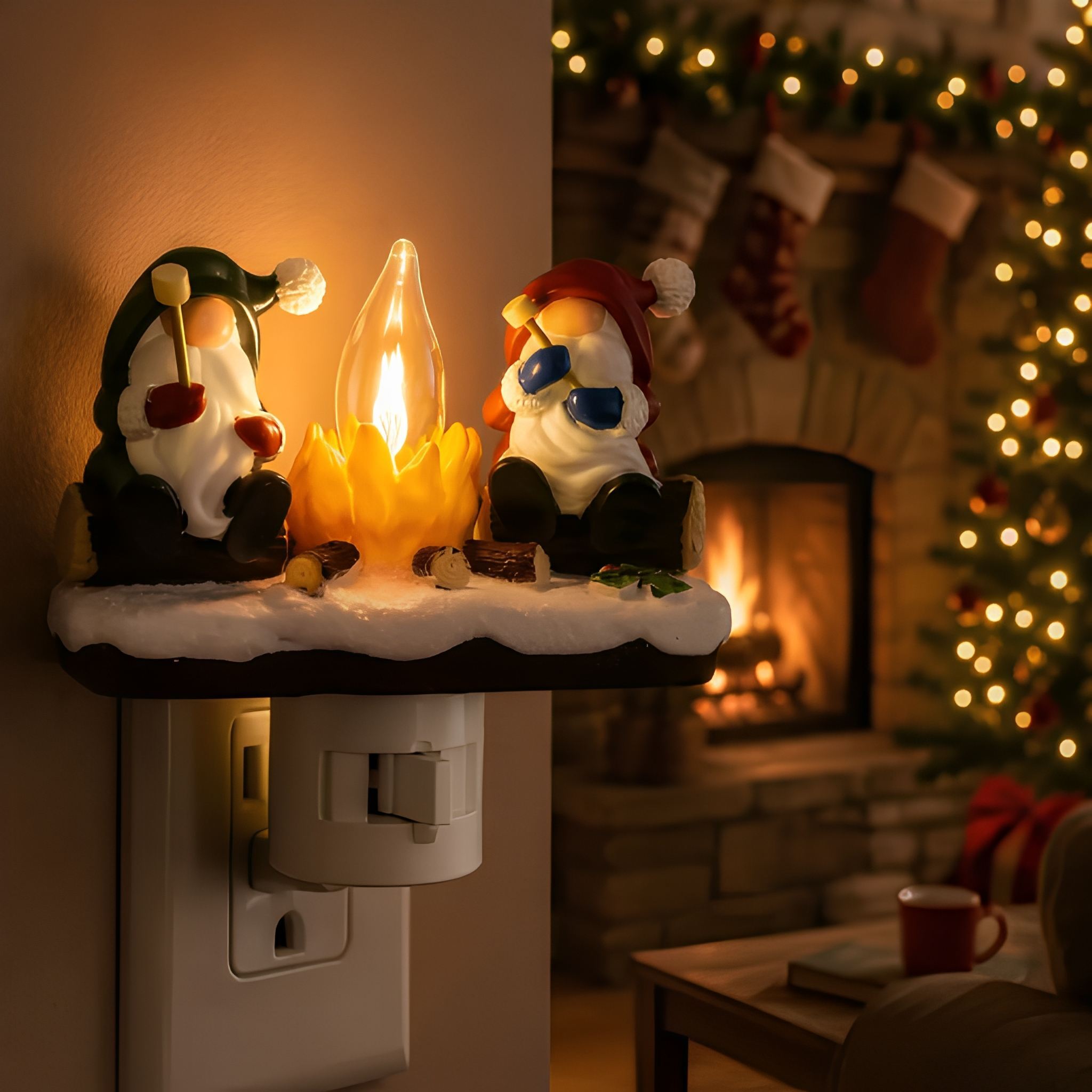
GL-SZ18 Holiday Resin Plug-In Night Light
- Hand-finished resin body with flame-effect bulb
- Plug-in format for seasonal and gift ranges
- Christmas and Halloween variants available
- Suits wholesale and private-label orders
Always request test reports before you place your first order. A reliable wholesale night lights supplier shares these documents freely. If they hesitate, consider it a red flag.
Communication and Support
Good communication saves you from costly mistakes. You want a supplier who responds quickly and clearly. Test this before you commit. A reliable wholesale night lights supplier makes communication easy and transparent.
Send your first inquiry and track the response time. A professional supplier replies within 24 hours. They answer your questions directly. They do not dodge specific requests. Ask about lead times, payment terms, and sample policies. See how they handle follow-up questions.
Watch for the communication red flags. Does the supplier only use WhatsApp or WeChat? That is fine for quick messages. But they should also have a professional email address with their company domain. No company email often means no real infrastructure.
Consider time zone differences. A supplier who responds during your business hours is easier to work with. If they only reply late at night, plan for slower communication loops. Set expectations early about response times and who handles your account.
Ask for photos and videos during production. A transparent supplier sends progress updates without you chasing them. They offer to arrange video calls. They let you see the factory floor.
Finally, test their problem-solving skills. Send a slightly difficult question. See how they handle it. A good supplier does not get defensive. They provide a clear answer or offer to find one. Poor communication early in the relationship usually gets worse, not better. Do not ignore it.
Sample Testing and Quality Control
You would never buy a car without a test drive. The same logic applies to night lights. A supplier can show you beautiful photos and glossy spec sheets. None of that tells you how the product performs in real life. Sample testing is your test drive. It is the moment you find out if the factory can actually deliver what they promised.
Start by requesting production samples, not prototype samples. This distinction matters more than most buyers realize. A prototype is often hand-built by an engineer. It gets extra attention and premium parts. A production sample comes off the actual assembly line. It shows you what your bulk order will really look like. Ask your supplier to pull samples from a recent production run. If they refuse or stall, that tells you something important.
Once your samples arrive, test them like a customer would. Plug each unit into a wall outlet. Check the brightness. Watch for flickering or uneven lighting. Feel the housing after a few hours of use. A quality unit stays warm, not hot. Test the dusk-to-dawn sensor by covering it with your hand. Does the light turn on and off smoothly? Try the touch dimming if your model has it. Small failures at this stage predict big problems at scale.
Your testing should cover every critical area of the product. Here is a breakdown of what to check and why each test matters.
| Testing Area | Essential Standards | Purpose |
|---|---|---|
| Final Product Testing | Lighting performance tests, battery endurance tests, folding mechanism durability tests, safety compliance verification | Ensure completed units meet all functional and safety requirements before shipment |
| LED System Testing | Brightness stability (no flickering/uneven lighting), color temperature accuracy (warm white, cool white, RGB), energy efficiency testing, heat control standards | Verify core lighting functionality, visual quality, and safe operation |
| Battery System Safety | Battery capacity verification, charging cycle testing, overcharging protection, short-circuit protection, over-discharging prevention | Confirm battery reliability and safe daily use |
| Electrical Safety & Compliance | CE certification, RoHS compliance, FCC certification | Meet international safety, environmental, and electrical performance standards |
| Manufacturing Precision | Laser cutting accuracy, assembly consistency (LED modules, batteries, magnetic parts), surface finishing inspection | Ensure consistent quality and defect-free products across batches |
Run a heat test on every sample. Plug the unit in and let it run for four hours straight. Touch the housing and the plug. Check for discoloration or warping. A night light that runs hot is a fire risk. That risk becomes your liability. The numbers back this up. Electrical distribution and lighting equipment caused an estimated 32,620 home fires each year from 2015 to 2019. Those fires led to about 470 deaths. You do not want your product on that list.
Inspect the connectors and prongs closely. Wiggle them. Do they feel loose? A loose connection causes arcing. Arcing causes fires. Check the cable size if your model has one. Confirm the connector temperature rating matches the actual operating temperature. These details separate a safe product from a dangerous one.
Order at least three samples from different production batches. This step catches inconsistency. Batch A might perform perfectly. Batch B might flicker. Batch C might have a crooked housing. A supplier with strong quality control produces identical units every time. A supplier without it produces surprises. You want the first kind.
Test the certifications too. Do not trust a logo printed on the box. Ask for the actual test reports. Request the declaration of conformity. Verify the standards your product claims to meet. Look for references to IEC 60598-1, UL 2108, or UL 8750. These are the standards that govern lighting safety. A real supplier shares these documents without hesitation. A fake one makes excuses.
A certificate on a website means nothing. A test report with your product's model number on it means everything.
Document everything during your testing. Take photos of defects. Write down the batch number. Note the date you received the sample. This record protects you later. If bulk production fails to match the sample, you have proof. Suppliers respect buyers who keep detailed records. They also know those buyers are harder to cheat.
What happens when a sample fails? Do not walk away immediately. Give the supplier a chance to fix the problem. Send clear photos and a written description of the defect. Ask what caused it and how they will prevent it. A good supplier responds with a root cause analysis. They adjust their process. They send a new sample. A bad supplier blames shipping or makes excuses. Their response tells you everything about their quality culture.
Consider hiring a third-party inspection service for your first bulk order. These inspectors visit the factory during production. They check units against your approved sample. They issue a report before shipment. This costs a few hundred dollars. It saves you thousands in returns and chargebacks. Many experienced buyers never skip this step for a new supplier.
Finally, keep your approved sample in a safe place. Label it with the date and batch number. This becomes your golden sample. Every future order gets compared against it. If a new shipment feels different, you have a physical reference. Quality control is not a one-time event. It is an ongoing habit. Build that habit early, and your customers will reward you with repeat business.
Picking the right wholesale night lights supplier comes down to three things. Check their reliability, their certifications, and their sample quality. Understand your MOQ, pricing tiers, and OEM options before you commit. Then request quotes and samples from at least three suppliers. Compare landed costs, lead times, and communication speed. Test every sample like your business depends on it, because it does.
Your next step is simple. Contact suppliers today, ask for their tier sheets, and order samples. Do that, and you will find a partner who helps your business grow.
Ready to Source Quality LED Night Lights?
Contact Guangli today for a free quote and sample!
Get a Quote Request a Sample
Housing and holder options are listed in the night light base range.
Sources and References
- UL Solutions - safety certification and the ETL listing mark ul.com
- Intertek - product testing and certification intertek.com
Updated October 14, 2026
Ready to Source Quality LED Night Lights?
Contact Guangli today for a free quote and sample!
0users like this.