Sourcing Guide
Overseas Customers Change Product Requirements Mid-Project: How Night Light Factories Flexibly Support Iteration
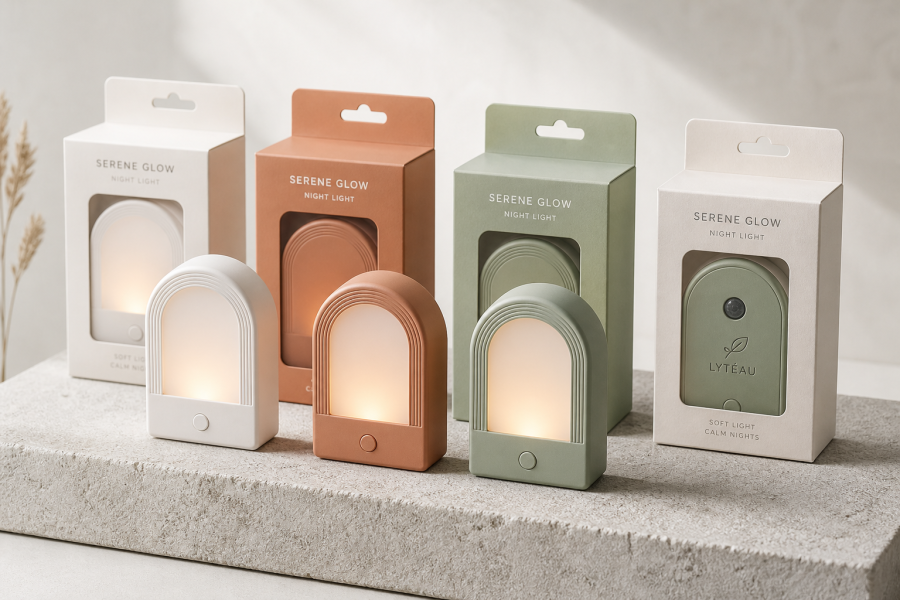
Product requirements change all the time. You start developing a night light for one market, then decide to add a dusk-to-dawn sensor. You approve one color, then your marketing team wants a new brand color. You design one packaging size, then your retailer asks for a different box. The question is: can your factory flexibly support these changes without blowing up your budget and timeline?
Why Product Requirements Change Mid-Project
Changes during development are normal, not a sign of bad planning. Common reasons include:
- Market feedback: You showed the prototype to customers or retailers, and they suggested changes
- Internal team alignment: Marketing, design, and sales teams weigh in after the initial concept
- Retailer requirements: Your buyer specifies a new packaging size, color, or feature
- Competitive analysis: You see what competitors are doing and want to match or differentiate
- Regulatory updates: New certification or labeling requirements come up
The problem is not the change itself. The problem is when your factory says "this requires a new mold" or "this costs $2,000 extra" for every small change.
Common Mid-Project Changes and Their Real Cost
Change 1: Adding a Sensor (Dusk-to-Dawn or Motion)
What it means: You started with a standard switch night light, then decided to add automatic on/off function.
What a flexible factory does: Swaps the internal PCB module. No housing mold change needed (if the housing has enough space).
Real cost: $0.50-$1.50 per unit extra, plus $100-$300 for a new sensor module sample.
What a rigid factory does: Says you need a whole new housing mold because "the design is different."
Change 2: Changing the Housing Color
What it means: You approved white, now you want pastel pink or matte black.
What a flexible factory does: Just changes the plastic resin color. No mold change needed.
Real cost: $0.05-$0.10 per unit extra for custom color, plus a small setup fee.
What a rigid factory does: Says you need to order 5,000+ pieces to do custom color, or charges a huge setup fee.
Change 3: Changing the Packaging
What it means: Your retailer asks for a different box size or window design.
What a flexible factory does: Works with the packaging supplier to adjust the box design. The product itself does not change.
Real cost: $200-$500 for a new box die, plus $0.10-$0.30 per unit extra for the new packaging.
What a rigid factory does: Says the product size was designed for the original box, so you need to redesign the product.
Change 4: Adding Your Logo
What it means: You forgot to mention branding at the start, and now you want your logo printed on the product.
What a flexible factory does: Adds silkscreen or UV printing. No mold change needed.
Real cost: $50-$150 setup fee, plus $0.05-$0.15 per unit.
What a rigid factory does: Says the housing was not designed for a logo, so you need to modify the mold.
Change 5: Changing the Brightness or Color Temperature
What it means: You tested the prototype and decided it is too dim, or the light color is too blue.
What a flexible factory does: Swaps the LED module or LED driver. The housing does not change.
Real cost: $0.10-$0.30 per unit extra for better LEDs, no mold cost.
What a rigid factory does: Says you need a new heat sink design, which means modifying the mold.
What Makes a Factory Flexible vs. Rigid
Signs of a Flexible Factory
- They have multiple internal modules (switch, sensor, dimming) that fit the same housing
- They can do custom color, logo, and packaging without new molds
- They have their own tooling room, so they can modify molds quickly
- They do not charge huge fees for small changes
- They have experience handling iteration and version updates
Signs of a Rigid Factory
- They only sell "off-the-shelf" products with no customization options
- Every change requires a new mold quote
- They do not have in-house tooling (they outsource mold making, so changes take weeks)
- They charge setup fees for every small modification
- They push back on changes and say "that is not how we do things"
How to Manage Changes Without Blowing Your Budget
1. Group Changes Before Implementing
Instead of asking for one change at a time, collect all the changes you want and implement them together. This saves setup fees and reduces production delays.
2. Understand What Is a "Free" Change vs. a "Paid" Change
Not all changes require mold modifications. Work with your factory to categorize changes:
- Free / low-cost changes: Color, logo, packaging, LED brightness, switch type
- Medium-cost changes: Adding a sensor, changing the lens shape, modifying the mold slightly
- High-cost changes: Completely new housing design, new mold, full re-certification
Knowing the difference helps you prioritize changes that give you the most value for the lowest cost.
3. Do Prototype Testing Before Final Mold Cutting
The cheapest time to make changes is before the mold is cut. Spend extra time on 3D prototypes and pre-production samples. It is much better to change the design now than to modify the mold later.
4. Build "Change Buffer" into Your Budget
Plan for 10-15% of your development budget to go to changes. This way, when you decide to add a sensor or change a color, you are not surprised by the cost.
How Guangli Supports Mid-Project Iteration
At Guangli, we know that product development is iterative, not a one-time process. We have built our production system to support changes flexibly:
- Modular internal design: Our night light housings are designed to work with multiple internal modules (standard switch, dusk-to-dawn sensor, PIR motion, dimming). You can swap modules without changing the housing
- In-house tooling room: We have our own mold modification team, so small changes can be done in 3-5 days, not 3 weeks
- Custom color and logo in-house: We have our own printing and color matching department, so setup fees are low and turnaround is fast
- Packaging coordination: We work with packaging suppliers to handle box design changes without affecting the product
- Transparent change pricing: We give you a clear price list for common changes, so you know exactly what each adjustment costs
- Version control: We track all design changes and versions, so you always know which version of the product you are ordering
FAQ
Q1: How many rounds of changes are typical in night light development?
A: Most products go through 2-3 rounds of changes after the initial design. This is normal and expected. A good factory will plan for this in the timeline and budget.
Q2: Can I change the product after mass production has started?
A: It depends on what stage production is at. If the parts are not yet molded, we can usually accommodate small changes. If production is already running, changes will require a new production run, which costs more. We recommend freezing the design before mass production starts.
Q3: What if I want to add a new feature 6 months after launch?
A: This is actually the best scenario. You have already tested the product in the market, and now you want to add a "pro" version with more features. Because we use modular design, we can create a premium version by just swapping the internal module, without changing the housing mold.
Work with a Factory That Grows With You
If you want a factory that supports iteration and helps you improve your product over time, contact us today. We provide free consultation for your product concept, and we can show you how our modular platform lets you make changes without huge costs or delays.
Ready to Source Quality LED Night Lights?
Contact Guangli today for a free quote and sample!
0users like this.