Sourcing Guide
ODM LED Lighting Supplier: How ODM Works for Custom Night Light Brands
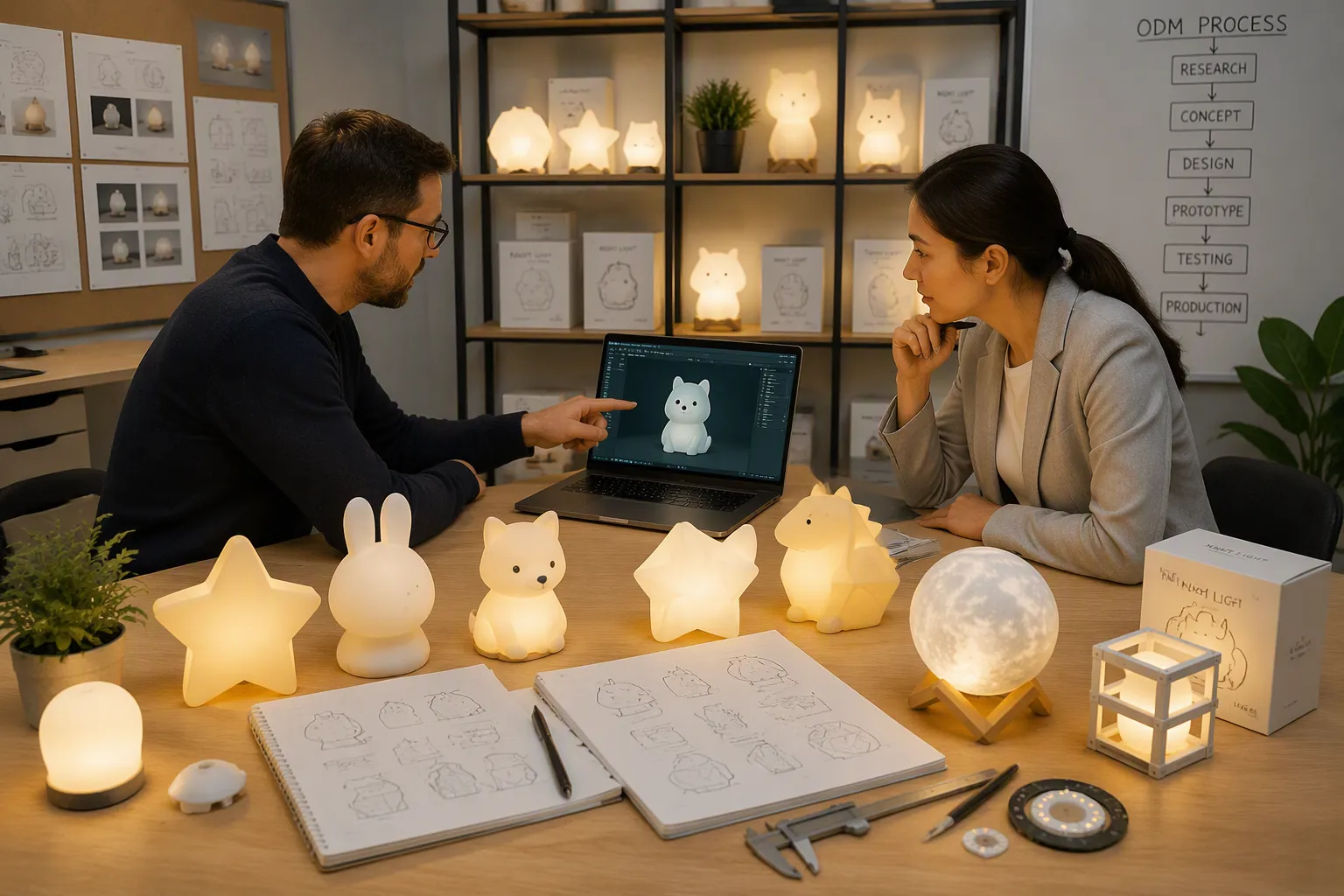
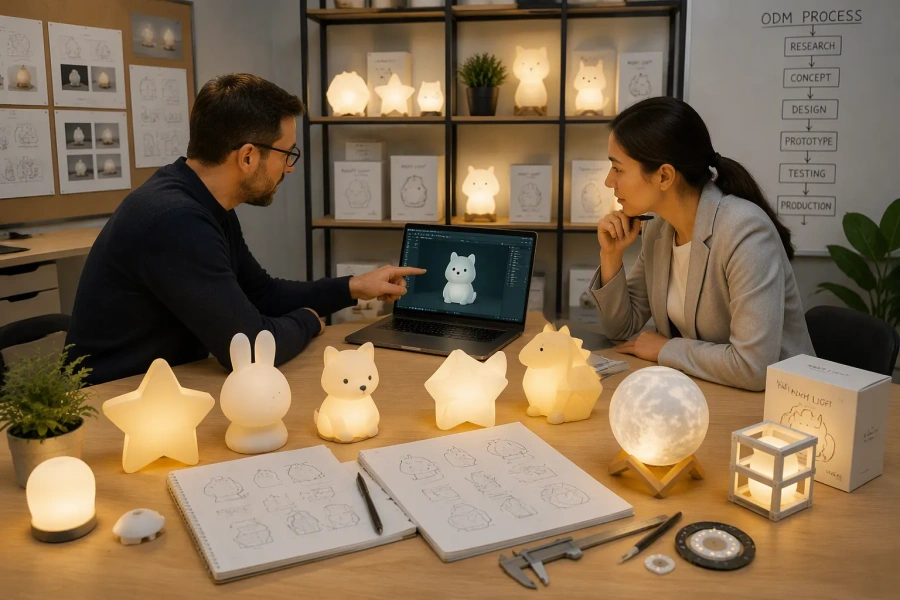
An ODM LED lighting supplier sells you a design that already exists, then puts your brand on it. That is faster and cheaper than OEM, but only if you know what you are and are not allowed to change. This guide is for brand owners comparing ODM and OEM routes for night lights. Confirm tooling ownership, exclusivity terms, and certification transfer before the first purchase order.
Key Takeaways
- ODM LED lighting suppliers help you launch custom night lights fast and at lower cost.
- You can customize logos, colors, packaging, and features to make your brand stand out.
- The ODM process includes sharing your idea, approving samples, and starting production.
- Quality control checks ensure every night light matches your approved sample.
- Choose a supplier with good communication and certifications for a smooth partnership.
Table of Contents
- What ODM Means in LED Lighting
- How ODM Works Step by Step for Custom Night Light Brands
- Key Benefits of Using an ODM LED Lighting Supplier
- How to Choose and Customize with an ODM LED Lighting Supplier
- Common ODM Challenges and How to Solve Them
What ODM Means in LED Lighting
Defining ODM: Original Design Manufacturer
An ODM in the LED lighting industry handles both design and production. You pick from ready-made or semi-custom lighting options. Then you label them as your own brand. The manufacturer owns the design. This setup lets you avoid research and development costs. You can quickly introduce or refresh product lines with limited resources.
In the LED lighting industry, an ODM partner may use existing designs and modify them to fit your unique requirements. These changes can include shape, lumen output, color temperature, or smart controls.
ODMs tend to retain design rights. If you private label an ODM's lamp, chances are another brand can provide the same shape with different branding. It's less risk if you're seeking speed, but it's more difficult to safeguard distinctive aesthetic.
ODM vs. OEM: Key Differences for Night Lights
You might wonder how ODM differs from OEM. Here's a quick comparison to help you understand.
| Factor | ODM (Original Design Manufacturer) |
|---|---|
| Product Design | Manufacturer-driven, standard designs |
| Customization | Moderate—limited to design tweaks |
| IP Ownership | Manufacturer may own or share IP |
| Manufacturing Model | Mostly in-house |
| Cost Structure | Lower initial, fixed costs per unit |
| Lead Time | Shorter (ready-made designs) |
| Typical Volume | High-volume, low-to-medium complexity |
| Branding | Private label, white label options |
OEM means the manufacturer builds to your specifications. You bring the design. ODM flips this. The manufacturer brings the design, and you add your branding.
Why ODM Fits Custom Night Light Brands
ODM works well for custom night light brands that want controlled branding changes. You get speed-to-market with brand differentiation. You don't need full engineering resources. An odm led lighting supplier already has proven optical and engraving processes. This lowers your execution risk for custom branding.
Reference models like the Astronaut Crystal Ball Night Light or Wood Base Crystal Disc Night Light show that ODM-ready platforms already exist. You can start from proven optical crystal forms, engraved imagery, and wood or illuminated bases. This shortens discovery time compared to building from scratch.
Related reading: the night light range.
How ODM Works Step by Step for Custom Night Light Brands
Step 1: Share Your Night Light Concept and Requirements
Every successful ODM project starts with a clear request for quotation, or RFQ. You don't need a perfect technical drawing. You do need a solid description of your vision. Tell the supplier what matters most. Think about the product's unit price, the minimum order quantity (MOQ), sample costs, and customization fees. Add packaging costs, production lead time, shipping terms, and payment terms. Don't forget reorder conditions.
An ODM LED lighting supplier needs a complete picture. List the product specifications that matter to you. Include the acrylic plate, the LED base, the power method, lighting modes, dimensions, and controls. These details help the supplier respond with accurate numbers.
Request supporting materials beyond the written specs. Ask for pre-production samples, customized artwork samples, and packaging samples. Request logo samples and product inspection reports. Ask for production photos or videos, quality control procedures, carton specifications, and shipping details. These items help you evaluate the supplier's capabilities before you commit.
Here's a quick checklist of what to include in your RFQ:
- Product unit price
- Minimum order quantity (MOQ)
- Sample cost
- Customization cost
- Packaging cost
- Production lead time
- Shipping terms
- Payment terms
- Reorder conditions
The more detail you provide upfront, the fewer surprises you'll face later. Clear requirements save time and prevent miscommunication.
Step 2: Supplier Creates or Adapts the Product Design
The design phase begins once the supplier understands your requirements. An ODM arrangement means the manufacturer already owns the baseline design. They don't start from scratch. Instead, they adapt existing structures to fit your brand.
Documents drive most of this work. A written specification sheet records your color choices, logo placement, packaging, labeling, and approved samples. This signed spec sheet becomes the reference point for production. It protects both sides. You can point to the document when questions arise later.
Branding and packaging artwork also get created during this phase. The supplier produces new logo designs, color schemes, packaging inserts, and instruction manuals. The product shape and tooling stay unchanged. You get a fresh look without paying for new molds.
What about CAD models and engineering drawings? For pure ODM projects, these rarely get created. The factory already owns the design, the molds, and the tested electronics. New CAD models only appear when you need a completely new custom mold or enclosure. Drawing reviews and mold drawings become part of the process then.
| Document type | Role in ODM adaptation |
|---|---|
| Written specifications / spec sheet | Records the brand's color, logo, packaging, labeling, and approved sample; serves as the main written design document |
| Branding/packaging artwork | Creates new logo, color, packaging, insert, and manual artwork; existing product shape and tooling remain unchanged |
| CAD models and engineering drawings | Needed only for a new custom mold or enclosure; the factory already owns the baseline design for pure ODM changes |
The design phase moves quickly because the hard engineering already exists. Your focus shifts to branding, colors, and user experience details.
Step 3: Prototype and Sample Approval
Samples turn your requirements into something you can hold, test, and evaluate. This step builds confidence before mass production begins. Base your lead-time planning on approval milestones, not a single factory number.
The approval sequence for custom LED night lights follows a logical path. First, you confirm the concept, including the MOQ. Next, you approve artwork and film samples for color accuracy. Then you test a functional prototype. You check LED specifications, battery runtime, and controls. You sign off on the golden sample after those tests pass. Finally, a pilot run of 50 to 100 units validates the production line.
Typical timelines vary by scope. Here's a helpful reference:
| Scope / Route | Typical lead time | Prototype approval criteria |
|---|---|---|
| Stock product | 3–7 days (8–15 days if stock low) | No prototype approval; existing design ships |
| Custom OEM on existing structure | 25–35 days after deposit and final customization confirmation | Artwork/film approval, confirmed LED spec, functional prototype, golden sample |
| Full ODM (new structure, optics, electronics, or APP) | 6–12 months from concept approval to first shipment | Concept approval, tooling, golden sample, pilot run |
| CE/FCC compliance testing | 2–4 weeks, run in parallel | Accredited laboratory results before bulk release |
Put together an approval pack for every milestone. Include a schedule with named decision owners. Review source images and artwork carefully. Check engraving clarity, optical centering, base fit, and clean illumination. Confirm the individual protective packaging. Each checkpoint matters.
Confirm the use context, quantity, destination, and required arrival date before comparing optional changes. Log every open exception as a controlled revision. Each change stays traceable and accountable. Award the ODM project only after these reviews pass.
Step 4: Branding and Custom Features
This is where your night light becomes your night light. The base design already works. Now you make it yours. Branding turns a generic product into something customers recognize and remember.
You have more options than you might think. Start with the logo. You can add your brand mark to the lamp base, the packaging, or both. A plain logo print on the base works for private label projects and keeps the tooling change small. A fully branded gift box takes it further. Your packaging can also carry your colors, your story, and your contact information.
Color matters too. Custom color schemes let you match lamps to specific themes. Soft hues work for nurseries. Vivid primaries fit playrooms. Neutral tones suit all-purpose rooms. You pick the palette that fits your brand identity and your target market.
Shape is another lever. Distinctive shapes like rockets, clouds, or stars help you stand out. The market is crowded. A unique silhouette gives buyers a reason to stop and look.
Small brands often worry about minimums. Some factories offer small batch runs, sometimes as low as 1 to 100 pieces. That gives you a chance to test the market without a huge commitment.
Here is a quick look at what a typical ODM LED lighting supplier can customize for you:
| Customization Option | What the Supplier Offers |
|---|---|
| Logo Printing | Add your brand logo on selected products; logo position and method depend on product structure, material, and order quantity. |
| Custom Packaging | Customize color boxes, blister cards, stickers, labels, barcodes, carton marks, and user manuals for retail, wholesale, and distributor channels. |
| Product Color | Choose product colors based on brand identity, local market preference, and sales channel requirements. |
| User Manual & Language | Customize manuals, product labels, and packaging text in different languages for local market compliance. |
| Market-Specific Configuration | Recommend product models and specs based on climate, power outage conditions, usage habits, and price positioning. |
| Product Combination | Combine rechargeable bulbs, emergency lights, flashlights, fans, or other products into wholesale or promotional sets. |
Before you compare optional changes, confirm the basics. Lock down the use context, quantity, destination, required arrival date, and fixed product requirements. This keeps the customization phase focused and avoids wasted effort.
Use a production-ready route for a confirmed model, ODM / Private Label for controlled branding changes, OEM / Build-to-Print for a released buyer specification, or Full ODM Development when the concept still needs engineering.
Your inquiry brief should include several key inputs. List the use case and distribution method. Name the product family and preferred development route. Note any critical dimensions or component limits. Clarify artwork ownership and revision rules. Specify the packing level and labeling data. Add quantity tiers and schedule constraints. Name the approvers for evidence and exceptions. These details speed up the process and reduce back-and-forth.
Step 5: Production and Quality Control
Production begins after you approve the golden sample. This is where your night light moves from a single unit to thousands. Quality control keeps every unit consistent with the one you signed off on.
A good factory follows a structured process. The R&D team develops product concepts based on your requirements. They cover appearance, structural design, and functional solutions. Then 3D printing creates prototypes. These verify the design structure, size, appearance, and installation method before mass production. Mold development follows. Precise molds get built based on the final structure. Product forming transforms designs into physical components and finished lighting products. Each product then undergoes comprehensive testing. This includes lighting performance, electronic functions, sensor response, structural reliability, and safety verification. Finally, stable mass production begins with strict quality control systems.
Quality control does not happen only at the end. It runs through every stage. Here is what a thorough program looks like:
- Incoming material inspection: Raw materials like wood, synthetic, and paper-based components get tested for cracks, moisture content, surface smoothness, tear resistance, folding flexibility, and consistent thickness before they enter the assembly line.
- In-process quality control: Each production stage is monitored for assembly consistency. This includes laser cutting accuracy, positional accuracy of LED modules, batteries, and magnetic parts. Surface finishing checks look for scratches, rough edges, or visible defects.
- LED system testing: Brightness stability gets checked for flickering or uneven lighting. Color temperature accuracy is verified for warm white, cool white, and RGB. Energy efficiency and heat control standards are also tested.
- Battery system safety and performance control: Battery capacity is verified. Charging cycle testing runs. Protection systems get checked for overcharging protection, short-circuit protection, and over-discharging prevention.
- Magnetic folding structure inspection: Magnetic alignment gets tested. Durability cycle testing runs for thousands of folding cycles. Structural precision is controlled.
- Final product testing: Lighting performance tests, battery endurance tests, folding mechanism durability tests, and safety compliance verification all happen. Only products passing all tests are approved for packaging and shipment.
Continuous aging tests verify long-term performance and reliability. Some factories integrate lumen sphere equipment to ensure lighting fixtures meet all relevant standards. Products are certified with CE, RoHS, FCC, and other international standards.
You should also ask about the factory's track record. Look for on-time delivery rates of 95% or higher. Check average response times, ideally under 4 hours. Read customer reviews. Verify compliance certifications like CE, RoHS, and ISO 9001. Request factory audit reports. These signals tell you whether the supplier can deliver consistently.
Step 6: Packaging, Logistics, and Delivery
Your night lights are built and tested. Now they need to reach your warehouse or your customers without damage. Packaging and logistics are the final steps, and they matter more than many brands realize.
Packaging does two jobs. It protects the product during transit. It also sells the product on the shelf. Custom packaging includes color boxes, blister cards, stickers, labels, barcodes, carton marks, and user manuals. Some factories offer 100% eco-friendly packaging options. Smart, branded packaging enhances shelf appeal and protects products in transit.
Shipping terms define who pays for what along the journey. Incoterms are ICC rules that set these responsibilities. They define when risk transfers, who pays duties, and who processes customs documentation. Here are the three most common options:
- FOB (Free on Board): You pay shipping from the port forward.
- CIF (Cost, Insurance and Freight): The seller covers cost, insurance, and freight to your country's port. After that, you take over.
- DDP (Delivered Duty Paid): The seller handles virtually everything, including customs. This is the simplest for you but often more expensive.
FOB or CIF can suit you if you want more control or better rates. Just remember that you manage more steps yourself.
A freight forwarder helps with the heavy lifting. They reserve goods space, obtain coverage, and coordinate with customs. For lighting products, choose a forwarder experienced with fragile, high-value items. Customs clearance ensures your imports comply with regulations. Safety standards on lighting vary by country, so check the rules for your market.
Clean paperwork prevents delays. Invoices, packing lists, and certificates of origin all need to be accurate. Real-time shipment tracking and readiness to act on holdups keep things moving.
Plan your warehouse space before the cargo lands. Bulk lighting orders need storage. Keep the space free of dust and moisture. LEDs and fixtures do not fare well in damp locations. An inventory management system tracks in-stock, sold, and re-order items. Lighting demand can surge during building or holiday booms, so stay ahead of it.
Custom branding typically costs an additional $0.50 to $2.00 per unit. The exact cost depends on complexity and order volume. Sample policies vary. Samples are often charged, especially for new clients or customized items. Fees may be refundable or credited toward a bulk order. Ask about sample costs and lead times early in your discussions.
Some buyers bypass distributors and deal directly with manufacturers for large custom runs. Distributors provide consistent inventory, competitive pricing, and packaged logistics. Either path can work. The right choice depends on your volume, your timeline, and your internal capabilities.
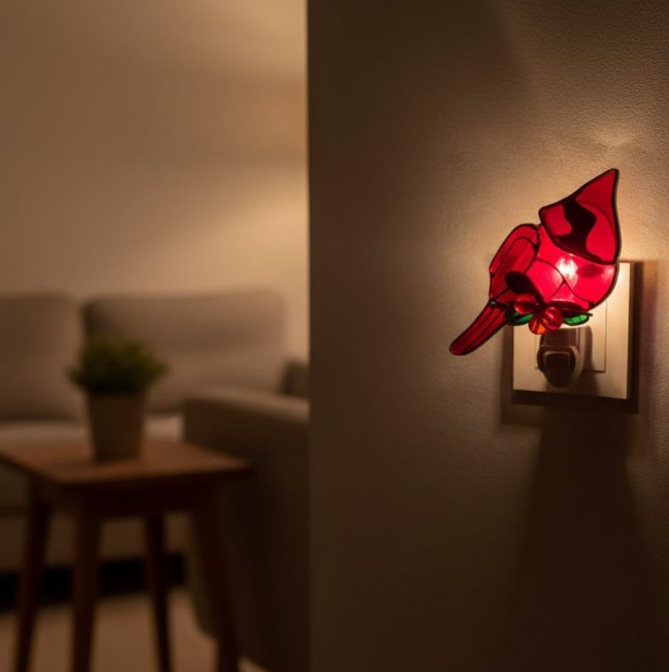
Wrought Iron Glass Red Bird Plug-In Night Light GL-TY01
- Wrought-iron glass plug-in night light with warm glow for living areas
- Decorative housing that brands can adopt as an ODM base
Related reading: OEM/ODM LED night light manufacturing step by step.
Key Benefits of Using an ODM LED Lighting Supplier
Faster Time to Market for Your Night Light Brand
Speed matters when you want to launch a new night light. An ODM led lighting supplier already has working designs and tested electronics. You skip months of engineering work. You talk directly to the factory team. That direct line removes delays from middlemen who relay questions back and forth. The people who build your product are the same people who answer your questions. This setup speeds up customization, photometric calculations, and project adjustments. You get accurate production schedules and faster order confirmation. Your night light hits shelves sooner.
Lower Product Development Costs
Building a night light from scratch costs a lot. You pay for research, design, tooling, and testing. ODM changes that math. You start with a proven base design. The factory already owns the molds and tested components. You avoid those upfront expenses. Factory-direct quotes also cut out trading-company markups. Those markups often add 15–40% to your costs. You also dodge hidden handling, inspection, documentation, and storage fees. Your money goes toward branding and marketing instead of engineering. That improves your profit margin from day one.
Access to Manufacturing Expertise and Existing Designs
A good ODM partner brings deep manufacturing knowledge to your project. They control every production stage. This includes incoming component inspection, SMT assembly, soldering, aging testing, waterproofing, and final photometric verification. Documented checkpoints and traceable records reduce defects. You get consistent quality across every batch. The factory also offers flexible order quantities and stable material sourcing. You benefit from their engineering collaboration too. They handle structural design, electronic design, and smart lighting integration. You gain years of expertise without hiring a single engineer.
Scalability from Samples to Mass Production
You start with one sample on your desk. Then you need five hundred units for your first launch. Later, you might need five thousand. A good ODM LED lighting supplier handles that jump without drama. The factory already owns the molds, the tooling, and the tested electronics. Nothing needs to be rebuilt when your order grows. You just place a bigger order.
This scalability protects your cash flow too. You can test the market with a small batch first. If your night light sells well, you scale up. If it flops, you haven't burned your budget on inventory. Many suppliers offer flexible order quantities for exactly this reason. You grow at your own pace, and the production line grows with you.
More Control Over Branding and Product Features
Some brands worry that ODM means giving up control. The opposite is true. You decide how your night light looks, feels, and functions. Your logo goes where you want it. Your colors match your brand identity. Your packaging tells your story.
You also control the features your customers care about. Want a touch sensor instead of a switch? Ask for it. Need warm white for nurseries and RGB for playrooms? That's your call. You can add timers, dimming, or rechargeable batteries. Each choice shapes how buyers experience your product.
The supplier brings the engineering know-how. You bring the brand vision. That partnership gives you a product that feels uniquely yours, even though the base design came from the factory. Your customers see your name, your style, and your features. They never see the ODM behind the scenes.
Related reading: night light manufacturer OEM/ODM and lamp holder guide.
How to Choose and Customize with an ODM LED Lighting Supplier
A polished website is not a factory. The difference shows up in tooling records, test reports, and who answers the technical questions. You need a partner who can build your night light the way you picture it. That means checking their technical skills, their production capacity, and how well they communicate. You want an odm led lighting supplier who proves their capabilities with real evidence, not marketing claims. Let's walk through each checkpoint.
Evaluate Technical Capability and Certifications
Start with certifications. These documents prove a factory meets real standards. They are not decorations on a wall. Certifications tell you whether the factory can handle safety, quality, and environmental rules for your target market.
The certifications you need depend on where you plan to sell. A night light headed to Europe needs CE marking. That mark shows the product meets EU health, environmental, and safety rules. RoHS compliance matters too. It restricts hazardous substances in the manufacturing process. For North America, you want UL certification. UL is one of the most recognized safety testing organizations in the US. FCC certification is also mandatory. It ensures your electronic device does not cause electromagnetic interference. You might also see DLC certification. It proves high energy efficiency and often unlocks utility rebates.
Here is a quick reference table:
| Certification | Market | What It Means for You |
|---|---|---|
| UL | North America | Safety testing for materials, components, and functionality |
| FCC | North America | Limits electromagnetic interference from electronic devices |
| CE | Europe | Required for products sold in the EEA; covers health and safety |
| RoHS | EU & North America | Restricts hazardous materials in production |
| DLC | North America | Proves high energy efficiency; often needed for rebates |
| ISO 9001 | Global | Shows a certified quality management system |
Do not stop at the certificate itself. Ask for test reports from accredited labs like TUV, SGS, Intertek, or Bureau Veritas. A certificate can look impressive. A lab report shows actual testing happened. The factory should also run an in-house laboratory with CNAS accreditation or something equivalent. That lab should test photometric performance, thermal stress, IP and IK protection, salt spray corrosion, and long-term aging stability. Those tests catch problems before your customers ever see them.
Technical capability goes beyond paperwork. Ask about their engineering team. How many engineers work there? What patents do they hold? How often do they release new product models? A factory with a strong R&D team can solve design problems quickly. They can also adapt products for extreme climates or demanding environments. Ask for a verified project list with locations, quantities, years, and client types. That list tells you more than any brochure.
Component transparency matters as well. They should openly disclose the brands of LED chips, batteries, and drivers they use. Unknown components inside your product create hidden risks. Field failures and warranty claims follow when parts are substandard. You want a factory that names their suppliers.
Review ODM Product Catalogs and Manufacturing Capacity
Once you confirm their technical strength, look at their existing products. A good product catalog shows you what the factory already builds well. Those proven designs become your starting point. You skip the risk of untested engineering and get straight to branding.
Review the catalog for night light styles that fit your brand vision. Look for crystal bases, wood bases, acrylic panels, and different light modes. Check what customization options they offer on each model. Some factories clearly list what you can change: shell colors, logos, packaging, beam angles, and control methods. Others keep that information vague. You want the transparent ones.
Manufacturing capacity matters just as much as design variety. You need a factory that can actually deliver your order on time. Ask about the number of production lines and daily output rates. Ask about shifts per day and monthly capacity. Find out how they handle peak seasons. The third and fourth quarters get busy. You want to know whether your order still fits into their schedule.
Here is an audit checklist for verifying their operations:
| Audit item | What to check |
|---|---|
| Production lines | Real assembly workflow, not just factory photos |
| Production planning | How they schedule and monitor orders |
| Quality stations | Inspection points during production |
| Repeat-order capability | Ability to reproduce approved specifications |
| Traceability | How they track batches and investigate issues |
| Corrective actions | How they record, fix, and prevent complaints |
| OEM/ODM engineering | How they confirm specs, samples, and branding changes |
Component sourcing deserves a close look. Ask who supplies their LED modules, batteries, and electronic parts. Request a full bill of materials, or BOM. That document shows exactly what goes into your night light. Ask about lead times for standard products and fully custom products. Standard orders might take 10 to 15 days after deposit. Full custom development can take 10 to 19 weeks. Get those numbers in writing before you commit.
Also request their on-time delivery rate. A target of 95 percent or higher is a solid baseline. Then ask for customer references. A quick call with an existing client reveals more than months of email back-and-forth.
Check Communication and Customization Flexibility
Certifications and capacity mean little if the supplier ignores your messages. Communication quality decides how smoothly your project runs. You want a partner who responds fast and speaks plainly.
Test their response time before you make any commitment. Send a detailed question about a product you like. A reliable supplier answers within a few hours. A disorganized one takes days. You want the team that replies in 24 hours or less. That speed continues through design confirmation, sampling, and production.
Look for a supplier with a clear customization process. The process should move from design confirmation to prototype development to sample production and then mass manufacturing. You should know exactly where your project stands at every stage. A supplier who guides you through each step saves you from surprises.
Here is what a flexible supplier should offer you:
- Logo laser printing on the product or base
- Custom packaging with your brand colors and story
- Adjustable beam angles for spot or flood effects
- Custom color temperature and lumen output
- Shell colors that match your brand identity
- Private mold development for exclusive product shapes
Do not underestimate the value of small-batch trial orders. Some factories let you start with 100 to 500 units. That gives you a low-risk way to test the market. If the product sells well, you scale up. If not, you have not buried yourself in inventory. Ask about their minimum order quantities early in the conversation. Also ask about sample costs and whether those fees get credited toward a bulk order later.
Clear documents keep customization projects on track. A written specification sheet records your color choices, logo placement, packaging, and approved samples. Both sides sign it. That document becomes the reference point for every production run. When questions arise later, you point to the paper. No ambiguity.
Global service support matters too. A good factory offers faster sample delivery, timely technical communication, and dependable after-sales support. Ask about spare parts reserves. A factory that stocks around 0.2 percent of order quantity for spare parts shows they plan for your long-term needs. Ask about warranty terms as well. Three to five years is common for quality components.
Trust your experience during this process. Did the factory answer your questions clearly? Did they push back when something made no sense? Did they offer alternatives when you asked for the impossible? That kind of partnership shapes your success far more than any certificate on the wall.
Define Your Custom Night Light Specifications
You cannot get an accurate quote without a clear spec sheet. This is the step where vague ideas turn into real numbers. Your supplier needs these details before they can price your project or promise a delivery date.
Start with the physical size. Small circular LED luminaires usually range from ø75 to 200 mm and run 6 to 24 W with 300 to 1,800 lumens. ODM catalogs often list diameters like ⌀45, ⌀70, ⌀75, ⌀80, and ⌀100 mm. Length options stretch from 300 to 3,000 mm for linear styles. Pick a size that fits your target room and your packaging budget.
Light output comes next. You choose the wattage and lumen package based on the length and the thermal design. A nursery night light needs far less output than a corridor fixture. Match the brightness to the job.
Color temperature shapes the mood. Standard options include 3000K, 4000K, and 6000K. Warm tones around 2700K to 3000K feel cozy and calm. Cooler tones around 4000K to 6000K feel crisp and alert. You can also request project-specific values for volume orders.
Color rendering matters if your customers care about how objects look under the light. CRI ≥80 works for most homes. CRI ≥90 with R9 above 50 suits retail, museum, and medical settings. That extra red rendering makes skin tones and fabrics look natural.
Here is a reference table for common applications. Use it to sanity-check your own specs.
| Application | Wattage | CCT | Beam / Optics | CRI | Other |
|---|---|---|---|---|---|
| Guest-room entry | 6–8 W | 3000K | 60° | 90+ | — |
| Bedhead wall washer | 10–12 W | 2700K | 24° narrow | — | UGR <19 |
| Corridor ceiling | 12 W | 3000K | — | — | IP44, 90-min emergency option |
| Lift-lobby pendant | 18 W | 3000K | — | — | 97 lm/W, Triac dimmable to 5% |
| Spa & bathroom | 24 W | 4000K | — | — | IP54, sealed front ring |
| Retail gondolas | 24 W | 4000K | 30° spot | 95, R9>50 | — |
| Food-court seating | 18 W | 3000K | micro-prismatic | — | UGR <16 |
| Mall circulation | 18 W | 4000K | 1 m on-centre | — | 500 lx, 50,000 h L70B10 |
| Pop-up kiosk track | 15 W | 3000–4000K selectable | — | — | 48V track adapter |
Your supplier can also configure housing material, metal components, mounting style, and wiring. Housing options include PC, PMMA, or borosilicate glass. Metal parts come in aluminum, SS304, or SS316L. Mounting choices cover surface, wall-mounted, suspended, or project-specific brackets. Wiring can be customized for cable length, connectors, cable-entry position, and linkable configuration.
Power source is a big decision. Standard voltage runs AC 220–240V. Some projects need AC 120–347V. If you want portability, ask about USB-rechargeable or battery-powered options instead.
Before you request a quotation, confirm ten key parameters: diameter, length, wattage or target lumen output, color temperature, CRI requirement, housing and diffuser material, IP and IK rating, control method, emergency requirement, and mounting and wiring configuration. Lock these down early. Every change later costs time and money.
Choose Lighting Features: Modes, Colors, Sensors, and Power
Features turn a basic lamp into a product people want to buy. The creative night light market is shifting toward decorative sculptural fixtures and circadian-supportive smart lighting. That market is projected to reach $1.88 billion by 2035. Personalization drives much of this growth. Think photo moon lamps and engraved wood designs. Portability matters too. USB-rechargeable models that double as accent decor are winning shelf space.
Light modes give your customers control. Tap on/off controls are the simplest option. Multiple color-changing modes add play value. Adjustable brightness lets users dim the light for bedtime or brighten it for reading. Some suppliers offer adjustable color temperatures and directional light for task use.
Color options range from a single warm glow to full RGB color change. Warm, gentle tones suit nurseries and bedrooms. RGB color-change modes appeal to kids and gamers. You pick the palette that matches your brand and your buyer.
Sensors add hands-free convenience. Light sensors turn the night light on at dusk and off at dawn. Motion sensors wake the light when someone walks by. Some models combine both for hallways and stairwells. These features reduce energy waste and delight users.
Power source ties everything together. Rechargeable batteries make the product portable. Outlet-powered designs never need charging. Some models draw power directly from outlet terminals and need no batteries at all.
Here is how major suppliers stack up on these features.
| Supplier | Light Modes | Color Options | Sensors | Rechargeable Power |
|---|---|---|---|---|
| Lumipets | Tap on/off controls; multiple color-changing modes; adjustable brightness | Multiple color-changing modes | N/A | Rechargeable batteries for portability |
| SnapPower | Automatic on/off | N/A | Light sensor for automatic on/off | No batteries required (draws power from outlet terminals) |
| Maxxima | Motion-activated lighting | N/A | Dusk-to-dawn sensors; motion-activated | N/A |
| Eaton | Adjustable light levels | N/A | Automatic dusk-to-dawn sensors | N/A |
| Osram / Ledvance | Adjustable color temperatures; directional light | Adjustable color temperatures | Motion sensors; dusk-to-dawn sensors | N/A |
| Panasonic | Sensor-activated LED night lights | N/A | Sensor-activated | N/A |
| Eufy | Adjustable brightness | Warm, gentle glow | Dusk-to-dawn sensors; motion sensing | N/A |
| GE Lighting | Color-changing capabilities (Cync smart line) | Color-changing capabilities | Motion sensors; light sensors | N/A |
The chart shows where suppliers cluster. Motion and light sensors appear across many brands. Rechargeable power shows up less often, which means it can set your product apart.
Technical ranges give you room to customize. Beam angles run from 10° spot to 120° wide flood. You can also choose elliptical, square, linear, or bat-wing shapes. Custom lens tooling becomes feasible at 5,000 units or more. Standard color temperatures include 2700K, 3000K, 4000K, 5000K, and 6500K. Custom values from 2400K to 5700K are possible through phosphor selection at the chip level for volume orders. CRI ≥80 is standard, and CRI ≥90 with R9 above 50 is available for retail, museum, and medical use. You can run multiple power levels from the same tooling, such as 20W, 30W, and 40W. Strip and matrix formats come in 12V or 24V DC. For signage and light box applications, color consistency within ≤3 SDCM keeps backlit faces uniform. Luminous efficacy at the chip level runs 130–200 lm/W for high-quality products.
Over 80 verified OEM manufacturers can supply customized silicone, acrylic, and smart IoT-enabled night lights. Many offer low MOQ and full branding services. Products on the market include remote-control LED rechargeable night lights, rechargeable touch-control bedside table lights, USB-chargeable bedside lights with adjustable settings, and RGB color-change night lights. You have plenty of proven feature combinations to choose from.
Consideration: MOQ, Pricing, and Intellectual Property
Money and rights deserve careful attention. These terms shape your margins and protect your brand. Get them in writing before you pay any deposit.
Minimum order quantities vary by customization level. A standard ODM product often starts around 500 pieces per model and color. Stock products with existing molds can go as low as 10 pieces. Logo customization usually requires about 1,000 pieces per model. Custom packaging pushes the MOQ to about 2,000 pieces per design. A full OEM project with a new mold often needs around 5,000 pieces per model. Some factories will negotiate with no fixed MOQ, so always ask.
Pricing follows volume. Small orders of 500 to 2,000 pieces usually get standard unit pricing. Medium orders of 2,000 to 10,000 pieces often earn a 5–10% volume discount. Large orders above 10,000 pieces can get 10–20% off, and that number is negotiable. Samples usually cost 2–3× the unit price. Many suppliers refund that sample fee against your first bulk order.
Intellectual property terms protect your investment. If you pay tooling fees for a private mold, you own the exclusive design rights. The manufacturer should sign an NDA and an exclusivity contract. That private mold cannot be produced for or sold to other clients. Tooling fees may also be fully rebated once your cumulative orders hit a pre-agreed threshold. Ask about this rebate. It can save you real money over time.
| Issue | Typical term in ODM agreements |
|---|---|
| Design/mold ownership | If the buyer pays tooling fees for a private mold, the buyer owns exclusive design rights |
| Confidentiality/exclusivity | Manufacturer signs NDA and exclusivity contract; the private mold is not produced for or sold to other clients |
| OEM vs. ODM MOQ | OEM (custom logo/box on existing product) often starts around 1,000–2,000 units; ODM usually requires larger volumes, often enough to fill a 40HQ container |
| Mold-fee rebate | Tooling/mold fees may be fully rebated once cumulative orders for that product reach a pre-agreed threshold |
| Term area | Typical ODM LED night light contract terms |
|---|---|
| MOQ – standard ODM product | Around 500 pieces per model/color; stock products with existing molds may be as low as 10 pieces |
| MOQ – logo customization | About 1,000 pieces per model |
| MOQ – custom packaging | About 2,000 pieces per design |
| MOQ – full OEM/new mould | Around 5,000 pieces per model; OEM/ODM customization can also be negotiated with no fixed MOQ |
| Sample pricing | Usually 2–3× unit price, refundable against the first bulk order |
| Small orders (500–2,000 pcs) | Standard unit pricing |
| Medium orders (2,000–10,000 pcs) | 5–10% volume discount |
| Large orders (10,000+ pcs) | 10–20% volume discount, negotiable |
A reliable odm led lighting supplier will walk you through these terms without pressure. Ask questions until every number makes sense. Then sign the agreement and move forward with confidence.
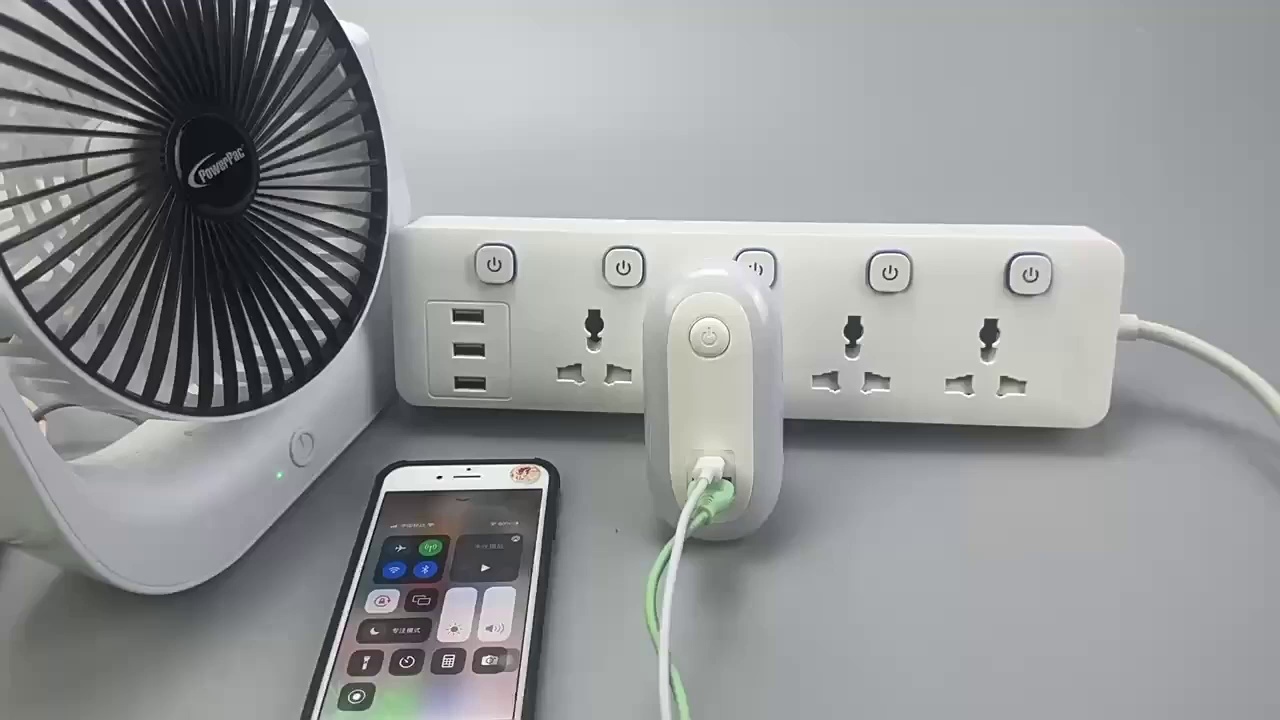
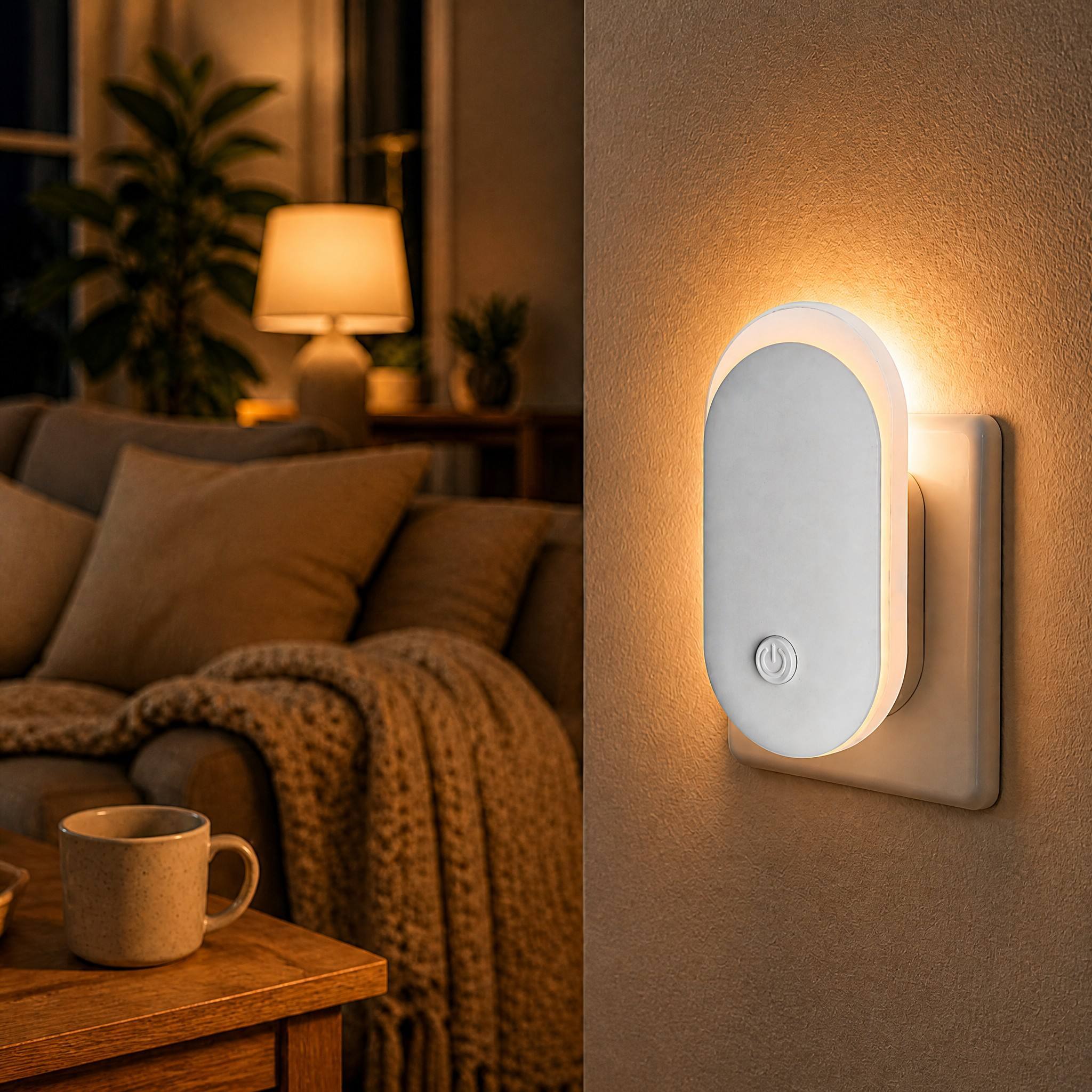
A94D Dusk to Dawn Night Light with USB-A & USB-C | Guangli
- Dusk-to-dawn night light with USB-A and USB-C charging ports
- Sensor plus charging outlet in one wall unit
Common ODM Challenges and How to Solve Them
ODM projects rarely run cleanly. The useful question is how fast a supplier surfaces a problem instead of hiding it. Knowing the common problems ahead of time helps you fix them fast. Here are the challenges custom night light brands face most often, along with practical solutions.
| Challenge | What Happens |
|---|---|
| Inconsistent product quality | Factories that outsource production or lack standardized quality management may deliver different performance across batches. |
| Limited customization capability | Many suppliers offer only logo printing and lack full OEM/ODM services such as industrial design, mold development, electronic engineering, packaging customization, firmware adjustment, and color matching. |
| Poor communication | Delayed responses during development, sampling, production, and shipment can cause missed deadlines and unnecessary costs. |
| Compliance risks | Baby products must meet strict safety regulations; suppliers without proper testing or certifications can create import issues and legal risks. |
Problem: Low Product Differentiation
You pick a proven ODM design. Then you see the same lamp on three competitor websites. That hurts. The base product works, but everyone can buy it. Your customers have no reason to choose you over anyone else.
Production consistency makes this worse during bulk orders. A prototype may look excellent. The real test comes when the supplier maintains that quality across a larger run. For custom acrylic night lights, consistency involves stable LED bases, agreed electronic specifications, correct assembly fit, and packaging that protects against scratches and impact.
Solution: Add Unique Features and Packaging
You can solve differentiation with smart changes. ODM development lets you start from an existing concept and modify selected elements. Think size, surface pattern, lighting modes, base, color, packaging, accessories, or branding. A children's brand might choose a smaller lamp in colorful retail packaging. A gift company might prefer premium packaging with a personalized message. A home decoration brand might select neutral colors and a minimalist base. The same general product fits very different markets.
Packaging plays a major role here. Online-store packaging must protect the spherical body and electronics during transport. Retail packaging needs product images, feature information, and brand elements. Gift packaging emphasizes presentation and emotional appeal. Plan packaging alongside product dimensions. Oversized boxes raise shipping costs. Weak protection increases damage risk.
You can also request exclusive features. R&D teams collaborate with buyers to integrate special motion sensors and unique RGB controls. Flexible production lines allow rapid branding and packaging customization. That puts your identity on every unit.
Problem: Communication Gaps with the Supplier
Slow replies kill projects. You send a question about LED specs. Three days pass with no answer. Your launch date slips. Costs climb. This happens more often than you think.
Solution: Create Clear Specification Documents and Timelines
You can prevent most communication gaps with two straightforward tools: a written spec and a dated milestone list. First, write a specification document. This document lists every detail of your night light. Include the size, LED color, brightness, logo placement, packaging, and control functions. Both you and the supplier sign it. Now you have one shared reference for the whole project.
Second, build a timeline with clear milestones. Mark the dates for design approval, sample delivery, and production start. Name one person on each side who owns decisions. When your supplier knows exactly what you need and when you need it, they stop guessing. You stop waiting. A short weekly check-in call also keeps everyone aligned. Ask for a written status update before each milestone. That way, small problems surface early instead of becoming launch delays.
Problem: Quality Control Issues
Quality problems sneak in during bulk production. Your approved sample looks perfect. Then the first shipment arrives with uneven lighting, scratched acrylic, or loose bases. Every unit must match the approved sample in appearance and function. That includes engraving quality, LED performance, assembly, dimensions, control functions, surface condition, packaging, and labeling. Factories without standardized processes struggle to hold that consistency across thousands of units.
Solution: Use Pre-Production Samples and Inspections
A sample verifies whether your product works as intended before large-quantity production begins. Testing a sample can reveal problems early, such as:
- Artwork lines that are too fine
- Insufficient visual contrast
- Acrylic dimensions that do not fit the base
- Unexpected lighting effects
- Packaging dimensions that need adjustment
- Control functions that require modification
- Details that are hard to assemble consistently
Once you approve a sample, the finalized specifications become the reference for production and quality inspection. A professional supplier should also run these procedures:
| Pre-Production / Inspection Procedure | How It Reduces Quality Control Issues |
|---|---|
| Product & Sample Confirmation | Confirms specifications, structure, light effect, packaging, and sample details before production to reduce sample-to-bulk differences. |
| Specification Adjustment | Reviews size, wattage, CCT, housing structure, packaging, and target-market needs before sample confirmation and bulk production. |
| Sample-to-Bulk Coordination | Aligns confirmed samples, approved specifications, packaging details, and production notes before bulk production. |
| Incoming Material Check | Checks key materials and components before production to reduce avoidable quality issues at the source. |
| In-Process QC | Reviews production stages during manufacturing to control assembly consistency and reduce repeated errors. |
| Aging & Functional Testing | Runs aging tests, functional checks, integrating-sphere measurements, photometric testing, and hi-pot electrical safety checks before packing. |
| Final Inspection Before Shipment | Reviews finished products against confirmed specifications, order details, packaging requirements, and shipment preparation needs. |
Problem: Hidden Costs or MOQ Problems
You budget for a night light at one price. Then the invoice arrives with extra charges. Surprise fees pop up for tooling, logo setup, packaging plates, or rush shipping. Your minimum order quantity also shifts. A supplier quotes 500 pieces, then tells you the real minimum is 2,000. Now you must buy four times the stock you planned. That ties up your cash and fills your garage with boxes.
These surprises hurt small brands the most. You may also face unclear terms on who pays for molds, samples, or freight. Without a written agreement, the supplier can change the rules mid-project. You lose leverage once you pay a deposit.
Solution: Agree on Pricing, MOQ, and Deliverables in Writing
Put every number in a signed contract before you pay anything. Ask for a full cost breakdown, not just a unit price. List each fee on its own line. Then confirm the MOQ for each customization level. A plain logo print often needs fewer units than a custom box. Know those numbers upfront.
Lock down these terms in your agreement:
| Term | What to Confirm |
|---|---|
| Unit price | Price per piece at each quantity tier |
| Tooling and mold fees | Amount, who owns the mold, rebate terms |
| Sample cost | Price and whether it credits toward bulk orders |
| MOQ | Minimum per model, color, and packaging type |
| Shipping terms | FOB, CIF, or DDP, plus who pays duties |
| Payment schedule | Deposit percentage and balance due date |
Write down the deliverables too. Name the sample approval date, the production window, and the shipping deadline. Add a clause for reorders at the same price. If the supplier cannot meet a term, negotiate now instead of later. A clear contract protects your budget and keeps your launch on track.
ODM gives custom night light brands a practical, cost-effective way to launch products without designing a night light from scratch. The process follows clear steps: you share your requirements, the supplier designs or adapts the product, you approve samples, and production begins. Choose the right odm led lighting supplier, and you gain faster timelines, lower costs, and professional manufacturing expertise. To succeed, define your customization needs, communicate clearly, and solve common challenges with contracts, samples, and quality checks.
Related reading: LED night light manufacturer capabilities and certifications.
Sources and References
Updated October 21, 2026
Ready to Source Quality LED Night Lights?
Contact Guangli today for a free quote and sample!
0users like this.