Sourcing Guide
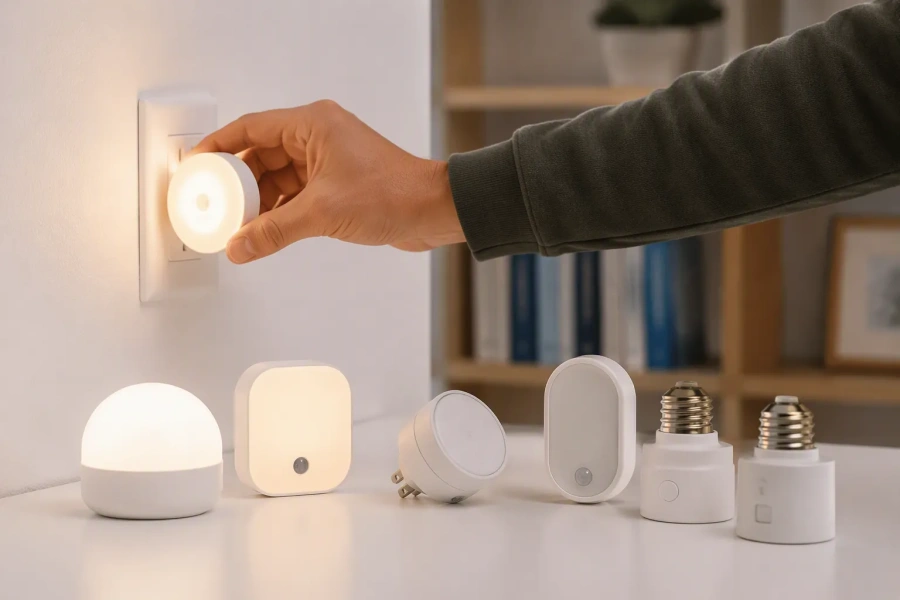
Night Light Manufacturer: OEM and ODM Plug-In LED Night Lights Guide
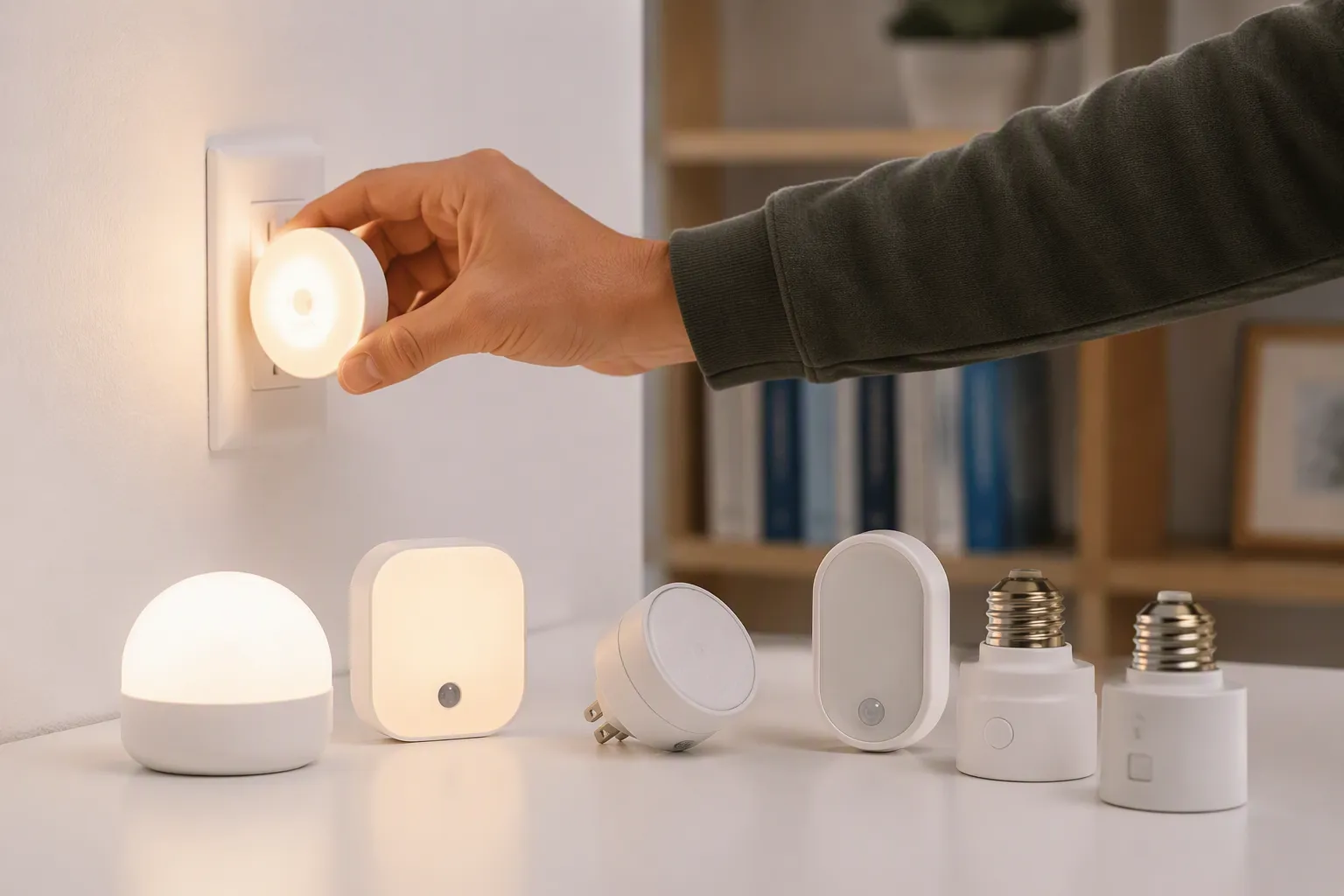
Quick Answer: A night light manufacturer should be judged on four things before price: the OEM/ODM service model it actually runs, the plug-in formats it can build, the lamp holders and safety standards behind them, and its certification and test evidence. Most buyers start with a photo and a unit price, then discover the real differences later, in MOQ, tooling ownership, and who holds the certification file. Ask for the factory's own certificate numbers, confirm which plug standards it can build, and check that the holder and housing were tested together rather than sourced separately.
Table of Contents
- Key Takeaways
- OEM vs. ODM: What's the Difference?
- Why Plug-In LED Night Lights Sell
- Lamp Holders: Compatibility Matters
- How to Evaluate a Night Light Manufacturer
- Customization and Design Support
- Pricing and Minimum Order Quantities
- Tips for a Successful Partnership
- Common Mistakes to Avoid
- Sources and References
Finding the right night light manufacturer starts with your business model. Do you need OEM or ODM services? Your product specs and target market decide that. Before you commit, check their certifications, quality control systems, and production capacity. Ask about customization options, minimum order quantities, and pricing upfront. A good partner treats you like a long-term ally, not a one-time sale.
Key Takeaways
- Choose OEM for unique designs and ODM for faster market entry.
- Require UL or ETL certifications for every night light you sell.
- Test samples and start with a small pilot order before mass production.
- Build a long-term partnership through clear specs and open communication.
OEM vs. ODM: What's the Difference?
You will see these two terms everywhere in the manufacturing world. They sound similar. They mean very different things for your business. Understanding the gap between them helps you pick the right path for your night light products.
Defining OEM Services
OEM stands for Original Equipment Manufacturer. In this model, you bring the design. You own the blueprint, the specifications, and the brand. The factory builds your product exactly as you specify.
Think of it this way. You hand a factory a detailed drawing of a plug-in LED night light. You tell them the shape, the brightness, the color temperature, and the packaging. They manufacture it to your exact requirements. Their name never appears on the product. Your brand goes on the box.
This model gives you full control. You decide every detail. The factory acts as your production partner. They do not sell your design to anyone else. You own the intellectual property.
OEM works best when you have a clear product vision. You know your market. You have engineering resources or design files ready. You want a product that no competitor can copy.
The trade-off? You carry more responsibility. You must provide complete specifications. You handle the design validation. You take on more upfront costs for tooling and molds. The factory simply executes your plan.
Defining ODM Services
ODM stands for Original Design Manufacturer. Here, the factory already has the design. They developed the product themselves. They offer it to you with your brand on it.
Picture a night light manufacturer with a catalog of ready-made plug-in LED night lights. They have a warm white model, a color-changing model, and a motion-sensor model. You pick one. They print your logo on the product and packaging. You sell it as your own.
This model moves fast. You skip the design phase. You skip the tooling costs. You get a proven product that already passed testing. The factory handles the engineering. They know the product inside and out.
ODM suits businesses that want to enter the market quickly. You might be a retailer adding a new product line. You might be a startup testing demand. You might lack in-house design teams. The factory fills that gap for you.
The trade-off here is exclusivity. Other brands can buy the same design. Your competitor might sell the identical night light with a different logo. You compete on brand, price, and marketing instead of product uniqueness. Some factories offer limited exclusivity for large orders. You need to negotiate that upfront.
Which Model Fits Your Business?
Your choice depends on your resources, your timeline, and your market position. Ask yourself a few honest questions.
Do you have proprietary designs you want to protect? Choose OEM. Do you need to launch in three months with minimal investment? Choose ODM. Do you have engineering staff who can write detailed specs? OEM gives you more control. Are you a small brand testing a new category? ODM lowers your risk.
Here is a quick comparison to help you decide.
| Factor | OEM | ODM |
|---|---|---|
| Design ownership | You | Factory |
| Upfront investment | Higher | Lower |
| Time to market | Longer | Shorter |
| Product exclusivity | Full | Limited or none |
| Engineering needs | High | Low |
| Best for | Brands with unique designs | Brands needing speed |
Many successful companies use both models. They launch an ODM product to test the market. Then they invest in OEM designs for their hero products. This hybrid approach balances speed with differentiation.
You can also ask a factory about their ODM customization options. Some factories let you modify an existing design. You might change the light color, the housing material, or the sensor sensitivity. This sits between pure OEM and pure ODM. It gives you some uniqueness without full design costs.
The key is honesty about your capabilities. Do not choose OEM if you cannot provide complete specs. Do not choose ODM if your entire brand promise rests on a unique product. Match the model to your real strengths.
If you are still deciding between the two service models, the difference shows up clearly in custom night light manufacturing.
Why Plug-In LED Night Lights Sell
Plug-in LED night lights fly off the shelves for good reasons. They solve real problems for real people. You can build a strong product line around them.
Energy Efficiency and Low Heat
LEDs sip electricity. They turn most of that power into light, not heat. An incandescent night light wastes energy as warmth. It also feels hot to the touch. LEDs stay cool, so you can place them near curtains, bedding, or little hands.
Long life seals the deal. Check the numbers.
| Bulb Type | Typical Lifespan |
|---|---|
| Incandescent | ~1,000 hours |
| Halogen | 2,000–4,000 hours |
| CFL | 8,000–10,000 hours |
| LED | 25,000–50,000 hours or more |
LEDs last roughly 25–50 times longer than incandescent bulbs. Your customers replace them far less often. That reliability builds trust in your brand.
Safety and Durability Benefits
Safety sells. Parents and facility managers care about it. LEDs run cool, so they lower burn risks. They also handle bumps and drops better than glass bulbs.
Most LED bulbs and fixtures have safety ratings and certifications indicating where and under what conditions they can be used.
Look for UL, ETL, CSA, or CE listings on every unit. These marks tell buyers your product passed independent testing. They also open doors to major retailers.
Popular Styles and Use Cases
Buyers want options. Dusk-to-dawn sensors suit hallways and nurseries. Motion-sensor models work well in bathrooms and stairwells. Color-changing units appeal to kids' rooms. Warm white versions fit hotels and senior care facilities.
Foldable and rotatable plugs solve crowded outlet problems. Compact designs fit tight spaces. You can stock a few core styles and cover most of the market.
The formats that sell best are listed in the night light range.
Lamp Holders: Compatibility Matters
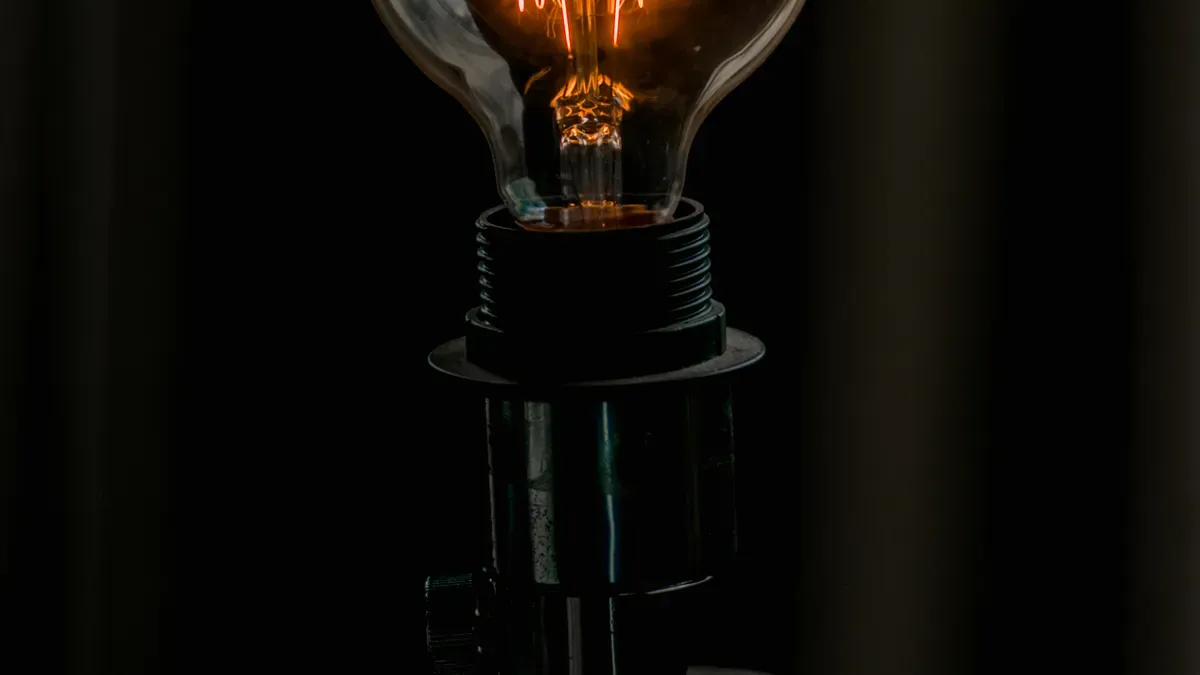
A night light is only as good as the holder that carries it. Pick the wrong holder, and you get loose fits, flickering lights, or worse. Let's break down what you need to know.
Common Lamp Holder Types
You will run into a few main types. Edison screw holders (E12, E14, E26, E27) use a threaded base. They are the most common worldwide. Bayonet holders (B15, B22) use a push-and-twist lock. They show up often in the UK and Australia. Pin-based holders (GU24, GX53) use two pins instead of threads. They work well for LED self-ballasted lamps.
Each type has a different base size. E12 and E14 suit candelabra and small night lights. E26 and E27 fit standard bulbs. Match the holder to your bulb's base, or nothing will fit.
Matching Holders to Night Light Designs
Your night light design drives your holder choice. A compact plug-in unit needs a low-profile holder. A foldable model needs a holder that stays put when the plug rotates. A color-changing night light needs a holder rated for the LED module's heat and voltage.
Think about the end user too. A nursery night light should have a holder that locks the bulb tight. Kids will bump it. A hotel model should resist tampering. Ask your manufacturer for holder samples. Test the fit before you commit to a full run.
Safety Standards for Holders
Holders carry their own safety rules. Do not assume a certified night light means a certified holder. Check both.
| Standard | Scope / Applicability | Key Testing Parameters |
|---|---|---|
| UL 496:2013 | Lampholders for incandescent, fluorescent, and discharge lamps, including GU24/GU24-1 bases for LED self-ballasted lamps | Insulation integrity; ground continuity; mechanical durability (torque for screw bases, insertion force for pin bases); compatibility with lamp caps; protection against live parts; stable mounting; UL 94 flammability (e.g., V-0 for plastic housings); humidity and temperature resistance |
| IEC 60238 | Edison screw lampholders; European adoption as EN 60238 supports CE compliance | Not specified in the retrieved evidence |
Ask your supplier for the holder's test report, not just the night light's certificate.
A holder that passes UL 496 or IEC 60238 gives you real confidence. It also keeps you out of trouble with retailers and regulators.
Holder choice is covered in more depth alongside the night light base and holder range.
How to Evaluate a Night Light Manufacturer
You have your product idea. You know your target market. Now you need a factory you can trust. This step decides everything. A weak manufacturer drags down your brand. A strong one lifts it up. So how do you separate the good from the bad? You dig into three areas: certifications, quality control, and production capacity. Let's walk through each one.
Certifications to Require
Certifications are not paperwork. They are proof. They show that an independent lab tested the product and found it safe. Without them, you cannot sell to major retailers. You also risk recalls, lawsuits, and damaged trust.
Start with the basics. Every plug-in LED night light sold in the US needs a UL or ETL listing. These marks come from Underwriters Laboratories and Intertek. Both test for electrical safety, fire resistance, and shock hazards. In Canada, look for CSA. In Europe, you need CE marking. For Australia and New Zealand, ask for RCM.
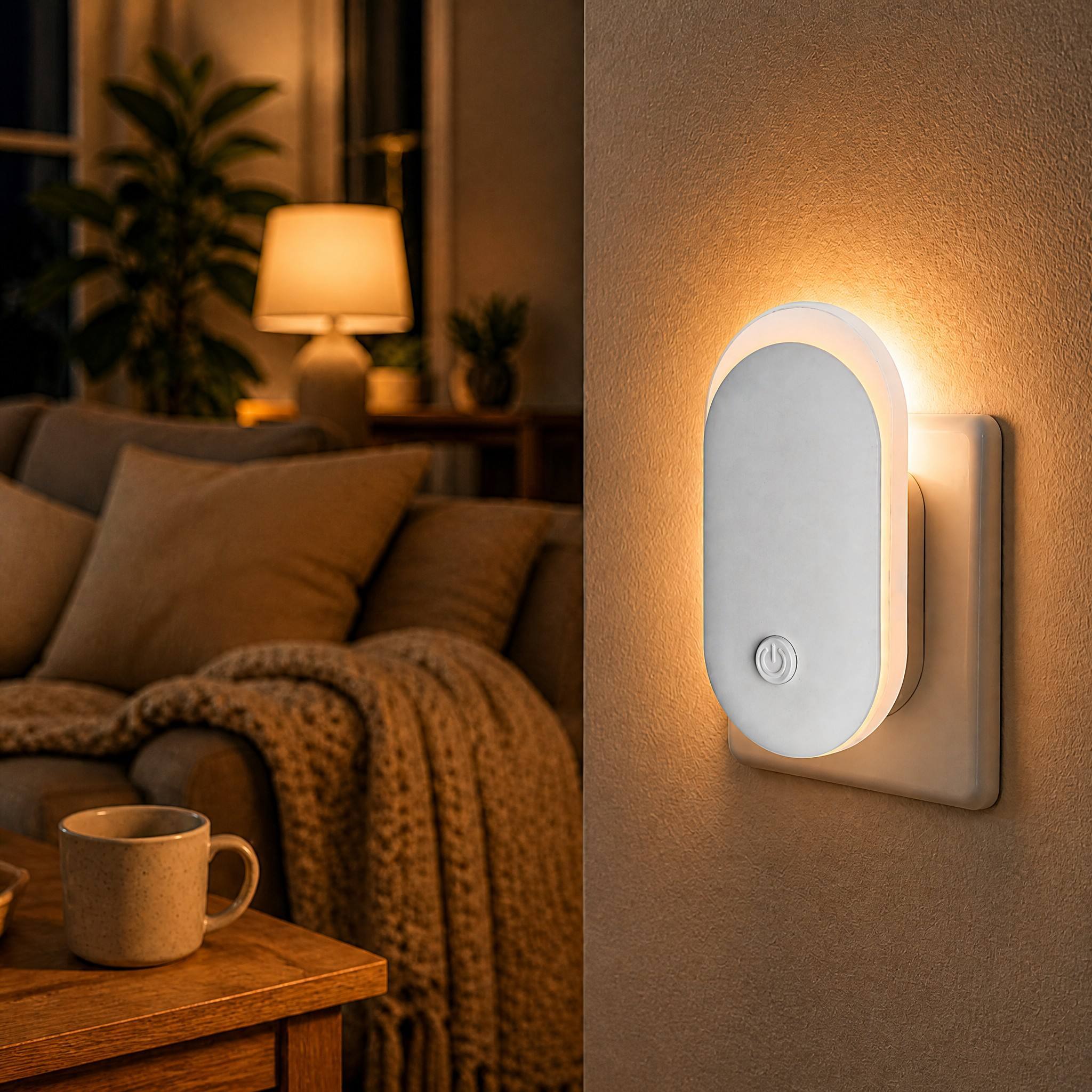
A96TB Dusk-to-Dawn Sensor Night Light with USB-A + Type-C
- Dusk-to-dawn photocell with automatic switching
- USB-A and Type-C charging ports in the same housing
- Plug-in format for bedrooms, hallways, and stairs
- Suits private-label and OEM programmes
Do not stop at the finished product. Ask about the components too. The LED driver, the plug, and the lamp holder each carry their own standards. A certified night light with an uncertified holder is still a risk.
Here is a quick reference for the certifications you should require.
| Market | Required Mark | What It Covers |
|---|---|---|
| United States | UL or ETL | Electrical safety, fire resistance |
| Canada | CSA | Electrical safety, performance |
| European Union | CE | Health, safety, environment |
| Australia / NZ | RCM | Electrical safety, EMC |
| Global (optional) | RoHS | Restriction of hazardous substances |
A certificate you cannot verify is worthless. Ask for the report number and check it with the issuing lab.
Some factories print fake certificates. Others use expired ones. Always verify. Go to the lab's website. Enter the report number. Confirm the product model matches your order. This takes five minutes. It saves you months of headaches.
You should also ask about the factory's own quality system certifications. ISO 9001 shows they follow documented processes. ISO 14001 covers environmental management. These are not product certifications. They still tell you a lot about how the factory operates.
Quality Control and Testing Processes
Certifications prove a product passed once. Quality control proves every unit meets the same standard. You need both.
Ask the night light manufacturer to walk you through their QC process. A good factory has checks at every stage. It starts with incoming materials. They test the LEDs, the plastic housing, and the plug components before production begins. Bad parts get rejected early. This saves time and money.
During production, they run in-line inspections. Workers check solder joints, wire connections, and housing fit. They test the light output and color temperature. They verify the sensor works. Some factories test every unit. Others use batch sampling. Ask which method they use and why.
After assembly, they run final tests. This is where they catch problems the in-line checks missed. They test for electrical safety, brightness, and switch function. They also run a burn-in test. This means they leave the night light on for hours or days. Any unit that fails gets pulled.
Here is what a solid QC process looks like from start to finish.
| Stage | What They Check | Why It Matters |
|---|---|---|
| Incoming materials | LED chips, housing, plugs, wiring | Catches defects before production |
| In-line inspection | Solder joints, fit, light output | Catches issues during assembly |
| Final testing | Safety, brightness, sensor function | Confirms each unit works |
| Burn-in test | Long-duration operation | Finds early failures |
| Packaging check | Labels, inserts, box integrity | Protects brand at retail |
Ask for their defect rate. A good factory keeps it under 1%. Ask how they handle returns. Do they replace faulty units? Do they cover shipping? Get this in writing.
You should also request a pre-shipment inspection. Third-party inspectors like SGS or Bureau Veritas can visit the factory. They pull random samples from your order. They test against your specs. This costs a few hundred dollars. It protects thousands of dollars in product.
Production Capacity and Lead Times
You found a factory with great certifications and solid QC. Now ask a simple question. Can they actually handle your order?
Production capacity tells you how many units they can make per month. It also tells you how fast they can scale. A small factory might make 50,000 units monthly. A large one might make 500,000. Your needs decide which is right.
Do not just ask for a number. Ask for proof. Request their production schedule for the last six months. Ask how many assembly lines they run. Ask how many workers staff each line. A factory that cannot answer these questions is hiding something.
Lead times matter just as much. Standard lead time for plug-in LED night lights runs 25 to 45 days after deposit. Custom OEM orders take longer. Tooling and mold creation adds 15 to 30 days. Chinese New Year adds two to four weeks. Plan around these delays.
Here is a rough guide to lead times by order type.
| Order Type | Typical Lead Time |
|---|---|
| ODM stock item | 20–30 days |
| ODM with custom logo | 30–40 days |
| OEM with existing mold | 35–50 days |
| OEM with new mold | 60–90 days |
Ask about their peak season. Most night light factories get busy from August to October. Retailers stock up for holiday sales. If you place an order in September, expect longer waits. Place your order early. Or negotiate a priority slot.
You should also ask about their minimum order quantity. This ties directly to capacity. A factory with high capacity often wants large orders. A smaller factory may accept lower MOQs. Find the balance between your budget and their minimums.
Finally, ask about their supply chain. Do they source LEDs from reliable brands? Do they have backup suppliers? A factory that depends on one vendor is fragile. A factory with multiple sources is resilient. You want the resilient one.
A good night light manufacturer answers all these questions without hesitation. They welcome your scrutiny. They know their numbers. They treat your questions as a sign of a serious buyer. That is the partner you want.
Customization and Design Support
Customization turns a generic night light into your product. It sets you apart from competitors selling the same thing. A strong manufacturer offers real design support, not just a logo stamp. Here is what to look for.
Custom Shapes, Colors, and Light Modes
You can shape the product around your brand. Many factories offer custom shapes and character designs. You might build a night light shaped like an animal, a star, or a mascot. Custom colors follow Pantone standards, so your shade matches your brand guide exactly. You can also pick custom lighting modes. Warm light suits nurseries. RGB fits kids' rooms. Touch dimming works well for bedside units. Ask your manufacturer which options they handle in-house. Some outsource these steps, which adds time and cost.
Branding and Packaging Options
Your brand needs to show up everywhere. Private label branding and logo printing put your name on the product itself. Customized packaging covers retail and gifting needs. You can design boxes, inserts, and instruction sheets that match your store's look. Ask about print methods too. Pad printing, silk screening, and laser etching each give a different finish. Request samples before you approve a full run.
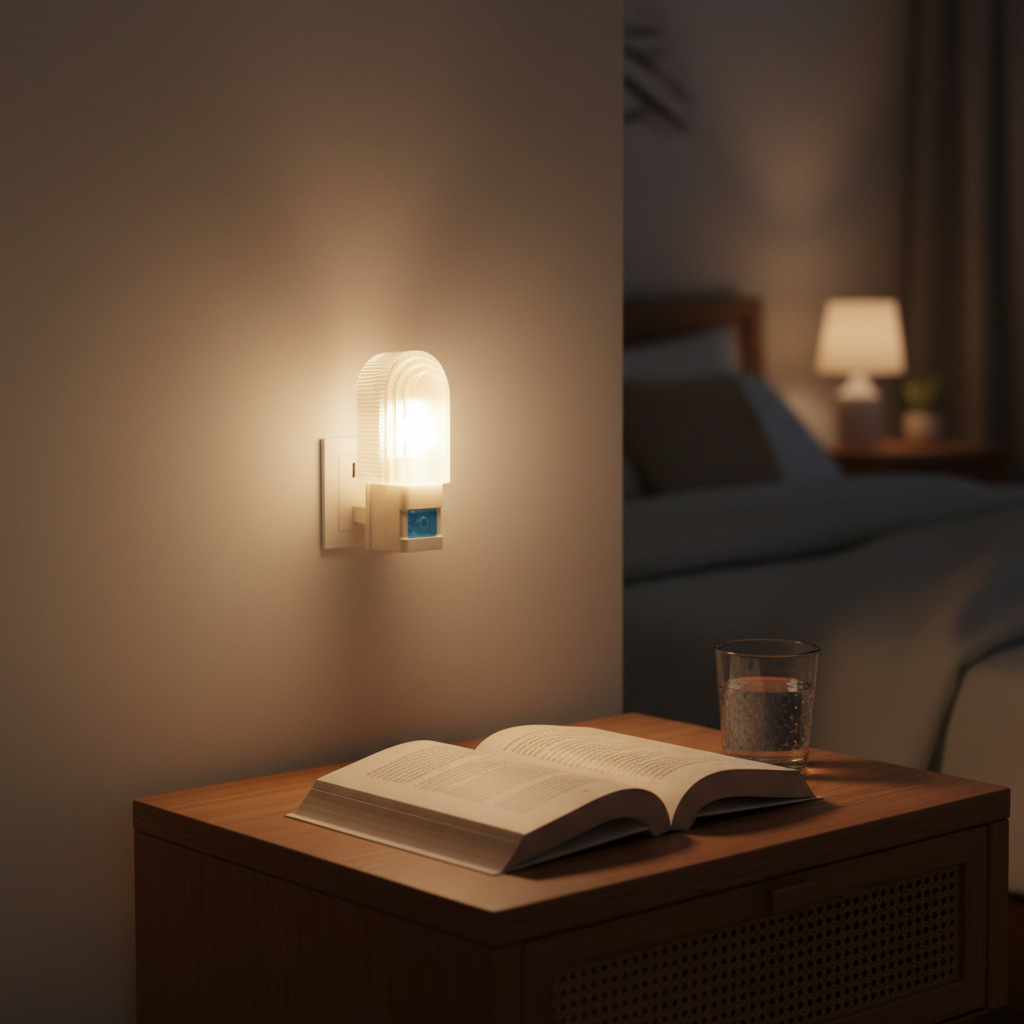
A38 UK Plug-In Sensor Night Light
- UK plug format with built-in sensor
- Automatic on/off at low light
- Compact housing for wall sockets
- Available for OEM and private label
In-House Design and Engineering Help
Good factories employ their own designers and engineers. They help you turn a rough idea into a manufacturable product. They check wall thickness, heat flow, and plug alignment. They also flag problems before tooling starts. That saves you money. Ask whether the design team works on-site. Factories that keep engineering in-house move faster and communicate better. If a supplier outsources everything, expect delays and miscommunication.
Treat design support as a core service, not an add-on. The right partner helps you build something unique.
Decoration-driven SKUs sit in the decorative night light range.
Pricing and Minimum Order Quantities
Price talks. Before you sign anything, you need to know what drives cost, what MOQs look like, and where factories hide extra fees.
What Drives Unit Cost
Several things push your unit price up or down. Material quality tops the list. Better LED chips and flame-retardant housings cost more. Order volume matters too. A 50,000-unit run spreads tooling costs across more pieces. Custom molds add thousands upfront. Certifications, testing, and packaging all add dollars. Even plug type affects price. A US plug costs less than a multi-region set.
Typical MOQs for OEM and ODM
MOQs vary by factory size and product type. Here is a rough guide.
| Order Type | Typical MOQ |
|---|---|
| ODM stock item | 500–1,000 units |
| ODM with custom logo | 1,000–3,000 units |
| OEM with existing mold | 3,000–5,000 units |
| OEM with new mold | 5,000–10,000 units |
Small factories accept lower MOQs. Large ones want bigger commitments. Ask your night light manufacturer for their exact numbers early.
Negotiation Tips and Hidden Costs
You have more leverage than you think. Ask for tiered pricing. A 10,000-unit order should cost less per piece than a 2,000-unit order. Request free samples before you commit. Push for payment terms like 30% deposit and 70% before shipment.
Watch for hidden costs: mold fees, setup charges, packaging plates, and shipping surcharges. Get every fee in writing.
Bundle future orders into one agreement. Promise a second run, and ask for a lower price now. That builds trust and saves money.
For the buying side of the same decision, see wholesale night lights: MOQ and pricing.
Tips for a Successful Partnership
A great partnership does not happen by accident. You build it with clear communication and smart planning. Here is how to get it right from day one.
Communicate Specs Clearly
Your specifications are the foundation of everything. Write them down in detail. Include dimensions, materials, brightness levels, color temperature, and plug type. Do not leave anything open to interpretation. A good night light manufacturer will ask questions. They want to understand your vision. Send reference photos and samples when you can. Put everything in a written document. Both sides sign it. This prevents costly mistakes later. If you change a spec, tell them immediately. Last-minute changes disrupt production and raise costs.
Start with Samples and Pilot Orders
Never commit to a full production run without samples. Ask for pre-production samples first. Test them yourself. Check the brightness, the sensor range, and the build quality. Send samples to your team or trusted customers. Get their feedback. Once you approve the sample, place a small pilot order. A pilot order might be 500 to 1,000 units. This tests the factory's consistency. You learn how they handle packaging, labeling, and shipping. You also catch problems before they scale. A pilot order costs a little more per unit. It saves you from a costly disaster.
Plan for Scaling and Reorders
Think ahead about growth. Your first order might be small. Your next order could be ten times bigger. Ask your manufacturer about their capacity for larger runs. Can they handle a sudden spike in demand? Do they have backup suppliers for key components? Discuss reorder lead times now. A good factory keeps your molds and materials on file. They can restart production faster on the second run. Negotiate reorder pricing upfront. Lock in a price for six or twelve months. This protects you from material cost swings. Plan your inventory needs. Do not wait until you run out of stock to place a reorder.
Common Mistakes to Avoid
Buyers make the same errors again and again. You can dodge them with a little care. Here are the big three.
Skipping Certification Checks
You find a factory with low prices and fast shipping. You place an order. Then your product gets stuck at customs. Or a retailer rejects it. Why? The night light manufacturer never got the right certifications.
Never take a supplier's word for it. Ask for the UL, ETL, or CE report. Check the report number with the issuing lab. Confirm the model on the certificate matches your order. This takes minutes. It saves you from recalls, fines, and lost sales.
A missing certificate can kill your entire product launch.
Ignoring Compatibility Testing
Your night light looks great in photos. Then customers complain. The bulb fits loose. The holder overheats. The plug blocks the second outlet. These problems come from skipped compatibility tests.
Test the holder with your chosen bulb. Test the plug in real wall outlets. Test the sensor in different room conditions. Ask for samples and try them yourself. Do not assume two parts will work together just because they look right.
Choosing on Price Alone
Low prices tempt everyone. But the cheapest quote often hides real costs. Maybe the factory uses weak LED chips. Maybe they skip burn-in testing. Maybe they ship late.
Think about total value instead. A slightly higher price buys better materials, faster lead times, and fewer returns. Ask about defect rates and warranty terms. Compare three or four suppliers on quality, not just cost. Your brand reputation depends on the product your customers actually receive.
Finding the right night light manufacturer takes effort. You need a partner who balances certifications, quality control, and customization. Match your OEM or ODM choice to your brand's needs. Lock in pricing, MOQs, and lead times before signing. Request samples and start with a pilot order first. That step cuts your risk. Build a long-term relationship for consistent quality and better terms.
Ready to Source Quality LED Night Lights?
Contact Guangli today for a free quote and sample!
Get a Quote Request a Sample
Sources and References
- UL Solutions - safety certification and the ETL listing mark ul.com
- Intertek - product testing and certification intertek.com
Updated October 14, 2026
Ready to Source Quality LED Night Lights?
Contact Guangli today for a free quote and sample!
0users like this.