Sourcing Guide
Motion Sensor Night Light Supplier: PIR Models, Specs, and Wholesale
A motion sensor night light solves one problem: light when someone is there, nothing when they are not. This guide is for wholesale buyers comparing PIR plug-in models for corridors, stairs, and bathrooms. Check detection angle, hold time, and light output at the lowest setting first, because those three decide whether the unit feels responsive or annoying. Certification and supplier evidence come next, and the checklist below covers both.
Key Takeaways
- Select PIR plug-in models for reliable motion detection and low energy use.
- Compare detection range, lumen output, and response time to match your market.
- Verify supplier certifications and build quality to avoid returns and safety risks.
- Test samples and balance sensor lifespan with LED rating for consistent product life.
Table of Contents
- Why PIR Technology Matters for Night Lights
- PIR Plug-In Model Specifications Compared
- Common Applications and Market Demand
- Wholesale Sourcing Checklist
- Motion Sensor Night Light Supplier Credentials and Expertise
Why PIR Technology Matters for Night Lights

How PIR Sensors Detect Motion
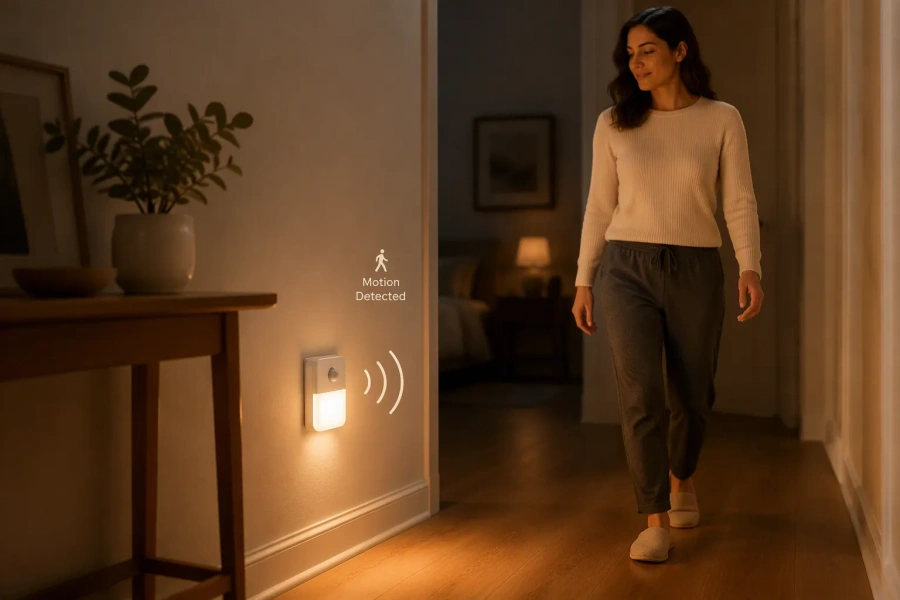
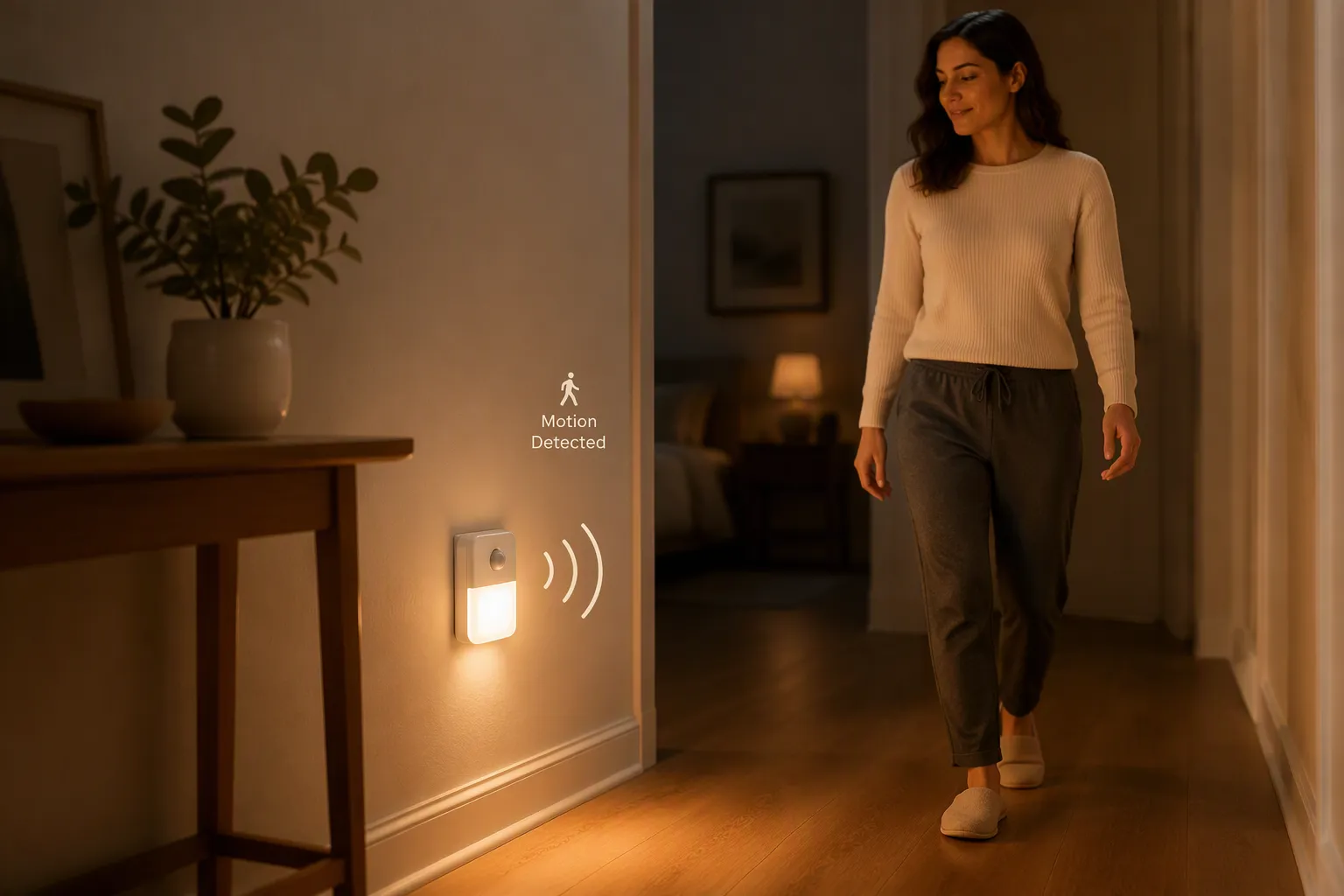
PIR stands for passive infrared. The sensor inside your night light watches for body heat. Every person gives off infrared energy. When you walk into a hallway, your body heat crosses the sensor's field of view. The sensor notices the sudden change in temperature. It sends a signal to the light. The light turns on right away. After you leave, the light waits a short time. Then it turns off by itself. This process needs no buttons and no switches. You just walk, and the light responds.
Key Advantages Over Other Sensor Types
Microwave sensors send out waves and can see through walls. That sounds useful, but it causes false triggers. Sound sensors react to noise, so a passing car or a barking dog can switch them on. PIR sensors only react to heat and movement. They use very little power in standby mode. They also cost less to produce. For a plug-in night light, this combination works best. You get reliable activation, low energy draw, and a straightforward design that certifies without re-testing.
Benefits for Wholesale Buyers and End Users
Your customers want lights that work without thinking. PIR plug-in models deliver that experience. They save electricity because they stay off when nobody is around. End users love the hands-free operation, especially in dark stairwells and bathrooms. For you as a buyer, PIR technology means fewer returns and fewer complaints. The parts are mature and widely available. That keeps your unit cost stable. It also makes after-sales support much easier. A proven sensor platform protects your brand reputation.
Related reading: the PIR night light range.
PIR Plug-In Model Specifications Compared
Two plug-in night lights can look identical on the outside and behave nothing alike in a corridor at 2 a.m. Inside, they can perform very differently. Compare those numbers before the bulk order, not after the first returns arrive.
Detection Range and Angle
Detection range tells you how far away the sensor can spot a person. Most plug-in models pick up motion from 10 to 20 feet. Detection angle covers the width of that zone. A 120-degree sensor watches a wide hallway. A 90-degree sensor works better in a narrow space. A wider angle sounds better, but it can trigger the light from nearby rooms. Match the range and angle to the space your customers will use.
Lumen Output and Color Temperature
Lumen output measures brightness. Plug-in night lights usually range from 10 to 100 lumens. A 10-lumen model suits a bedroom. A 100-lumen model lights up a staircase. Color temperature uses the Kelvin scale. Warm white sits around 2700K to 3000K. Cool white runs from 4000K to 6000K. Warm white feels cozy and works well in homes. Cool white looks crisp and fits commercial spaces. Offer both options to cover more buyers.
Power Consumption and Voltage
Power draw stays low on PIR models. Most units use 0.5 to 2 watts when active. Standby draw often falls below 0.5 watts. That low draw keeps energy bills down. Voltage depends on your market. North America runs on 120V. Europe and many other regions use 220V to 240V. Always confirm the voltage before you order. A mismatched plug or voltage will cause returns and safety problems.
Response Time and Delay Settings
Response time measures how fast the light turns on after the sensor spots you. Good models react in under one second. Cheap models can lag for two or three seconds. That delay feels like a broken product to your customers. Always test this number with a sample before you buy.
Delay settings control how long the light stays on after motion stops. Most plug-in models offer fixed delays between 15 seconds and 3 minutes. Some advanced units let users adjust the delay with a small dial or switch. A short delay saves more energy. A longer delay prevents the light from flicking off while someone still stands nearby. Think about where your customers will install the light. Staircases need a longer delay for safety. Bedrooms work fine with a short one.
Top Plug-In Model Specification Comparison
Here is a quick look at how three common plug-in tiers stack up. Use this table as a starting point for your own supplier quotes.
| Feature | Budget Model | Mid-Range Model | Premium Model |
|---|---|---|---|
| Detection range | 10 ft | 15 ft | 20 ft |
| Detection angle | 90° | 120° | 120° |
| Lumen output | 10–30 lm | 30–60 lm | 60–100 lm |
| Color temperature | 3000K only | 3000K / 6000K | 2700K–6000K |
| Power draw (active) | 1.5W | 1W | 0.5W |
| Response time | 2s | 1s | <0.5s |
| Adjustable delay | No | Yes | Yes |
| Voltage options | 120V | 120V / 220V | 120V / 220V |
Budget models suit high-volume, low-price channels. Mid-range models give you the best balance for most wholesale programs. Premium models win contracts in hotels and commercial projects. Stock a mix of all three. That way, you can serve every buyer who walks through your door.
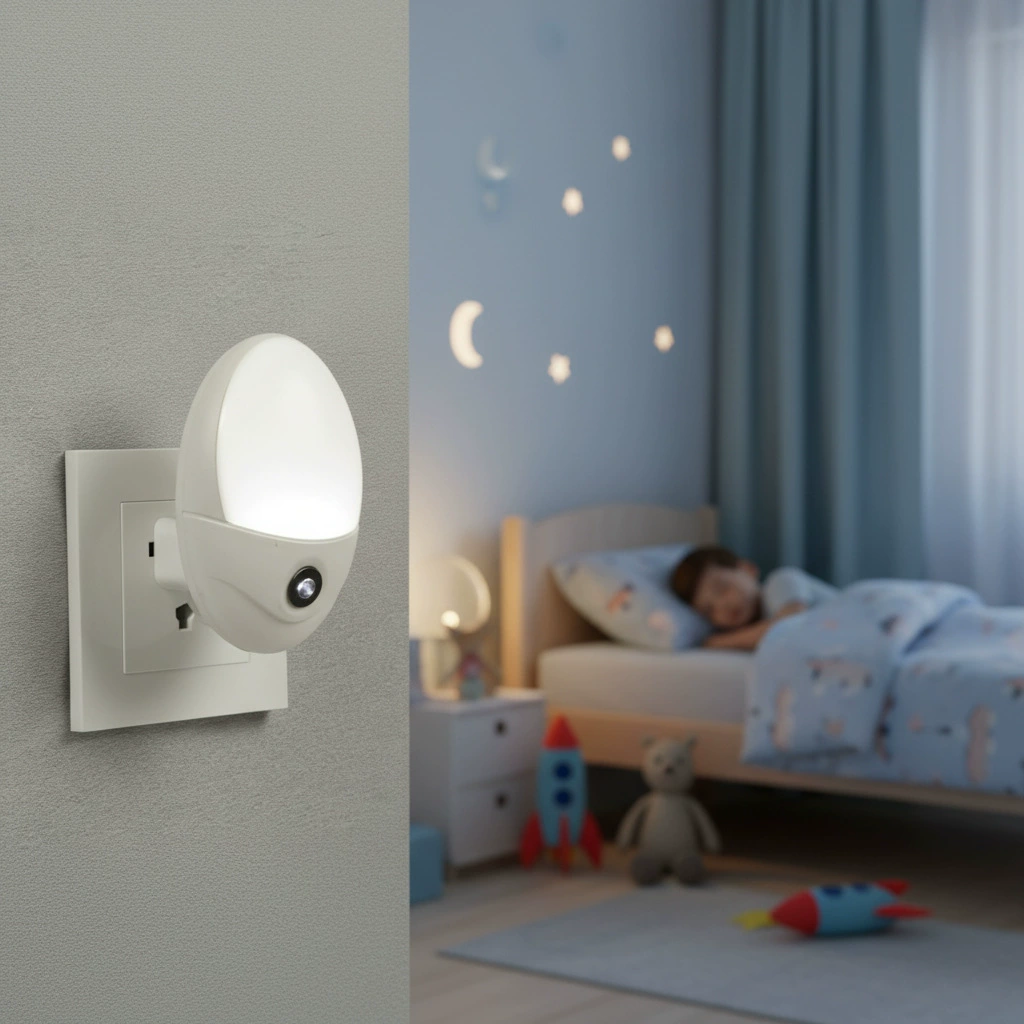
A58 Dusk to Dawn Sensor Plug-in LED Night Light | Guangli
- Dusk-to-dawn sensor plug-in LED night light for bedrooms and hallways
- Light-sensor activation with plug-in US format
Related reading: how dusk-to-dawn sensor night lights work.
Common Applications and Market Demand
PIR plug-in night lights sell well because they solve real problems in many spaces. You can target several markets with the same product line. Each market has its own needs and buying habits.
Residential Hallways and Staircases
Homeowners buy these lights for safety. A dark hallway at 2 a.m. causes stumbles and falls. Your customers want a light that turns on by itself. They also want it to stay off during the day. Staircases need a longer delay setting. A person walking down steps should never stand in the dark. Warm white light works best here. It feels soft and does not wake the whole house. This market buys in small packs, often two or four units. Retail channels and online marketplaces drive most of these sales.
Hotels and Hospitality Settings
Hotels order in bulk. They need hundreds of units for guest rooms, hallways, and bathrooms. Guests expect a light that works without fumbling for a switch. A PIR plug-in model delivers that experience every time. Hotel buyers care about durability and low power draw. They also want a consistent look across all rooms. You can win these contracts with mid-range or premium models. Offer custom branding on the housing. That small touch helps you stand out from other suppliers.
Commercial Corridors and Restrooms
Offices, hospitals, and schools need reliable lighting in shared spaces. A plug-in night light cuts energy costs in corridors that sit empty at night. Restrooms benefit even more. People enter, the light turns on, and it shuts off after they leave. Facility managers love the hands-free operation. They also value the low maintenance. These buyers place large orders and reorder often. Stock enough inventory to meet that steady demand.
Niche Applications and Seasonal Trends
Beyond hallways and hotels, PIR plug-in night lights fill some surprising roles. Think about closets. You open the door, and the light greets you. No cord fumbling, no switch hunting. Under-cabinet spots in kitchens work the same way. So do garages, laundry rooms, and RV interiors. Parents buy them for kids who fear the dark. Caregivers install them for elderly relatives who wake at night. Pet owners even use them near food bowls and litter boxes. Each niche adds volume to your orders. Each one also brings loyal repeat buyers.
Seasonal demand swings hard in this category. You should plan your inventory around these peaks:
- Winter and holiday months: dark afternoons drive home-safety purchases.
- Back-to-school season: dorm and apartment buyers stock up.
- Storm season: blackout-prone regions boost standby lighting sales.
- Q4 retail rush: big-box and online channels order heaviest.
Watch regional patterns too. Northern markets buy more units in fall and winter. Southern markets see steadier year-round demand. Hurricane and wildfire zones spike after major outages. Track these cycles with your supplier. A partner who forecasts with you keeps your shelves full when buyers show up.
One more niche deserves attention. Landlords and property managers buy plug-in models in bulk. They want zero wiring and zero electrician costs. A PIR unit installs in seconds. That speed wins repeat contracts. Add these buyers to your target list. They order often and complain little.
Related reading: the complete PIR motion sensor night light guide.
Wholesale Sourcing Checklist
You have your specs in hand. Now you need to vet the supplier behind them. This checklist walks you through the quality signals that separate a solid manufacturing partner from a risky one. Work through each item before you sign a purchase order.
Sensor Quality and Reliability
The PIR sensor is the heart of your product. A cheap sensor ruins everything else. It triggers when nobody moves. It misses people who walk too fast. It drifts out of calibration after a few months. Your customers blame the light, not the sensor. Then they blame your brand.
Ask your motion sensor night light supplier where the sensor comes from. Reputable manufacturers source PIR modules from established component makers. These modules hold their sensitivity over thousands of cycles. They also resist temperature swings. A sensor that works at 70°F may fail at 40°F. Cheap modules drift. Good ones stay stable.
Request the sensor's rated life cycle count. Quality PIR modules handle 100,000 triggers or more. Ask about false trigger rates too. A good sensor stays quiet when nothing moves. Test this yourself with a sample. Place the unit in a room with no traffic. Watch it for an hour. Any flicker means trouble.
You should also check the sensor's field of view consistency. Some modules have blind spots at the edges. A person can walk right through without triggering the light. Ask the supplier for a detection pattern diagram. Then verify it with your own walk test.
Certifications and Compliance
Certifications protect you from legal trouble. They also protect your customers from harm. Every market has its own rules. You cannot sell a plug-in night light in the US without the right safety marks. The same goes for Europe, the UK, Australia, and Japan.
Here is a quick reference for the major markets. Use it when you review supplier documents.
| Certification | Market / Region | Mandatory for Legal Sale? | Notes |
|---|---|---|---|
| UL (UL 1786) | United States | Effectively mandatory | Required by major retailers like Walmart, Target, and Amazon; covers fire resistance, shock protection, and durability for direct plug-in night lights |
| ETL | United States | Effectively mandatory | Intertek-administered; performs the same safety tests as UL and carries equal marketplace weight; meets OSHA and National Electrical Code requirements |
| CE | European Union | Mandatory | Declaration of conformity covering applicable EU health, safety, and environmental laws; you must maintain a technical file for 10 years |
| RoHS | EU and UK | Mandatory | Restricts ten hazardous substances, including lead, mercury, cadmium, and hexavalent chromium |
| UKCA | Great Britain | Mandatory | Replaces CE for most products after Brexit; technical requirements are nearly identical to CE; Northern Ireland still accepts CE |
| CEC | California, USA | Mandatory for California sales | Covers standby power, active power, and power factor; often becomes a national requirement as other states follow California |
| Energy Star | United States | Voluntary | Government efficiency program; improves retailer placement and pricing but is not a legal requirement |
| WEEE | EU | Mandatory | Registration proving you fund recycling programs for old electronics |
| REACH | EU | Mandatory | Broader chemical safety regulation that works alongside RoHS |
| VDE | Germany | Recognized safety certification | Internationally recognized electrical and electronic safety testing institute |
| CSA | Canada | Required for North American market | Non-profit standards organization; electrical products sold in North America require safety certification |
| PSE | Japan | Mandatory | Required under Japan's Electrical and Material Safety Law (DENAN Law); Category A products need the diamond PSE mark, Category B products need the round PSE mark |
| SAA | Australia | Required with EMC requirements | Australian national standard certification mark; uses IEC system standards; AC240V 50Hz |
| SABS | South Africa | Required | Uses IEC60598 system standards; AC220V–250V 50Hz; South African three-round pin plug |
| BS | United Kingdom | Required | Uses IEC60598 system; AC240V 50Hz; square three-prong plug |
Fake certificates are a real problem in this industry. Some suppliers copy a competitor's certificate number. Others Photoshop a logo onto a PDF. You need to verify every document yourself. Here is how to check a certificate in six steps:
- Obtain the exact certificate number and issuing lab from the supplier.
- Check the number against the lab's official database, such as the UL Verify Database at verify.ul.com.
- Confirm the certificate holder name matches the supplier.
- Confirm the product category matches the night light you plan to sell.
- Check the expiration date to make sure the certificate is still active.
- Treat any mismatch or missing record as a red flag for a fake certificate.
Never accept a certificate image alone. Verify the certificate number in the issuing lab database before committing to a bulk order.
A trustworthy motion sensor night light supplier will hand over certificate numbers without hesitation. They will also welcome your verification. If a supplier stalls or makes excuses, walk away.
Build Materials and Durability
The housing and plug pins decide how long your product lasts. Cheap plastic cracks during shipping. Thin pins bend in the socket. Both problems create returns and safety risks.
Look for flame-retardant ABS housing. This material resists heat and stops the spread of fire. It also holds up well against drops and impacts. Ask the supplier for the plastic's flammability rating. A good rating meets international safety standards for electrical enclosures.
Plug pins matter just as much. Copper and brass pins conduct power well and resist corrosion. Thin plated pins wear down after repeated plugging. They also heat up under load. That heat can melt the housing or damage the wall outlet. Ask about pin thickness and material grade. A quality supplier will share this data without pushback.
Check the internal wiring too. Good units use thick enough gauge wire for the rated current. Poor units cut corners here. The wire overheats. The insulation breaks down over time. This creates a shock hazard.
You should also test the plug's grip in a real outlet. A loose fit causes arcing and flickering. A tight fit stays secure for years. Ask for a sample and try it in several outlets. Test it in older sockets too. Those tend to run loose.
Weather and humidity affect some installations. Bathrooms and laundry rooms see high moisture. A sealed housing keeps moisture away from the electronics. Ask whether the unit has any moisture protection. Even a basic gasket helps in damp spaces.
Finally, check the overall fit and finish. Sharp edges, loose seams, and rattling parts signal poor tooling. A well-built unit feels solid in your hand. That feel translates to fewer returns and better reviews.
LED Specifications and Lifespan
The LED is the part your customers see working every night. Its specs decide how bright the light shines, how long it lasts, and how much energy it uses. Three numbers tell most of the story: L70 rating, total lifespan hours, and how the LED compares with the sensor in the same unit.
L70 is the standard way to measure LED lifespan. It tells you how many hours pass before the LED dims to 70 percent of its original brightness. Most PIR plug-in night lights carry an L70 rating of 54,000 hours or more. Some premium models reach 100,000 hours. To put that into perspective, 54,000 hours equals over six years of continuous use. Since a night light only runs when motion triggers it, the real-world lifespan stretches much longer. Your customers could install that light today and still see full brightness a decade from now.
Here is the catch. The LED will almost certainly outlast the motion sensor module. The sensor contains moving detection elements and exposed circuitry. Those parts wear down over time. A high-quality motion sensor might fail after 100,000 triggers. Meanwhile, the LED still pumps out light. That means the sensor becomes the first failure point in the product, not the LED. You want a supplier who sources proven PIR modules with a long mechanical life. Otherwise, your customers end up with a working LED that never turns on.
You should always ask for the L70 rating in the datasheet. If the supplier cannot provide one, move on. A missing L70 rating means they do not test their LEDs properly.
Compare LED lifespan against sensor lifespan using this rule of thumb. A good LED rated for 54,000 L70 hours should pair with a sensor module rated for at least 50,000 to 100,000 cycles. When the gap gets too wide, you waste money. You pay for LED life your customers never use. Balance the two specs, and you get a product that fails evenly across all components.
Color temperature also affects perceived lifespan. Warm white LEDs tend to hold their color longer than cool white ones. The phosphor coating on warm white chips degrades more slowly. Stick with 2700K to 3000K for residential products. The color stays stable for years.
Customization and Branding Options
Your brand identity matters in a crowded market. A plain white night light with no logo sells for less. A custom-branded unit with your packaging commands a higher price and builds recognition. Most suppliers offer several customization features.
Here are the most requested options and what they require:
| Customization Feature | Typical MOQ Requirement | Key Details |
|---|---|---|
| Logo printing | 1,000 – 2,000 pieces | Silk-screen or laser printing on the housing. Laser lasts longer and resists fading. |
| Custom color | 1,000 – 2,000 pieces | Match your brand palette. Some suppliers offer Pantone matching. |
| Packaging design | 1,000 – 2,000 pieces | Blister packs, color boxes, or retail-ready clamshells. You supply the artwork. |
| Specification adjustments | Varies per change | Change color temperature, detection range, or delay settings. Higher MOQ for non-standard specs. |
When you ask a motion sensor night light supplier about customization, start with the smallest MOQ. Many suppliers set a minimum of 1,000 units for any custom work. That number drops if you pick a standard housing with just a logo added. If you want a completely new housing color plus custom packaging, expect the MOQ to rise to 2,000 pieces or more.
Think about your sales channels before you decide on branding. Retail stores prefer branded packaging with clear product images. Online sellers need packaging that survives shipping without damage. For Amazon or Walmart Marketplace, a plain poly bag with a printed insert often works best and survives the returns cycle. That cuts your per-unit cost.
Custom colors carry a risk. You may order 2,000 units in your signature blue, only to find the color looks different under store lighting. Ask the supplier for a color sample chip or a 3D rendering before you approve production. Better yet, pay for a small pre-production sample. The extra cost beats a container full of ugly blue lights.
MOQ and Pricing Structures
Every factory needs a minimum order quantity. MOQ covers their setup costs, material procurement, and production line time. Understanding how MOQ and pricing work together helps you negotiate better deals.
Standard MOQ for plug-in PIR night lights ranges from 500 to 2,000 units for stock models. That means you order at least 500 pieces of a single model with no customization. Once you add logo printing or custom packaging, the MOQ jumps to 1,000 or 2,000 pieces. Specialty models with unusual voltage or sensor angles may require 3,000 units minimum.
Pricing follows a volume curve. Here is a typical structure you might see from a mid-tier supplier:
- 500 – 1,000 units: $4.50 per unit
- 1,001 – 3,000 units: $3.80 per unit
- 3,001 – 10,000 units: $3.20 per unit
- 10,000+ units: $2.80 per unit
Those numbers swing based on the LED grade, sensor module quality, and housing material. Budget models with cheap LEDs and thin plastic can drop below $2.00 per unit at high volume. Premium models with adjustable delays, wide detection angles, and flame-retardant housings land closer to $5.00.
Ask for a tiered price list in the first inquiry; the second quote usually depends on it. A reliable motion sensor night light supplier will give you prices for at least three volume brackets. If they only quote one price, press for the full range.
Deposit terms follow a standard pattern. Most factories ask for a 30 percent deposit upfront to start production. The remaining 70 percent is due before shipment, or upon receipt of the bill of lading. Some suppliers offer net-30 terms after multiple orders, but that usually requires an established relationship.
Watch out for hidden costs in the pricing. Tooling fees for custom molds can add $2,000 to $5,000 upfront. Testing and certification fees for new product variations also hit your budget. Sample shipping costs add up if you request multiple rounds. Get a full cost breakdown in writing before you agree to any terms.
One final tip. Order a small quantity of a stock model first. Prove the supplier's quality, delivery time, and communication speed. If everything checks out, then negotiate a larger custom order. This approach reduces your risk and builds trust with the supplier.
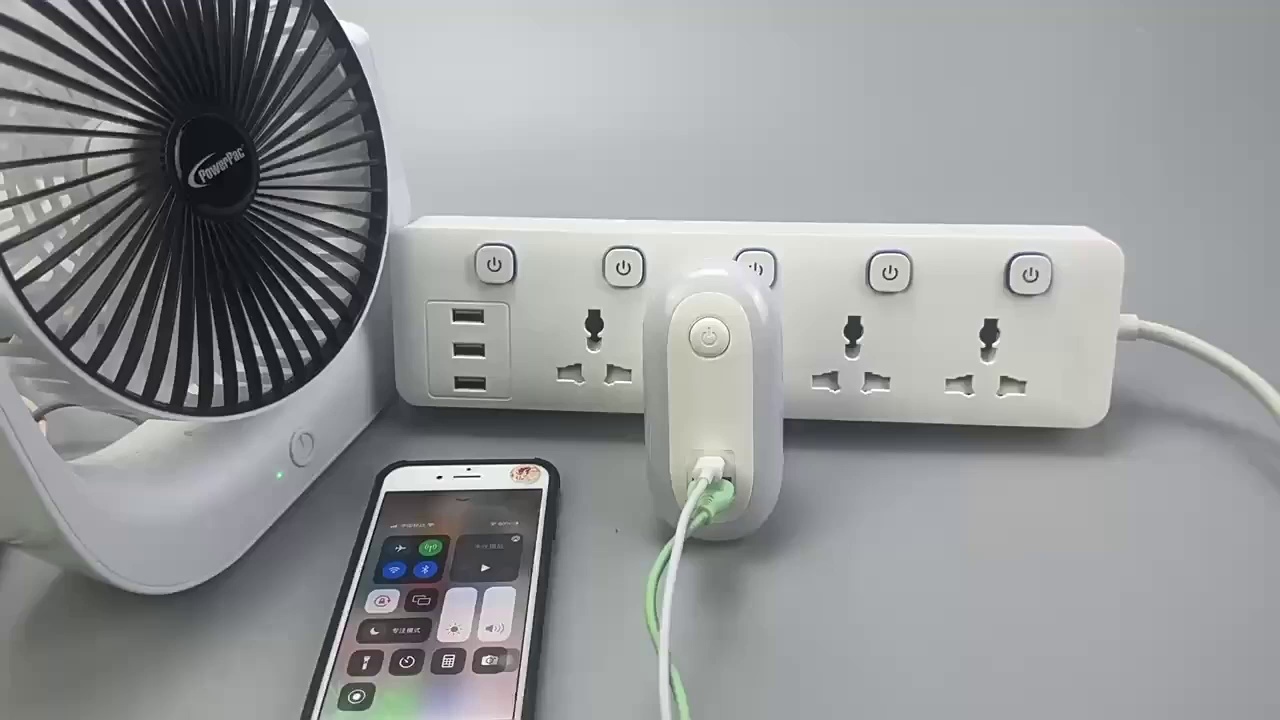
A94D Dusk to Dawn Night Light with USB-A & USB-C | Guangli
- Dusk-to-dawn night light with USB-A and USB-C charging ports
- Sensor plus charging outlet in one wall unit
Motion Sensor Night Light Supplier Credentials and Expertise
You have your specs and your checklist. Now comes the hardest part. You need to separate real factories from trading companies and middlemen. A trading company claims to be a manufacturer. They take your order and farm it out to someone else. You lose control over quality and delivery. A true factory owns its production lines. They know every component in your product. They can fix problems fast. This section shows you how to spot the difference and find a partner you can trust for years.
Manufacturing Experience and Capabilities
Experience matters in this industry. A supplier who has built PIR night lights for a decade knows the common failure points. They have seen sensors drift in cold weather. They have fixed housing cracks from shipping stress. They have tuned delay settings for different markets. A new supplier learns these lessons on your dime. Their mistakes become your returns.
Ask your motion sensor night light supplier how long they have operated. Ten years or more signals stability. Five years is acceptable if they focus on lighting products. Under three years raises questions. You want a partner who will still be around when you reorder next season.
Factory size tells you about capacity. A small workshop with 20 workers can handle 5,000 units per month. A mid-size factory with 100 workers can push 50,000 units. A large operation with 300 or more workers handles container-level orders. Match the factory size to your order volume. A tiny factory cannot meet a sudden spike in demand. A huge factory may ignore your smaller orders.
Look at their production equipment too. Automated SMT lines place LED chips with precision. Manual soldering introduces defects. Ask whether they run automated optical inspection (AOI) on their circuit boards. This machine catches solder defects before assembly. It saves everyone time and money.
In-house tooling capability matters for custom work. A factory with their own injection molding machines controls housing quality. They also control lead times. A factory that outsources molds waits in line behind other customers. That delay hits your delivery schedule.
Check their component supply chain. Good factories maintain relationships with established PIR module makers. They do not switch suppliers to save a few cents. That consistency keeps your product stable across orders. Ask how they handle component shortages. A prepared factory keeps safety stock of critical parts.
Quality Control and Testing Procedures
Quality control separates professional factories from backyard operations. You need to understand their testing process at every stage. Ask for a written QC plan. A vague answer means they have no system.
Reliable lighting manufacturers should comply with ISO 9001, CE, or RoHS standards. These certifications prove they follow documented processes. They also show a commitment to consistent output. Ask for the certificate numbers and verify them yourself.
Incoming material inspection comes first. Good factories test every batch of PIR sensors, LEDs, and housings. They reject bad components before production starts. A factory that skips this step builds defects into every unit.
In-process checks catch problems during assembly. Workers test sensor function after module installation. They check LED brightness and color temperature. They verify plug pin alignment. These quick tests stop defective units from moving down the line.
Final inspection is your last line of defense. Demand 100% inspection before shipment. Every unit should pass a functional test. The light must trigger within the response time spec. The delay must match the setting. The plug must fit a standard outlet. A factory that only spot-checks 10% of units takes a gamble with your money.
Ask about their testing equipment. A dark room with a moving heat source tests PIR sensors properly. A light meter verifies lumen output. A power meter checks standby draw. A factory without this equipment cannot verify their own specs.
Third-party audits and certified labs add confidence in product consistency. Companies like SGS, TUV, and Intertek inspect factories and issue reports. These audits check working conditions, process controls, and product testing. Ask your supplier for their latest audit report. A factory that welcomes audits has nothing to hide.
Delivery performance reveals a lot about a factory. Look for a 96% or higher on-time delivery rate. This number shows they plan production well and respect deadlines. A supplier with a 70% on-time rate will delay your shipments. That kills your retail launch.
You can verify supplier credibility through several signals. Check their verified supplier status on B2B platforms. Review public financial data if available. Look at their reorder rate. A high reorder rate means other buyers trust them. Check their on-time delivery metrics too. These numbers tell the real story behind the sales pitch.
A factory that shares its QC data openly is a factory worth keeping. If they hide their numbers, find another partner.
Client Portfolio and Case Studies
A supplier's client list tells you who trusts them. Big brands do not work with unreliable factories. They audit every partner. They demand consistent quality. They walk away at the first sign of trouble. So a supplier with brand-name clients has passed tough tests.
Ask your supplier about their current clients. They may not share names due to confidentiality agreements. That is normal and professional. But they can describe the client types. Do they serve hotel chains? Retail chains? Online brands? Government contracts? Each segment demands different strengths.
Hotel clients care about durability and appearance. They order thousands of units with consistent color and finish. A supplier who serves hotels knows how to control production quality at scale. Retail clients care about packaging and price points. They need products that survive shipping and look good on a shelf. Online sellers care about review scores. They need low defect rates to avoid returns.
Ask for case studies. A good supplier will share a story about solving a client's problem. Maybe a hotel chain needed a custom delay setting. Maybe a retailer needed special packaging for a holiday promotion. Maybe an online brand needed faster delivery to meet a sales event. These stories show how the supplier works under pressure.
Request references from current clients. Most suppliers will provide two or three contacts. Call them. Ask about quality consistency across orders. Ask about communication speed. Ask about how the supplier handles problems. A reference who praises the supplier's problem-solving is worth more than one who only talks about price.
Look at their export history. A supplier who ships to North America knows UL and ETL requirements. One who ships to Europe understands CE and RoHS rules. One who serves multiple regions has broad experience. They can help you enter new markets.
Check their trade show presence. Factories that exhibit at shows like the Hong Kong International Lighting Fair or the Canton Fair invest in their brand. They meet buyers face to face. They show real products, not just photos. A supplier with a booth at a major show has passed a basic credibility test.
Finally, ask about their product development pipeline. A supplier who only copies old designs will fall behind. One who invests in new sensor modules and LED technology keeps your catalog fresh. Ask what new models they plan to launch this year. Their answer shows whether they lead or follow.
Support and After-Sales Services
Warranty coverage is the first thing you should ask about. A good supplier stands behind their product. Most quality manufacturers offer a one‑year warranty for PIR plug‑in night lights. Some premium suppliers extend that to two or three years. The warranty should cover sensor failure, LED defects, and housing cracks. It should not cover damage from misuse or improper installation. Get the warranty terms in writing. A verbal promise means nothing when a shipment fails.
Response time matters when problems come up. You want a supplier who answers your emails within 24 hours. You want someone who picks up the phone during business hours. A supplier who takes three days to reply will leave you stranded with unhappy customers. Test their response speed during your initial contact. Slow communication now means slow support later.
Technical support goes beyond warranty claims. Your customers will call you with questions. They will ask about installation. They will ask about delay settings. They will ask why the light flickers. You need answers fast. A good supplier provides detailed product manuals. They offer troubleshooting guides. They train your team on common issues. Some suppliers even provide video walkthroughs. That documentation saves you hours of phone time.
Replacement policies protect your inventory investment. Ask about their process for defective units. Do they require you to ship the defective units back first? Do they advance replacements? Do they offer credit instead of a physical swap? A supplier who advances replacements keeps your shelves full. You pay for the return later. That policy prevents stockouts during peak seasons.
Always clarify who pays for return shipping on warranty claims. Some suppliers cover it. Others expect you to pay. That cost adds up fast with heavy shipments. A $5 return fee on a $4 unit eats your margin. Negotiate this term before you sign the contract.
Spare parts availability matters for long-term support. A good supplier stocks replacement PIR modules, LED boards, and plug assemblies. They can ship these parts to you within days. That speed lets you repair units yourself instead of waiting for full replacements. Ask about their spare parts catalog. A supplier without spare parts leaves you with dead inventory.
Documentation quality reveals a lot about the supplier's professionalism. Request a sample manual and packaging insert. Check for clear language and diagrams. A confusing manual creates customer frustration. It also generates more support calls. Good documentation includes these key elements:
- Installation steps with diagrams
- Safety warnings and voltage requirements
- Troubleshooting advice for common problems
- Contact information for technical support
After-sales communication should continue after the shipment arrives. A proactive supplier checks in. They ask about product performance. They ask about customer feedback. They use that information to improve future batches. A supplier who disappears after payment treats you like a transaction, not a partner.
Consider the time zone difference. A supplier in China who works during your night hours can still be useful. They just need a clear communication plan. Set up a shared document for support requests. Use a ticketing system if your volume is high. Agree on a maximum response window that works for both sides.
A reliable motion sensor night light supplier with strong after-sales support protects your reputation. When a bad unit slips through, you want a fast replacement. When a customer has a question, you want quick answers. When a new regulation appears, you want updated certification documents. Support is not an extra. It is part of the product you buy.
Picking a dependable motion sensor night light supplier comes down to balance. You weigh technical specs against certifications and commercial terms. A thorough sourcing checklist cuts your risk and protects your long-term profits.
Always ask for product samples and detailed quotes first. Test the sensor performance and build quality yourself. Check how fast the supplier responds. Do all this before you commit to a large order.
Related reading: plug-in night light OEM options and certifications.
Sources and References
Updated October 21, 2026
Ready to Source Quality LED Night Lights?
Contact Guangli today for a free quote and sample!
0users like this.