Sourcing Guide
Low MOQ Night Light OEM Supplier: Trial Orders, Custom Branding & Cost Guide
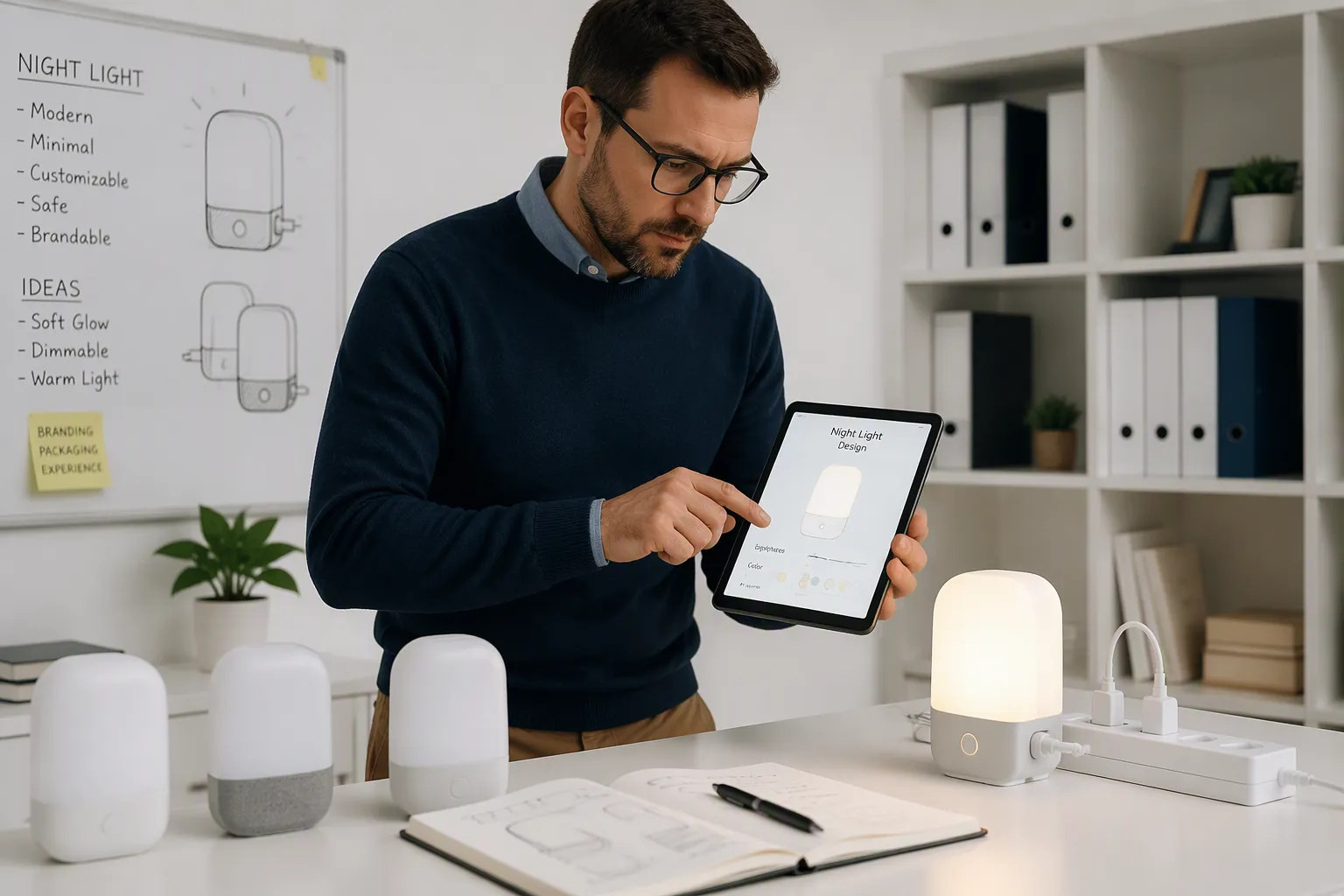
A low moq night light oem supplier usually accepts trial orders starting at 500 units, and you can add custom color and logo at that volume.
| Manufacturing Stage | Duration |
|---|---|
| Sample approval and modifications | 2–4 weeks |
| Mass production (after deposit and sample approval) | 20–30 days |
So expect 15–30 days for a 500-piece trial run after sample approval.
| Cost component | Figure for a 500-piece run |
|---|---|
| All-in total (product + logo printing + custom packaging + shipping) | ~$2,000–$4,000 |
| Tooling / mold cost (standard housing modification) | $0 (no mold cost); modification budget $0–$500 |
| Certification | $0 extra — standard models already carry ETL/cUL certification |
That all-in range covers tooling, certification, and shipping. Small trial orders usually carry a 15–30% per-unit premium over bulk pricing, so plan for that.
Key Takeaways
- Start with a 500-unit trial order to test the market without large inventory.
- Expect a 15–30 day lead time and $2,000–$4,000 all-in cost for 500 units.
- Customize stock models with color and logo to avoid mold costs.
- Choose a supplier with transparent MOQ, sample policies, and fast lead times.
- Validate market fit with sell-through rate, reviews, margin, and return rate before scaling.
Small-Batch vs. Bulk Sourcing
How Order Size Changes Unit Price
Order size drives your unit price more than almost anything else. Factories spread setup costs across every piece they make. A 500-piece run carries those costs on fewer units, so each night light costs more. Expect a 15–30% per-unit premium on a trial order compared to a 5,000-piece run. That premium buys you flexibility. You test the market without locking up capital in inventory you might not sell.
MOQ, Lead Time, and Customization Compared
Small-batch and bulk orders differ on three fronts: minimums, speed, and what you can change. Here is how they stack up.
| Attribute | Small-Batch | Bulk |
|---|---|---|
| MOQ | 500 pieces for custom color + logo on a standard model; 1,000 pieces for a custom lens (new shape) due to lens mold cost | 3,000–5,000+ pieces |
| Lead time | 15–30 days (factories quoting 60 days are not set up for test runs) | 30–45 days |
| Customization | Housing color, silkscreen or UV printed logo, retail packaging, custom lens, bundling, function changes | Same options, plus deeper price breaks |
Notice the customization menu stays wide at 500 units. You can split a 1,000+ piece order into 2–3 colors and test which one sells.
Where Small-Batch Fits Best
Small-batch sourcing shines in three situations. You are launching a new brand and need proof of concept. You want to test a color or lens style before committing to volume. Or you sell through a channel with unpredictable demand, like a pop-up shop or a Kickstarter campaign. Bulk pricing rewards confidence. Small-batch pricing buys you the information to earn that confidence first.
What to Look for in a Low MOQ Night Light OEM Supplier
Picking the right partner makes or breaks your first production run. A good low moq night light oem supplier removes friction at every step. A bad one buries you in hidden fees and vague promises. Here is what separates the two.
Existing Platform Models Ready to Customize
The best suppliers already have proven night light models sitting on their platform. These are designs that sell well on Amazon, Etsy, and gift channels. You skip the design phase entirely. You pick a model, choose your color and logo, and move straight to samples.
Ask your supplier for their platform catalog. Look for models with real sales history and existing certifications. A supplier with a deep catalog signals experience. They have already solved the engineering problems you would otherwise pay to fix. This is the single biggest cost saver for a trial run.
Transparent MOQ and Sample Policies
A trustworthy supplier states the MOQ upfront. No "contact us for details" games. You want clear numbers: 500 units for custom color and logo, 1,000 units for a custom lens. You also want a written sample policy.
Here is what a fair sample policy looks like:
- Sample fee is quoted clearly, typically $30–$100 per unit
- The fee is refundable or credited against your production order
- Sample lead time is stated in days, not "soon"
- You get tracking information the day the sample ships
Push back on any supplier who will not put these terms in writing. Vague sample terms often hide slow response times and quality surprises later.
Fast Lead Times and Startup-Friendly Terms
Speed matters when you are testing a market. A supplier built for trial orders quotes 15–30 days for production. A supplier quoting 60 days is set up for bulk, not for you. Ask for their standard lead time in writing before you pay anything.
Startup-friendly terms go beyond speed. Look for low deposit percentages, flexible payment methods, and clear communication channels. Some suppliers offer net terms after your first order. Others assign you a dedicated account manager. These small signals tell you whether the supplier sees you as a long-term partner or a one-time transaction.
A reliable low moq night light oem supplier will also walk you through certification status without pressure. Standard models often carry ETL or cUL certification already. That saves you thousands in testing fees on your first run.
Custom Branding Without Mold Costs

You can build a real brand without paying for a full housing mold. The trick is to customize what already exists. Here is how that works.
Custom Color and Logo on Stock Housings
Start with a stock housing. Pick your color from the factory's resin options. Then add your logo with silkscreen or UV printing. Both methods cost little at 500 units. You get a product that looks like yours, and you skip the $3,000–$8,000 housing mold entirely. Ask your supplier for their color chip list. Most factories stock a wide range, so you rarely need a custom resin batch.
Custom Lens and Light Effect Options
The lens is where your night light gets its personality. A small lens mold costs far less than a full housing mold, so you can change the light effect at trial volume. Here are your main options.
| Custom Lens / Light Effect Option | Description | Cost Impact |
|---|---|---|
| Custom-shaped lens | Cloud, moon, star, or animal-shaped lens | Small lens mold $500–$1,500 (vs. $3,000–$8,000 for full housing mold) |
| Patterned diffusion | Frosted, ribbed, or dotted patterns for varied light effects | Low-cost small lens mold ($500–$1,500) |
| Colored lenses | Warm amber, cool blue, pink for mood lighting | Low-cost small lens mold ($500–$1,500) |
| Translucent/frosted plastic finish | Alters light diffusion effect via material finish | Almost no mold cost; pay only for color resin, MOQ 1,000–2,000 pcs |
The frosted finish is your cheapest path. You pay for color resin only, and the MOQ sits at 1,000–2,000 pieces.
Bundling and Functional Modifications
You can also bundle items or tweak functions on a stock model. Add a USB cable, a gift box, or a second unit in a set. Swap the switch type or add a dimmer. These changes use existing tooling, so they carry no mold cost. Keep the changes simple at 500 units. Each modification adds a small setup fee, and those fees add up fast.
>>
Validating Market Fit Before Scaling
Sell-Through Rate and Review Signals
Your first 500 units are a test, so treat the data like one. A healthy sell-through rate sits around 60–70% within 90 days. Watch your reviews for signals that people actually want this product:
- Customers get upset when something goes wrong with the unit
- Users ask for new features instead of asking for explanations
- Buyers share unprompted stories about how they use it
- Retention stays flat and repeat purchases show up
- Organic growth happens without heavy ad spend
The LatchLight wearable night light is a good example. Its designers solved one focused problem for parents during nighttime feedings. That focus turned buyers into advocates and drove word-of-mouth growth. You want the same effect: reviews that mention a friend's recommendation, or repeat praise for one specific feature.
Margin and Return Rate Benchmarks
Aim for a gross margin of at least 50% after landed cost. Night lights are small and light, so shipping stays cheap and that target is realistic. Keep your return rate under 5%. Anything higher usually points to a quality issue or a listing that overpromises. Check your numbers at 30 and 60 days. If margin holds and returns stay low, you have a winner on your hands.
Deciding When to Reorder
Reorder when three things line up. You have sold through 70% of your trial run. Your return rate sits below 5%. And your reviews average four stars or better. At that point, place a bulk order of 3,000–5,000 units and capture the 15–30% per-unit savings. Wait too long and you risk a stockout during your growth window.
Cost Breakdown for a 500-Piece Run
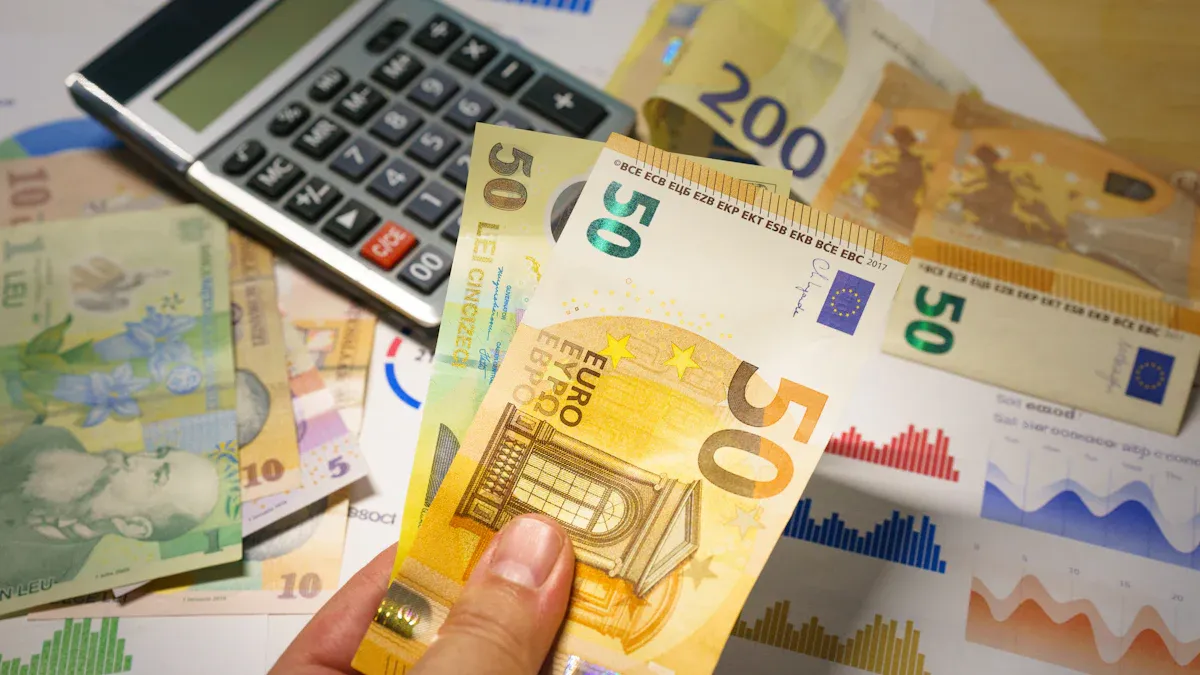
A 500-piece run is small enough to stay affordable and big enough to prove your concept. The trick is knowing where every dollar goes. Let's walk through the numbers piece by piece, so nothing surprises you at invoice time.
Unit Price, Tooling, and Certification Fees
Your unit price is the biggest line item, and it depends on the model and the customization you choose. A standard night light with custom color and a printed logo typically lands in the $2.50–$5.00 per unit range at 500 pieces. Simpler plug-in models sit at the low end. Rechargeable or sensor-equipped models push toward the top.
Tooling is the next line. Here is the good news: you pay nothing for a stock housing. You only pay when you change a mold. A custom lens mold runs $500–$1,500. A full housing mold runs $3,000–$8,000, and you should avoid that at trial volume. Ask your low moq night light oem supplier which changes need new tooling and which ones don't. A clear answer here saves you thousands.
Certification fees depend on what the model already carries. Standard platform models often ship with ETL or cUL certification in place. That means $0 extra for you. If you modify the electronics, you may need to re-certify, and that can add $500–$2,000. Confirm the certification status in writing before you approve the sample.
| Cost Line | Typical Range at 500 Pieces | Notes |
|---|---|---|
| Unit price (stock model, custom color + logo) | $2.50–$5.00 per unit | Higher for rechargeable or sensor models |
| Housing mold | $0 | Stock housing, no mold needed |
| Custom lens mold | $500–$1,500 | Only if you change the lens shape |
| Full housing mold | $3,000–$8,000 | Avoid at trial volume |
| Certification (standard model) | $0 | ETL/cUL already in place |
| Re-certification after electronics change | $500–$2,000 | Only if you alter the electronics |
Shipping, Duties, and Hidden Costs
Shipping is where budgets quietly bleed. A 500-piece night light order is light and compact, so sea freight is cheap per unit. Air freight costs more but cuts weeks off your timeline. Pick based on your launch date, not just the freight quote.
Duties depend on your destination country and the product's declared value. Build them into your landed cost from day one. Then watch for the fees that catch first-time buyers off guard:
- Mold fees
- Setup charges
- Packaging plates
- Shipping surcharges
Packaging plates deserve a special mention. A custom printed box needs a printing plate, and that plate is a one-time cost you pay even at 500 units. Setup charges cover machine calibration for your logo print or your color batch. Shipping surcharges cover fuel, peak season, and remote delivery. Get every fee in writing before you pay a deposit. A supplier who lists them upfront is a supplier you can trust.
Sample Budget Model
Build your budget around a realistic sample scenario. Say you pick a stock model, add a custom color and a printed logo, and keep the standard lens. Here is what a 500-piece run looks like on paper.
| Budget Line | Low Estimate | High Estimate |
|---|---|---|
| Product (500 units × $2.50–$5.00) | $1,250 | $2,500 |
| Logo printing setup | $50 | $150 |
| Custom packaging (printed box + plate) | $150 | $400 |
| Certification | $0 | $0 |
| Sea freight | $200 | $500 |
| Duties and surcharges | $100 | $300 |
| Sample fee (credited to order) | $0 | $0 |
| Total | ~$1,750 | ~$3,850 |
The sample fee usually comes back as a credit on your production order, so it nets to zero. That keeps your all-in figure inside the $2,000–$4,000 range. Add a custom lens and you push toward the top of the range. Skip the printed box and you drop toward the bottom. Every choice moves the number, so model two or three scenarios before you commit.
Low MOQ Night Light OEM Supplier Comparison
MOQ, Lead Time, and Customization Matrix
Supplier types differ on three numbers that matter most: minimum order, lead time, and what you can change. Here is how the main options compare.
| Supplier Type | Typical MOQ | Lead Time | Customization Depth |
|---|---|---|---|
| Trading company | 500–1,000 pcs | 25–40 days | Color, logo, packaging; limited factory access |
| Low MOQ OEM factory | 500 pcs (1,000 for custom lens) | 15–30 days | Color, logo, lens, bundling, function tweaks |
| Large-volume factory | 3,000–5,000+ pcs | 30–45 days | Full range, plus deep price breaks |
| Domestic/regional supplier | 100–500 pcs | 10–20 days | Color and logo; higher unit cost |
A low moq night light oem supplier sits in the sweet spot for trial runs. You get factory-direct pricing and real customization at 500 units. Trading companies fit best when you want one contact for many product types. Large factories reward you once volume is proven. Regional suppliers work when speed beats cost.
Total Cost of Ownership by Supplier Type
Unit price tells only part of the story. Add tooling, samples, freight, and rework risk, and the ranking can shift. A trading company may quote a lower unit price, yet charge markup on molds and slow down changes. A large factory offers the best per-unit rate at volume, but a 500-piece order there carries setup fees you cannot spread. Domestic suppliers cost more per unit but cut freight and tariff exposure.
Run the math on landed cost per sellable unit, not the quote sheet. Weigh response speed too. A fast answer on a lens change saves you weeks. For most first runs, the factory-direct route keeps total cost lowest at 500 pieces.
Step-by-Step Ordering Guide
Requesting Samples and Verifying Quality
Start by asking two or three suppliers for samples of the same model. Pay the sample fee, then wait for tracking numbers. A good supplier ships within a few days.
When the samples arrive, test them like a customer would. Plug each one in and check the light output. Feel the housing for sharp edges or loose parts. Run the switch a few dozen times. Then compare the logo print and the color against your spec sheet.
Write down what you find for each supplier. Note the response time, the packaging quality, and any defects. This side-by-side record makes your final choice much easier.
Placing and Tracking the Trial Order
Pick your supplier and confirm the details in writing. Your order confirmation should list the unit price, the MOQ, the lead time, and every fee. Check the certification status one more time before you pay.
Then follow these steps:
- Pay the deposit and get a receipt.
- Approve the pre-production sample before mass production starts.
- Ask for weekly progress photos or a video.
- Book freight once production finishes.
- Inspect the goods before they leave the factory.
Track each stage against the 15–30 day timeline. If a supplier goes quiet for more than a week, send a follow-up. Clear communication now prevents surprises at delivery. Once the units arrive, count them and spot-check a few boxes before you list them for sale.
A 500-unit trial order, a 15–30 day lead time, and $2,000–$4,000 all-in costs give you a realistic baseline for your first run with a low moq night light oem supplier. Three levers control that number: how much you customize, whether you need new certification, and how you ship. Before you scale, prove the market with sell-through, reviews, margin, and return rate. Then take your first step: request samples from two or three suppliers and compare total cost of ownership, not just unit price.
Ready to Source Quality LED Night Lights?
Contact Guangli today for a free quote and sample!
0users like this.