Sourcing Guide
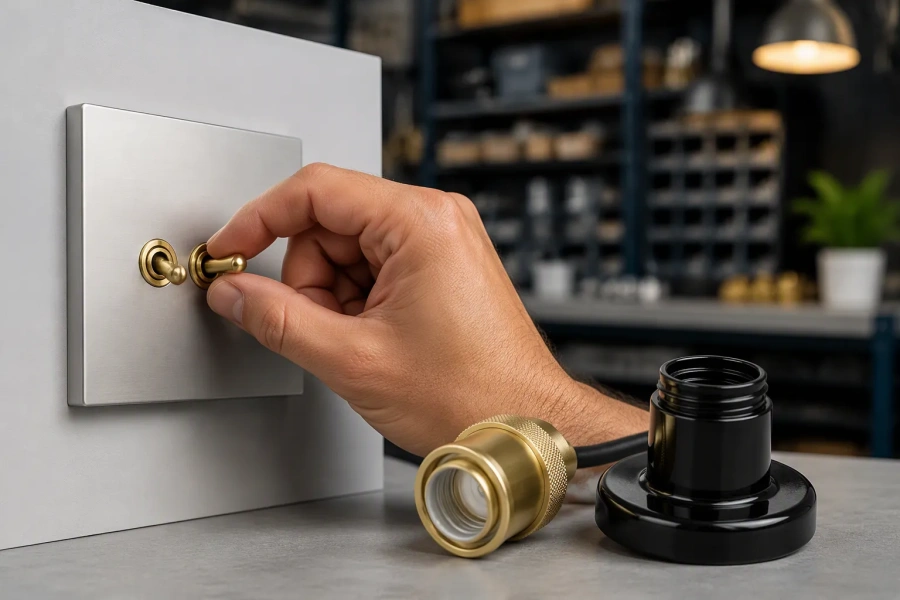
LED Lighting Accessories Manufacturer: Lamp Holders, Sockets, Switches & OEM Supply
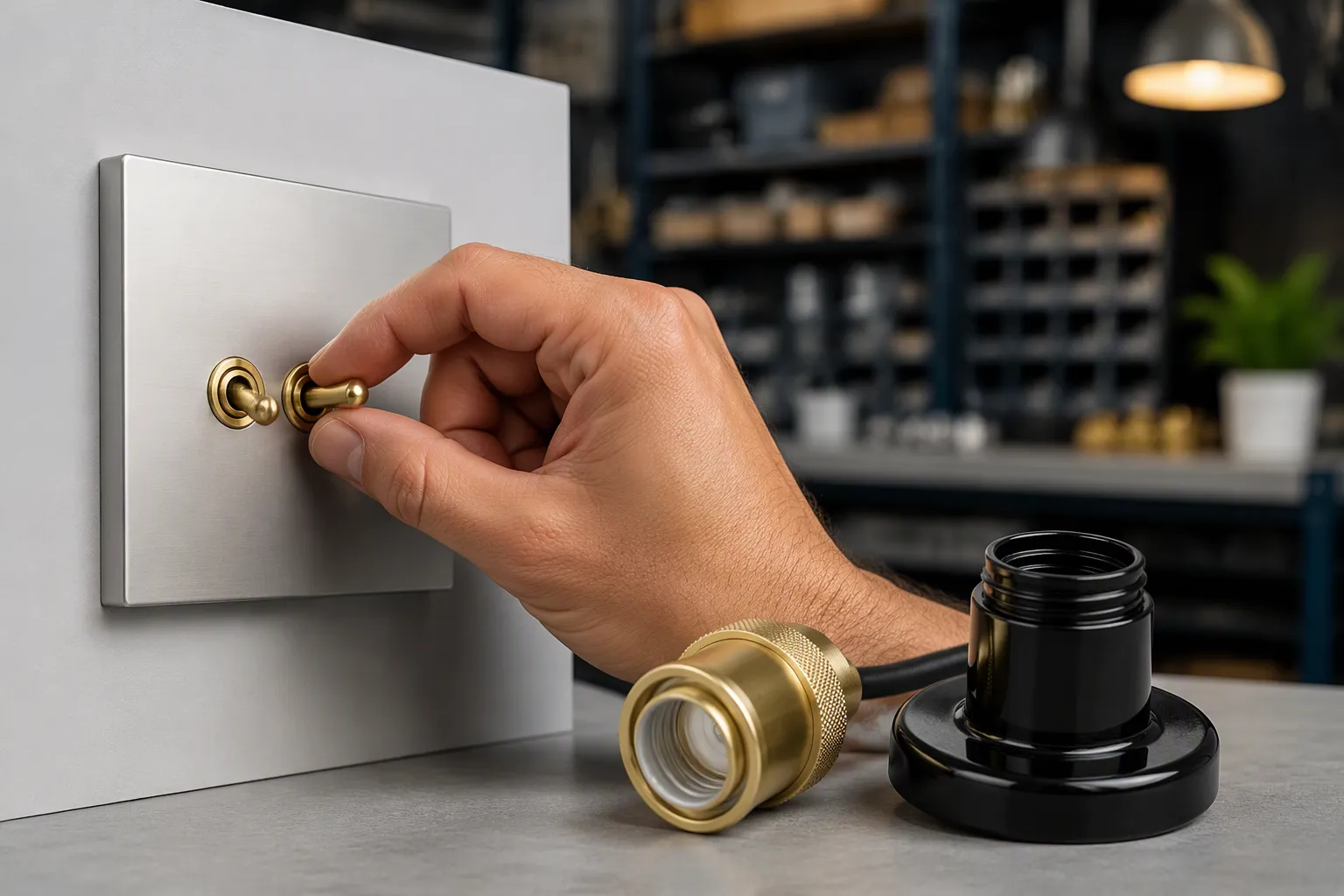
An led lighting accessories manufacturer supplies the parts that make LED fixtures work, stay safe, and install easily. These specialized suppliers produce lamp holders, sockets, switches, and related components. They also offer OEM supply for brands and integrators. Why do these accessories matter so much? They determine compatibility, safety, and installation efficiency in every LED system. You can source standard catalog parts or fully customized OEM components from a single manufacturer. That flexibility saves you time and keeps your supply chain simple.
Key Takeaways
- LED lighting accessories include lamp holders, sockets, and switches. These parts connect, control, and protect LED fixtures.
- Choose accessories that match your bulb base and voltage. Correct matching prevents flickering, early failure, and safety risks.
- Look for safety certifications like UL or ETL. These marks prove the product passed important safety tests.
- OEM supply lets you customize parts with your brand. You can get custom packaging, labeling, and even unique designs.
- Pick a manufacturer who communicates well and offers support. Good support solves problems quickly and keeps your project on track.
What an LED Lighting Accessories Manufacturer Supplies
When you work with an led lighting accessories manufacturer, you get access to a full ecosystem of parts. These parts connect, control, and protect LED fixtures. Let's break down what you can actually buy, how standard and custom options differ, and who uses these components.
Core Product Categories
A typical manufacturer carries several product families under one roof. Lamp holders grip the bulb and deliver power to it. Sockets provide the electrical interface between the lamp base and the fixture wiring. Switches give you on/off control and sometimes dimming or multi-way function. Beyond these three, you'll often find terminal blocks, connectors, mounting brackets, and wiring harnesses.
Lamp holders alone come in many material builds. The choice of material affects heat resistance, strength, and cost. Here's a quick reference:
| Material | Key Properties / Typical Use |
|---|---|
| Brass | Strength and longevity; good durability |
| Aluminum | Strength and longevity; lightweight metal option |
| Steel (incl. reinforced steel) | Superior heat resistance and mechanical strength; suited to high-wattage bulbs and industrial settings |
| Glass | Adds an artistic/aesthetic touch |
| Ceramic | Excellent insulating properties; high thermal endurance; popular in vintage and artisanal designs |
| High-grade plastics | Cost-effective and lightweight; must meet fire-retardant standards |
| Reinforced plastics | Enhance load capacity while keeping weight manageable; mimic traditional materials |
You'll see these materials across lamp holders, socket housings, and switch bodies. Each one solves a different problem. Ceramic handles high heat. Plastics keep weight and cost down. Steel stands up to industrial abuse.
Standard vs. Custom Components
Standard catalog parts give you speed and predictability. You pick a part number, check the datasheet, and place an order. These parts fit common lamp bases, mounting patterns, and voltage ratings. For many projects, a standard part works fine and saves you engineering time.
Custom components make sense when your fixture has special requirements. Maybe you need a non-standard mounting hole. Maybe your brand needs a specific color or logo on the switch. Maybe your production line needs a pre-wired harness. A good manufacturer will tool up for these requests and run them alongside standard production.
The trade-off is simple. Standard parts cost less and ship faster. Custom parts cost more upfront and take longer to develop. But custom parts can reduce your assembly time and strengthen your brand. Many buyers start with standard samples, then move to custom production once the design is locked.
Industries and Applications Served
LED lighting accessories show up in far more places than most people realize. You'll find them in commercial LED lighting, retail displays, hospitality venues, warehousing, education, institutional facilities, professional office lighting, outdoor and landscape systems, healthcare and medical equipment, residential fixtures, and horticulture grow lights.
The socket standard you choose often depends on your region and your market. Edison screw sockets are the most common mains-electricity socket type in continental Europe and North America. Bayonet mounts are predominant in Commonwealth countries and in the automotive industry. That regional split means automotive manufacturing is among the industries using LED lamp holders and sockets. If you sell into multiple regions, you'll likely need both socket styles in your catalog.
Each industry brings its own demands. Warehousing needs rugged, high-bay fixtures. Healthcare needs cleanable, reliable parts. Horticulture needs heat-tolerant holders that run long hours. A manufacturer with broad experience can match the right accessory to your application.
Lamp Holders: Types and Features
Lamp holders hold the bulb and feed it power. Pick the wrong one, and your fixture fails early or fails inspection. Here's what you need to know before you buy.
Common Lamp Holder Types
You'll meet a few main styles on the market. Screw-type holders accept Edison bases and dominate North American and European fixtures. Bayonet holders use a push-and-twist mount and show up widely in Commonwealth markets. Pin-based holders serve linear tubes and specialty bulbs. Beyond the base style, holders differ by mounting method: some snap into a panel, some mount to a bracket, and some come pre-wired for fast assembly. Match the holder type to your bulb base first. Everything else follows from that choice.
Materials and Construction
Construction decides how much heat and abuse a holder survives. Ceramic bodies handle high temperatures and suit high-wattage and vintage-style fixtures. High-grade plastics keep cost and weight down, but they must meet fire-retardant standards. Brass and aluminum contacts resist corrosion and hold tension over thousands of insertions. Steel-reinforced builds add mechanical strength for industrial settings. Check the contact material as closely as the body material. Cheap contacts loosen over time and cause arcing.
Key Selection Criteria
Run through this checklist before you commit to a part:
- Match voltage and current ratings to your power supply.
- Verify polarity on marked or color-coded terminals. Reversed polarity can burn out the LED bulb.
- Choose an installation spot that leaves the heat sink unobstructed, especially for high-power bulbs.
- Follow the manufacturer's wiring instructions for your specific model.
- Use correctly sized wires and secure every connection with connectors or insulation tape.
- Inspect joints and connections periodically after installation.
Compatibility deserves equal attention. A lamp may fit the socket physically yet clash with the ballast, dimmer, or thermal conditions. Drivers, sensors, and switches must also work together. Mismatches cause flickering, limited dimming, or early failure.
Sockets: Compatibility and Safety
A socket is the electrical handshake between your bulb and your fixture. Get it right, and your LED system runs cool and steady. Get it wrong, and you're looking at flickering, loose connections, or a failed inspection.
Socket Types and Base Compatibility
Your bulb's base decides your socket. Here's how the common pairings line up:
| Socket type | Base size | Compatible bulbs | Typical applications |
|---|---|---|---|
| E26 (Medium Edison screw) | 26 mm (~1 in), North American standard | A19, G25, G30, ST64, tubular, Edison vintage | Pendants, chandeliers, sconces, table lamps |
| E12 (Candelabra screw) | 12 mm, smaller than E26 | Candelabra & flame-tip bulbs, lower wattages | Decorative chandeliers, nightlights, vanity strips |
| GU10 (Twist-lock) | 10 mm pins, push & twist | PAR16/MR16 directional bulbs only; not compatible with Edison-base bulbs | Recessed cans, track lighting, retail display |
| Integrated LED | N/A, hardwired, no socket | No external bulb; LED array is permanent | Commercial downlights, under-cabinet strips, some modern pendants |
Bulb shapes follow the same logic. Type A bulbs (A15, A19, A21, A25) usually take E26 or E27 medium screw bases, or the E12 candelabra base. Type B and C bulbs (B10, C7, C9, C15, CA10) most often use E26, E27, E12, or E17 bases. Type BR bulbs (BR20/R20, BR30, BR40) typically connect with E26 or E27 bases. Type PAR bulbs (PAR16, PAR20, PAR30, PAR36, PAR38) commonly use E26 and E27, plus the G53 screw pin base. Type MR bulbs (MR11, MR16) usually take the GX5.3 or GZ4 bi-pin for low-voltage systems, and the GU10 bi-pin for 120-volt systems.
Safety Standards and Certifications
Certifications prove a socket meets recognized safety benchmarks. Look for UL or ETL marks for North American markets, and CE or ENEC marks for Europe. These labels confirm the socket passed dielectric strength, temperature rise, and mechanical endurance tests. Ask your supplier for the test reports behind the label. A real certificate comes with documentation you can verify.
Installation and Environmental Considerations
Where you install a socket matters as much as what you install. Keep these points in mind:
- Weatherproof and IP ratings: Sockets exposed to direct rain or snow need higher weatherproof ratings than those under covered porches or eaves. IP ratings standardize protection levels—an IP65-rated socket resists dust and low-pressure water jets, which suits harsh outdoor environments. Outdoor sockets commonly carry ratings such as IP44 or higher to resist water and solid particles.
- Temperature extremes: Socket materials must resist cracking or warping from heat or cold. In colder climates, frost-resistant sockets help maintain electrical connections despite freezing temperatures.
- Material durability: Materials used in outdoor sockets must withstand environmental stress (heat, cold, moisture) to preserve performance and safety.
Switches: Functionality and Design
A switch looks simple, but it controls how your LED fixture behaves every single day. The right switch gives you smooth operation. The wrong one gives you flicker, buzz, or a call-back from a customer. Let's look at your options.
Switch Types for Lighting Systems
You'll choose from three main families. Each one solves a different problem for your fixture or your customer.
| Switch Type | How It Works | Key Features | Considerations for LED |
|---|---|---|---|
| Standard Switches | Complete or break the circuit to power the fixture | Simple, effective, many styles and finishes | Must be LED-compatible to avoid flickering or buzzing; no dimming or smart control |
| Dimming Switches | Adjust the brightness of LED lights | Versatile lighting environment; some offer preset brightness levels | Must be designed for LEDs; incompatible dimmers cause flickering and a limited dimming range |
| Smart Switches | Controlled remotely via smartphone or home automation | Scheduling, remote access, voice assistant integration, energy monitoring | Boost efficiency through remote shutoff and scheduling; give consumption insights |
Design and Integration Options
Design sells fixtures, and integration keeps them relevant. You can offer both from one accessory line.
| Option Category | Design / Integration Option | Description & Benefit |
|---|---|---|
| Design (aesthetics) | Styles, colors, finishes | Sleek contemporary to ornate traditional designs complement interior decor without sacrificing function |
| Design (usability) | Ergonomic, intuitive layouts | Easy operation in the dark; inclusive for users with limited technical knowledge or mobility challenges |
| Design (customization) | Changeable intensity/color, programmable glow | Personalized ambience; soft night glow aids navigation for children and the elderly |
| Integration (smart control) | Voice commands and mobile apps | Remote, hands-free control for users with mobility limitations |
| Integration (connectivity) | Wi-Fi, Bluetooth, Zigbee | Manage lights remotely within smart-home ecosystems |
| Integration (automation) | Motion sensors and automated controls | Switches respond to human presence and simplify daily tasks |
| Integration (light source) | LED illumination in the switch | Energy efficiency, 25,000+ hour lifespan, low heat, status-color visual cues |
| Safety design | Non-conductive housing, fail-safes, standards compliance | Minimizes shock and overload risk; better visibility reduces stumbling in the dark |
Durability and Performance Ratings
Check the electrical and mechanical ratings before you commit. Match the switch's voltage and current rating to your load. Confirm the rated cycle count, because a cheap switch may fail after a few thousand presses. Look for fire-retardant housing materials and a clear certification mark. For outdoor or damp locations, insist on an appropriate IP rating. Ask your supplier for endurance test data, too. Real numbers tell you more than a glossy brochure ever will.
OEM Supply: Customization and Partnership
You've picked your lamp holders, sockets, and switches. Now comes the part that turns a catalog purchase into a real business relationship. OEM supply lets you put your own name on the product, shape the specs to your fixture, and scale production as your orders grow. Here's how that partnership actually works.
What OEM Supply Involves
OEM supply means a manufacturer builds components to your requirements, then ships them under your brand. You're not just buying parts off a shelf. You're buying a production line that runs to your drawings, your tolerances, and your packaging.
A strong OEM program covers a lot of ground. Here's what a full-service partner typically brings to the table:
- A comprehensive product line of LED components, drivers, and power supplies that already carry UL Listing and qualify for the DLC Multiple Listing Correlation Sheet. You buy only what you need and cut your compliance risk.
- Custom and unique solutions from in-house product development and engineering teams. They design to your specifications and move innovative products to market fast.
- Close collaboration with lighting fixture manufacturers, whether you run a multi-country operation or a niche brand.
- A whitebox private label program. Some suppliers have private-labeled fixtures for major brands for over 20 years. That track record lets select OEMs test a new market quickly and affordably using a large inventory of turnkey fixtures.
That last point matters for smaller brands. You can enter a market without building a factory. You lean on your partner's inventory and tooling instead.
Customization and Branding Options
Customization goes far beyond a logo on a box. You can adjust formulations, packaging formats, and labeling to fit your market. When you evaluate a partner, look hard at branding flexibility. A supplier who limits your options will limit your growth.
The table below shows the customization and branding options you should expect from a capable partner:
| Customization/Branding Option | Description |
|---|---|
| Custom formulations | ISO-compliant labs with in-process testing and strict quality checks |
| Volume/bulk packaging | Products supplied at any scale and format, from bulk to finished goods |
| Private labeling | Customized labeling of finished goods in any size, format, tubes, or bottles |
| Lyo-ready products | Master mixes you can customize downstream |
| Software and UI customization | Includes branding solutions |
| Custom packaging and labeling | Tailored solutions for packaging and labeling |
| Custom kitting and manufacturing | Custom options for kitting, packaging, and private labeling |
Not every option applies to every buyer. A small brand may only need private labeling and custom packaging. A large integrator may want custom kitting and full software branding. The right led lighting accessories manufacturer will scale the program to your size, not force you into a fixed package.
The OEM Partnership Process
A good OEM partnership follows a clear path. Skip a step, and you risk mismatched specs, surprise costs, or a product that misses the market. Here's how to structure the relationship from day one.
First, decide who owns the customer relationship. That single choice tells you whether you need an OEM deal or a resell deal. Next, model the economics at your partner's real customer volume, not a demo scenario. Price the embed as a volume deal. Write pricing protection into the contract so your vendor can't raise rates on you mid-project. Add roadmap visibility and a realistic exit path, too. Once the capability ships, the negotiating power shifts to the underlying vendor. An OEM partnership you can't measure is one you can't renegotiate.
From there, work through these four steps:
- Define requirements from market knowledge and a proven delivery record. You must understand the end market and translate user needs into project requirements. Validate them through regular Voice of Customer feedback on the proof of concept, prototypes, and final products. When you screen partners, ask whether they have built similar devices for your target market before.
- Secure a full set of R&D capabilities. Map the gaps in your in-house team, such as mechanical engineering, software, regulation, quality assurance, and systems integration. Pick a partner who fills those gaps. Lean on each other's core strengths. Use co-development and co-feasibility checkpoints to de-risk parallel work. Agree early on which partner resources you'll need.
- Choose flexible solutions built on a modular portfolio. Favor off-the-shelf components, modules, platforms, and modular software architectures that are already developed and tested. This cuts risk and speeds up technology readiness. Don't develop everything from scratch.
- Stay flexible enough to adopt your partner's process. Keep compliant processes and a Design History File. Run active joint reviews of deliverables. Use a risk-based development approach with joint monitoring from concept through feasibility, design, verification, validation, and launch. Align on culture, definitions, and early launch and support planning.
A real-world example shows how fast this can move. One white-label OEM path shipped in six weeks with a single product for the customer and capped dependency risk. The model followed the customer relationship, exactly as it should.
Choosing a Reliable LED Lighting Accessories Manufacturer
Quality Assurance and Certifications
Certifications tell you whether a supplier actually tests its parts. Start with the safety marks. Here's the key point many buyers miss:
"In terms of safety and legal compliance, they are identical. Both ETL (Intertek) and UL are Nationally Recognized Testing Laboratories (NRTLs) approved by OSHA. They test to the exact same safety standards (such as UL 1598)."
So don't reject a part just because it carries ETL instead of UL. Both marks prove the same thing. Look for these marks on the products you plan to buy:
- UL Listed: the product met Underwriters Laboratories' Standards of Safety.
- ETL Certification: an independent mark showing compliance with safety standards.
- ENERGY STAR: a government-backed program that certifies quality, performance, and savings.
- LM-80 / TM-21: test methods for measuring and projecting LED lifetime.
A cETLus mark also confirms certification across North America. Ask for the test reports behind every label. A real certificate comes with paperwork you can verify.
Production Capacity and Lead Times
Capacity shows up as lead time, not as a monthly unit count. A typical build-and-test cycle runs about 4–8 weeks when components are in stock. That window stretches to 12–20+ weeks when parts are constrained. Plan around these ranges:
| Item | Normal Market | Constrained Market |
|---|---|---|
| High-power LED chips | 4–8 weeks | 12–24 weeks |
| Driver ICs | 4–12 weeks | 20+ weeks |
| Finished fixture (stock parts) | 4–8 weeks | 10–20+ weeks |
For seasonal peaks, order 6–9 months ahead. Keep safety stock equal to 2–3 months of usage for routine replenishment. Dual-source critical components and negotiate priority allocation. A reliable led lighting accessories manufacturer will share these numbers openly.
Communication and After-Sales Support
Support decides whether a problem stays small. You need current product information to quote projects accurately. You need fast answers when defects or shortages appear, because a slow reply can stall an entire job. Live phone support matters too. If nobody picks up, your timeline and reputation take the hit. Strong warranties are a selling point as well, since they promise years of worry-free lighting and lower maintenance costs. Ask how the manufacturer supports installation, too. Parts designed for easy fitting prevent costly callbacks. Test all of this before you commit. Request samples, verify compliance, and confirm response times. That homework makes your sourcing decision a confident one.
Lamp holders, sockets, and switches form the backbone of every LED system. They hold the bulb, deliver power, and control operation. One weak part can drag down the whole fixture. OEM supply adds real value here. You get customization, branding, and scalable production from a single partner. Before you commit, judge each led lighting accessories manufacturer on certifications, capacity, communication, and support. Then request samples and verify compliance yourself. That step turns a hopeful guess into a confident sourcing decision.
Ready to Source Quality LED Night Lights?
Contact Guangli today for a free quote and sample!
0users like this.