Sourcing Guide
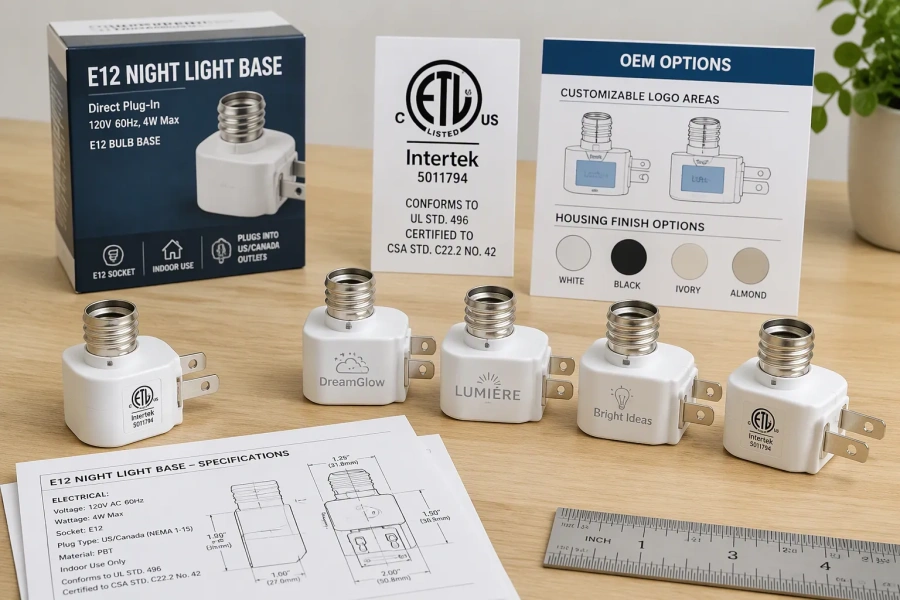
E12 Night Light Base Manufacturer: Sockets, ETL/cUL, and OEM Options
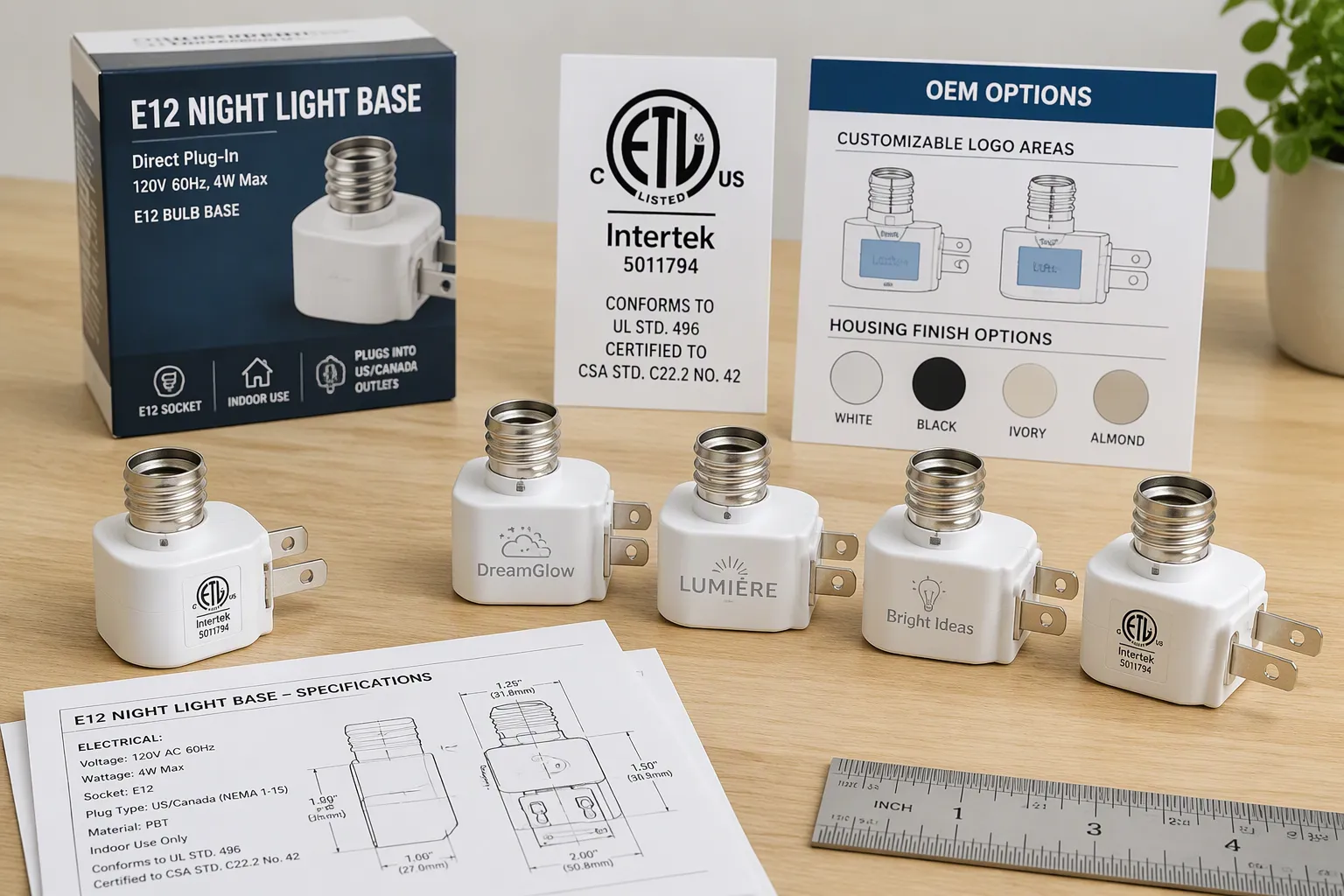
An E12 night light base only looks interchangeable until you compare the plug, the socket rotation, and the certification mark. This guide is for US and Canadian buyers sourcing E12 bases or complete plug-in night lights through OEM. Match the blade type to the market first (US two-prong, Canada CSA), then confirm ETL or cUL listing on the base itself rather than the carton, before anyone quotes a price.
Key Takeaways
- Choose your manufacturing region based on your biggest need: China for low cost, Taiwan for quality, North America for speed.
- Before the quote, put three numbers on the table: NEMA 1-15P plug, 120V, and the wattage rating the housing can take.
- Verify ETL or cUL certification numbers in official online directories to ensure they are valid and cover your product.
- OEM options let you customize housings, switches, plugs, and packaging, but higher customization increases minimum order quantities and lead times.
- Select a manufacturer with clear communication, a verifiable factory, and fair payment terms to avoid costly problems.
Table of Contents
- E12 Night Light Base Manufacturer Options by Region
- US/Canada Plug-In Socket Specifications for E12 Bases
- ETL/cUL Certification Requirements for US/Canada Markets
- OEM Options for Custom E12 Night Light Bases
- How to Choose an E12 Night Light Base Manufacturer
E12 Night Light Base Manufacturer Options by Region
Where you source your E12 night light bases shapes everything downstream. Price, lead time, certification support, and customization all depend on the region you pick. Three main regions serve this market today. Each one brings different strengths to the table.
China-Based Socket Specialists
China dominates the global market for small electrical sockets and lamp bases. You will find hundreds of factories in Guangdong, Zhejiang, and Fujian provinces that specialize in E12 socket production. Many of these factories run dedicated lines for night light bases alone.
These suppliers offer the widest range of options. You can order bare plastic sockets or fully assembled bases with switches, plugs, and housings attached. Most factories already hold ETL or cUL listings for their standard products. That means you skip the cost of getting a new certification for common designs.
Pricing sits at the lowest end of the global scale. A basic E12 plug-in base might cost you a few cents per unit at high volumes. Custom tooling costs also run lower here than anywhere else. A new injection mold for a custom housing might cost $2,000 to $5,000.
The trade-offs are real, though. Quality varies wildly between factories. You need to vet each supplier carefully. Communication can also slow things down. Time zone differences add a day to every email exchange. Shipping from China to the US takes 25 to 40 days by sea.
A good e12 night light base manufacturer in China will provide test reports, certificate numbers, and factory audit documents without hesitation. Ask for these upfront. Factories that dodge these requests are not worth your time.
Taiwan and Southeast Asia Suppliers
Taiwan has a long history in electrical component manufacturing. Its factories often spin out of the semiconductor and electronics supply chains. That background gives them strong process control and engineering depth.
Taiwanese suppliers tend to focus on mid-to-high-end products. You will pay more per unit than in mainland China. But you often get better consistency and tighter tolerances. Many Taiwan factories also hold UL and cUL listings directly, not just ETL.
Vietnam and Thailand have grown fast as alternative sourcing hubs. Rising tariffs on Chinese goods pushed many buyers to look elsewhere. These countries now host factories that produce E12 sockets and bases for export. Labor costs stay competitive. Shipping times to North America are similar to China.
The main drawback is fewer specialized suppliers. You have less choice in Southeast Asia. Custom tooling may take longer to set up. Some factories there still import key components from China, which adds cost and complexity.
Taiwan works well when you need precision parts and strong engineering support. Southeast Asia works well when you want to diversify away from China without moving production to North America.
North American Assemblers and Distributors
North American suppliers sit at the other end of the spectrum. They cost more. They also solve problems that overseas factories cannot.
These companies often import socket components from Asia. Then they assemble, wire, and test finished bases in the US or Canada. Some hold their own ETL or cUL listings for the finished product. That matters when you need a certified base fast.
Lead times are the biggest advantage. You can get samples in days, not weeks. Production runs ship in 1 to 2 weeks for standard items. That speed helps when you face a tight retail deadline or a sudden order spike.
Distributors also carry stock inventory. You can buy small quantities without meeting a factory MOQ. That works well for testing a new product or filling a gap in your line.
The downside is cost. A base that costs $0.50 from China might cost $2.50 from a US assembler. You also have fewer customization options. Most North American suppliers work from a fixed catalog. Custom tooling is rare and expensive.
Use North American suppliers for urgent orders, small batches, or products that need a domestic origin claim. Use them as a backup source when overseas shipments face delays.
What Each Manufacturing Region Does Best
Here is a quick comparison to help you match the region to your needs.
| Factor | China | Taiwan / SE Asia | North America |
|---|---|---|---|
| Unit cost | Lowest | Medium | Highest |
| MOQ | High (1,000+) | Medium (500+) | Low (100+) |
| Lead time | 25–40 days (sea) | 20–35 days (sea) | 1–2 weeks |
| Custom tooling | Basic, low cost | Moderate | Rare, expensive |
| Certification support | Common (ETL/cUL) | Strong (UL/cUL) | Built-in |
| Quality consistency | Variable | Good | Very good |
| Communication | Time zone gap | Time zone gap | Same time zone |
Most buyers use a mix. You might source standard bases from China and custom designs from Taiwan. You might keep a US distributor on standby for emergencies. The right mix depends on your volume, budget, and timeline.
What Each Manufacturing Region Does Best
Each region has a sweet spot. Your job is to match that sweet spot to your actual business needs. Let's break it down so you can pick the right source without second-guessing yourself.
China wins on scale and price. If you need 10,000 units of a standard E12 base, no other region comes close on cost. Factories there have the tooling, the molds, and the supply chain already in place. You can get a custom housing designed and molded in weeks. You can also find an e12 night light base manufacturer that already holds ETL listings for common designs. That saves you thousands in testing fees. The catch? You have to manage quality yourself. Hire a third-party inspector. Demand test reports. Visit the factory if you can. China rewards buyers who do their homework.
Taiwan and Southeast Asia win on consistency and risk diversification. Taiwan factories bring engineering discipline. Their tolerances stay tight. Their process control is strong. If your product needs precise fit or a clean finish, Taiwan is a smart pick. Vietnam and Thailand offer a middle path. You get lower costs than Taiwan but better reliability than many Chinese factories. You also reduce your exposure to tariffs and trade tensions. The trade-off is fewer options. You may wait longer for tooling. You may pay more per unit. But you sleep better at night knowing your supply chain is diversified.
North America wins on speed and simplicity. When you need 500 bases next week, a US or Canadian assembler delivers. No ocean freight. No customs delays. No language barrier. These suppliers often hold their own cUL or ETL listings for finished products. That takes compliance off your plate. You pay a premium, sure. But you also get domestic origin claims, fast samples, and low MOQs. For urgent orders or small test runs, that premium pays for itself.
Pick your region based on your biggest constraint. If cost is king, go to China. If consistency matters most, look at Taiwan. If speed decides the deal, stay in North America.
Smart buyers do not pick just one region. They build a hybrid supply chain. Source your high-volume standard bases from China. Get your custom or premium designs from Taiwan. Keep a North American supplier on standby for emergencies. This approach costs a bit more to manage. But it protects you from tariffs, shipping delays, and factory failures. One region alone leaves you exposed. Two or three regions give you leverage and backup.
Think about your product lifecycle too. A brand-new design with uncertain demand? Start with a North American distributor. You can test the market without committing to 5,000 units. Once sales prove steady, move production to China or Taiwan for better margins. A mature product with predictable volume? Go straight to Asia. Lock in pricing and tooling. A seasonal product with tight windows? Use a domestic assembler for the peak and import for the off-season.
Your certification needs also point you toward a region. If you need a finished base with a cUL mark right away, North American assemblers often have that ready. If you can wait for testing, Chinese and Taiwanese factories can certify a custom design for you. Just budget 6 to 10 weeks for the process. Factor that into your launch timeline.
Finally, think about communication. Time zones matter more than people admit. A 12-hour gap slows every decision. A routine question takes a full day to resolve, and that is the clearest signal you will get before money changes hands. If your team lacks experience with overseas sourcing, start with a domestic or Taiwanese supplier. The time zone overlap is better. The cultural fit is easier. Once you build confidence, expand to mainland China for cost savings.
No single region does everything best. The winning strategy is knowing what each one does well and using that to your advantage.
Related reading: the night light base range.
US/Canada Plug-In Socket Specifications for E12 Bases
Plug Types and Wall Outlet Compatibility
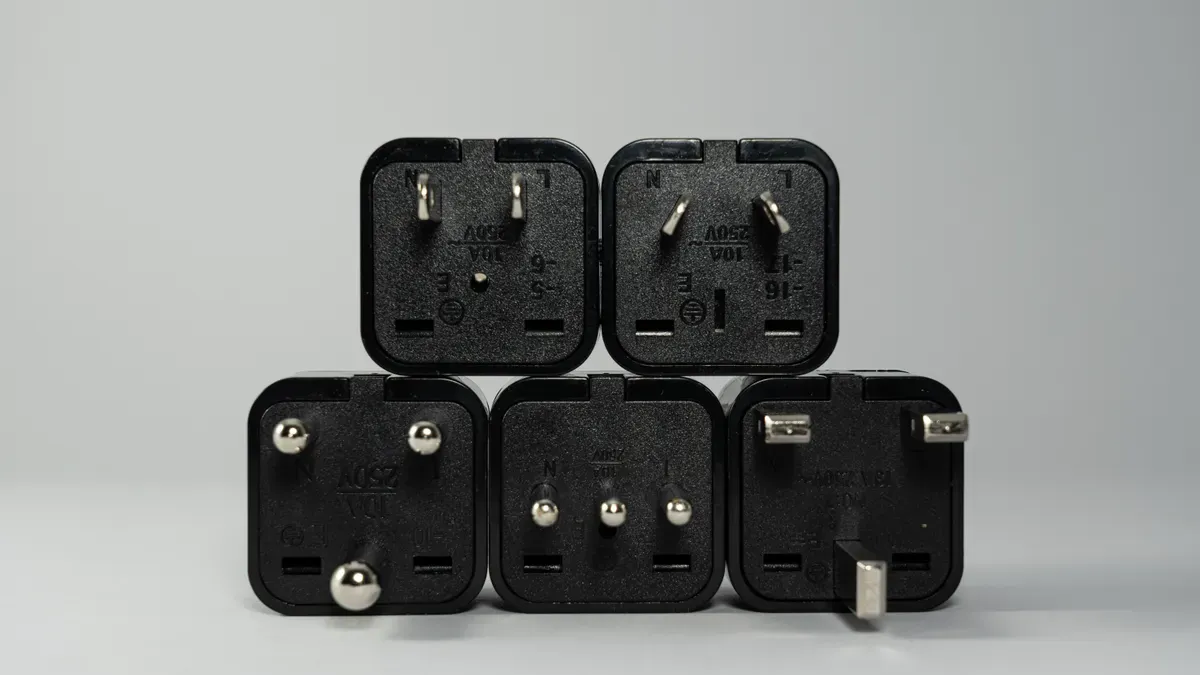
You need a plug that fits standard North American wall outlets. That means a two-prong, ungrounded plug with flat parallel blades. This is the NEMA 1-15P type. It fits every standard 120V outlet in the US and Canada. Some night light bases use a polarized plug. One blade is wider than the other. This design keeps the hot and neutral wires in the right position. Polarized plugs only fit one way into the outlet. Non-polarized plugs fit either way. Most retailers prefer polarized plugs for safety reasons. Make sure your supplier confirms the plug type before you order. A wrong plug means a useless product.
Voltage, Wattage, and E12 Base Dimensions
North American outlets run at 120V and 60Hz. Your E12 base must match this. Here are the key specs to check:
| Spec | Standard Value |
|---|---|
| Input voltage | 120V AC, 60Hz |
| Max wattage | 7W–15W (LED), 25W–40W (incandescent) |
| Base diameter | 12mm (E12 candelabra) |
| Screw pitch | 1.0mm |
| Pin spacing | 12.7mm center-to-center |
Always confirm the wattage rating. A base rated for 7W will overheat with a 40W bulb. Match the rating to the bulb you plan to use.
Materials, Switches, and Safety Features
Housing material matters for heat resistance and durability. Most bases use ABS or polycarbonate plastic. Polycarbonate handles heat better. It also resists yellowing over time. Look for UL 94 V-0 flame rating on the plastic. This means the material self-extinguishes if it catches fire.
Switch options include rotary, push-button, and slide types. Rotary switches feel sturdy and last longer. Push-button switches work well for basic on/off control and survive dirty hands better than touch panels. Some bases add a photocell sensor. This turns the light on at dusk and off at dawn. Safety features to demand include a fused plug, overcurrent protection, and a polarized connection. These protect against short circuits and electrical shocks.
Common Specification Mistakes Buyers Make
Buyers trip up on the same specs again and again. You can avoid most of these headaches with a quick checklist before you place an order.
The first mistake is ordering the wrong plug. Some suppliers ship European-style round pins or unpolarized blades by default. Those will not fit a US or Canadian outlet. Always confirm the plug is NEMA 1-15P with flat parallel blades. Ask for a photo of the actual plug, not a catalog drawing.
The second mistake is ignoring the wattage rating. A base rated for 7W will melt or fail if you pair it with a 40W incandescent bulb. Match the base rating to the bulb you plan to sell. If you switch bulb types later, recheck the rating.
The third mistake is skipping the base dimensions. E12 means a 12mm diameter with a 1.0mm screw pitch. Some factories label a base as E12 when it is actually E11 or E14. A tiny difference like that causes loose fits or stripped threads. Demand a spec sheet with exact measurements.
The fourth mistake is overlooking material ratings. Cheap ABS plastic warps under heat. Polycarbonate holds up better. Look for a UL 94 V-0 flame rating on the housing. Without it, you risk a failed safety test and a product recall.
The fifth mistake is forgetting the switch and safety features. A fused plug, overcurrent protection, and a polarized connection are not optional for retail sales. Buyers who skip these features often fail certification and lose months of production time.
Never trust a verbal spec. Get every number, material, and feature in writing before you pay a deposit.
Run through this list with every supplier. It takes ten minutes and saves you thousands in returns, rework, and lost shelf space.
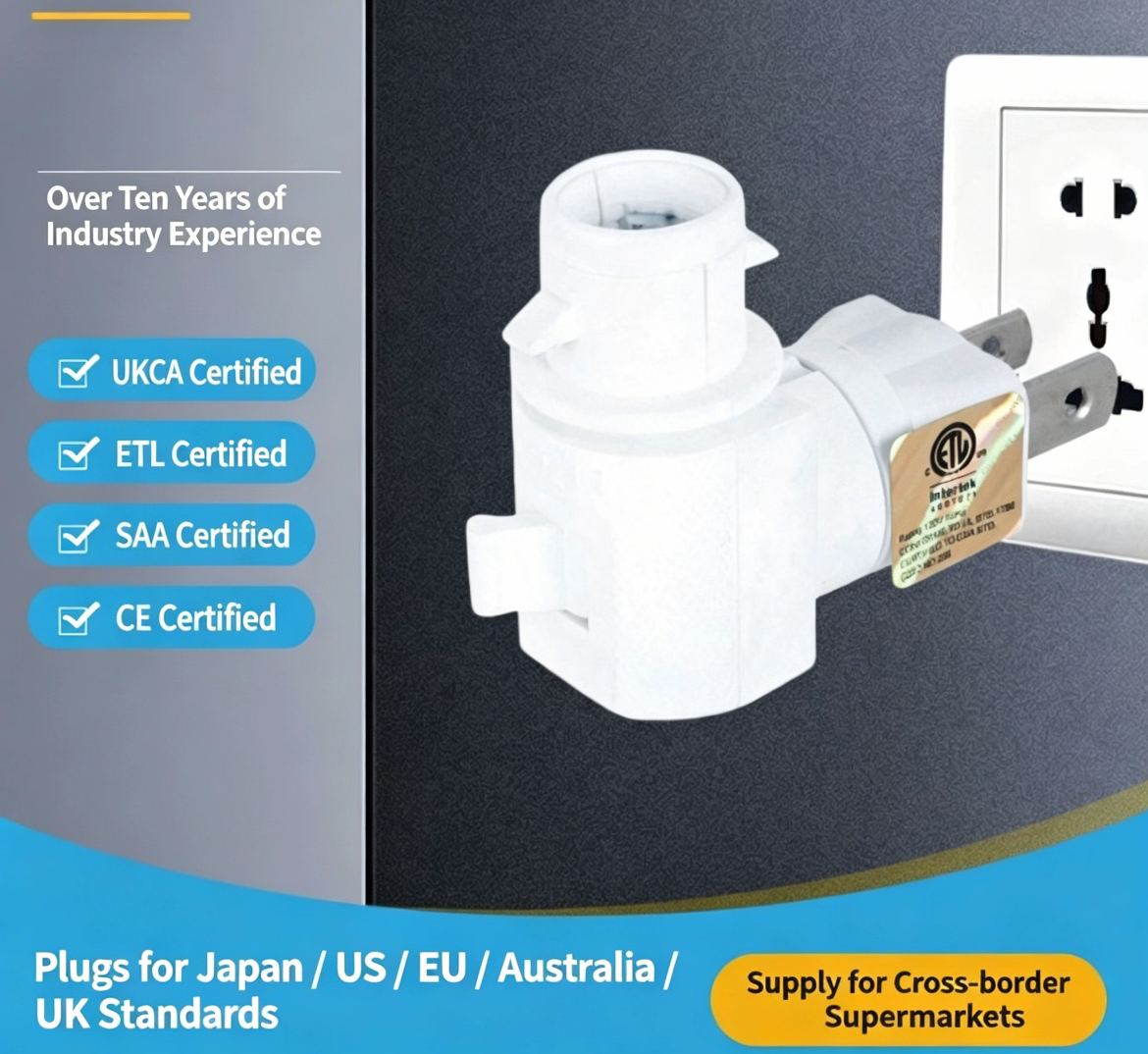
GL-073W Plug-in Lamp Holder with Toggle Switch
- Plug-in lamp holder with ETL, SAA and CE marks; blades for US, EU, UK, JP and AU
- Toggle switch and rotatable socket for wall outlets
Related reading: the E12 and E14 lamp holder manufacturer guide.
ETL/cUL Certification Requirements for US/Canada Markets
The safety mark on the base is not a detail. It is the line between a retail listing and a rejected shipment. These marks open doors to retail shelves, online marketplaces, and big-box store contracts. Without them, your product stays on the sidelines. Let's walk through what each mark means, why stores demand them, and how you verify a supplier's claims.
ETL vs. UL vs. cUL: What the Marks Mean
Safety certification sounds confusing. The truth is simpler than it looks. Several independent labs test electrical products against the same safety standards. Each lab issues its own mark once the product passes. You probably know UL best. Underwriters Laboratories built its reputation over a century. When you see the UL mark, you know a product passed rigorous testing.
ETL stands for Intertek, another Nationally Recognized Testing Laboratory. The US government recognizes both UL and Intertek as approved testing bodies. ETL and UL marks carry the same weight in practice. Retailers accept both. Distributors accept both. Customs officers accept both. The difference comes down to which lab ran the tests.
The cUL mark adds a special layer for Canada. A standard UL mark covers the US market. A cUL mark covers Canadian standards. The "c" prefix means the product meets Canadian electrical safety codes. Many products carry both marks together. You will see a dual mark like cULus or cETLus on compliant products. That means one certification covers both countries.
Here is the key distinction. ETL and UL are separate organizations. They test to the same safety standards. They maintain separate certification lists. Saying "ETL certified" means Intertek tested the product. Saying "UL listed" means Underwriters Laboratories tested it. Both produce valid results. Both marks are legitimate; no supplier should rank one above the other.
What about uncertified products? Some factories claim their products meet "UL standards" without holding a real listing. That is not the same thing. A product "designed to meet UL standards" has no lab verification behind it. Demand the actual certificate. Demand the certificate number. That removes all ambiguity.
Why US and Canadian Retailers Require Certification
You cannot sell an uncertified electrical product through normal retail channels. Period. Walmart, Home Depot, Target, and Amazon all mandate safety certification for plug-in products. Their buyers will not even review a product without evidence of the right marks.
Certification also protects you in the legal sense. If your night light base starts a fire, the victim's lawyer looks first at your safety marks. A certified product shows you took reasonable steps to ensure safety. An uncertified product exposes you to catastrophic liability. Insurance companies take a hard line here. Most commercial liability policies require certification for electrical products. Some policies outright refuse coverage for uncertified items.
Canadian retailers take the same position. The Canadian Standards Association oversees electrical safety in Canada. The cUL or cETL marks demonstrate compliance with Canadian codes. Without those marks, Canadian distribution channels close to you.
Customs officials also check certification. US Customs and Border Protection can hold shipments of electrical products without valid safety marks. Canadian border agents apply the same scrutiny. A single shipment without proper marks can sit in customs for weeks. The fees add up fast.
So the certification is more than a sticker. It is your license to sell. It is your defense against liability claims. It is your pass through border controls. Without the proper mark from your e12 night light base manufacturer, all your other supplier qualifications do not matter.
How to Verify Certificate Numbers
A supplier will send you a certificate PDF. You should not trust that document alone. Digital files take seconds to edit. Phantom certificates exist. Verification takes five minutes, and it protects your entire investment.
Start with Intertek's online directory for ETL markings. Search for the certificate number there. The directory lists the manufacturer name, the product model, and the test standards. Use the UL Product iQ tool similarly. It lets you search by certificate number, model name, or manufacturer. Both directories are free and public. Both give you definitive answers.
Check three things when you verify. First, confirm the company name on the certificate matches your actual supplier. Some factories borrow certificates from friendly operations. That happens more often than you expect. Second, check the model number. If your product carries a different model designation than the certificate, the certificate does not apply. Third, confirm the standards listed. Your certificate should reference UL 496 or similar standards for lamp holders and night lights. A mismatched standard means deeper digging.
You should also watch for red flags. An expired certificate is a hard fail. A certificate with vague product descriptions like "lamp parts" or "accessories" deserves scrutiny. A certificate issued to a shell company or trading company raises questions. A supplier who hesitates to share certificate numbers probably has something to hide.
One basic rule: if the certificate number does not produce results in the official directory, treat the claim as false. No exceptions.
Keep copies of your verification results. Save the certificate PDFs. Note the dates you checked. You will need this documentation later when a retailer asks for proof. Retailers run their own verification routines. Beat them to the punch with your records ready.
Finally, understand the difference between a listed product and a recognized component. A listed product carries the full mark. A recognized component only covers a part, like a socket. You want a full listing for your finished night light base. If your supplier only holds a component recognition, the finished base still needs its own certification. Ask which type of certification you are buying before you order.
Red Flags in Certification Claims
Some suppliers stretch the truth about certification. The warning signs matter most before the deposit leaves your account, not after. Here are the red flags that should make you walk away.
The supplier sends a certificate with a different company name. This happens often. A factory borrows a friend's certificate to win your order. That certificate does not cover your product. Ask why the names do not match. A honest supplier will explain. A dishonest one will dodge the question.
The certificate lists vague product descriptions. Terms like "lamp parts" or "electrical accessories" mean nothing. You need a certificate that names your exact product type. A night light base is not the same as a socket component. Make sure the description matches what you plan to sell.
The certificate number does not appear in the official directory. You already know this test. Run it every time. If Intertek or UL cannot find the number, the claim is fake. No exceptions.
The supplier refuses to share test reports. A real certificate comes with test data. The lab documents every test result. A supplier who hides these reports has something to hide. Ask for the full report. Watch how they respond.
The certificate expired years ago. Certification requires renewal. An expired certificate offers zero protection. Check the expiration date on every document. A lapsed listing means your product is uncertified in the eyes of retailers and customs agents.
If a supplier gets defensive about certification questions, treat that as your answer. Honest suppliers welcome the scrutiny.
Trust your gut here. A supplier who cannot produce clean paperwork today will not produce it when a retailer asks. Move on to the next candidate.
OEM Options for Custom E12 Night Light Bases
You can shape an OEM E12 night light base to match your brand, your market, and your price point. Factories offer a wide menu of options. Here is what you can customize.
Customization Scope: Housings, Switches, and Plugs
You control the look and function of your base. Housings come in rotatable E12 socket styles, wall-mount designs, and shapes for flame, diamond, or salt-lamp bulbs. Switch choices include toggle, on-off toggle, or independent types. Plug options cover ETL-certified USA plugs at 110–120V, long flat rotatable plugs, or two-round-pin plugs. You can also add your logo through silk-screen or laser printing.
Beyond hardware, you pick bulb type, brightness, sensor type, and material grade. Packaging scales from bulk to blister to boxed. The table below shows common OEM options.
| Customization Category | Available OEM Options |
|---|---|
| Bulb Type | LED, incandescent |
| Brightness | 50 / 58 / 65 lumens (Base / Advanced / Pro) |
| Sensor | Manual on/off; ambient light auto-detect; auto-detect + motion sensing |
| Material Grade | Standard PC + Brass; Reinforced PC + Gold-plated Brass; Weatherproof PC + Marine-grade Brass |
| Packaging | Bulk, blister, or boxed |
| Warranty | 1 year / 2 years / 3 years |
| Certification | ETL-approved for USA standards |
Tooling, MOQs, and Lead Times
Your order type drives your minimums and your timeline. Stock ODM items need 500–1,000 units and ship in 20–30 days. Adding a custom logo pushes MOQs to 1,000–3,000 units and lead times to 30–40 days. OEM projects with an existing mold require 3,000–5,000 units and 35–50 days. New molds jump to 5,000–10,000 units and 60–90 days.
Custom molds add thousands upfront.
Factor in Chinese New Year and peak season (August–October) for extra weeks.
Sampling and Approval Workflow
You start with a sample. Factories offer light customization, sample processing, graphic processing, and full custom development. You review the 3D drawing, approve the mold, and sign off on the pre-production sample. Then mass production begins. Always lock your specs in writing before you pay a deposit.
Documentation and Compliance Handoff
Once your OEM order wraps up, the paperwork matters as much as the product. A good e12 night light base manufacturer hands you a complete compliance package. You should never chase documents after the fact. Get everything before the final payment clears.
Here is what belongs in that handoff:
- The ETL or cUL certificate with a valid number you can verify online
- Full test reports from the lab, not just a summary page
- A spec sheet listing voltage, wattage, materials, and dimensions
- A Declaration of Conformity signed by the factory
- Labeling artwork showing where the mark goes on the product or packaging
- Traceability records linking your batch to production dates
Check each document against your purchase order. The model number on the certificate must match the model you bought. The factory name must match your supplier. Small mismatches cause big problems at customs or with retail buyers.
You also need to know who owns the certification. Some factories list your product under their own name. Others let you hold the listing. Ask this question early. If you plan to switch factories later, a listing in your name saves you from retesting.
Store every document in one shared folder. Retailers and customs agents will ask for them, sometimes years later.
Finally, confirm the labeling rules. The mark must appear on the product, the packaging, or both. Your supplier should tell you exactly where it goes. Get this in writing. A missing mark can pull your entire shipment off store shelves.
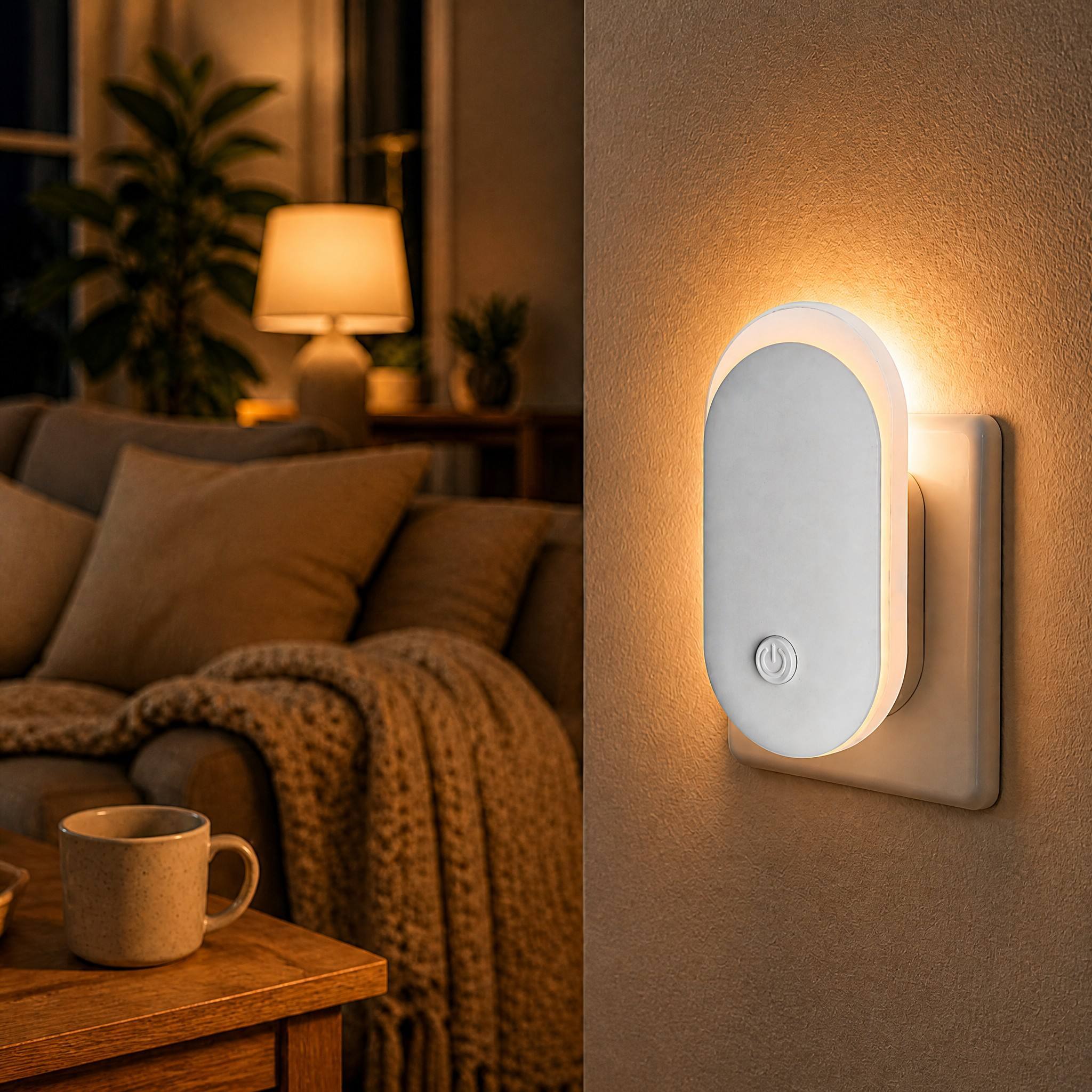
A96TB Dusk to Dawn Sensor Night Light USB-A+Type-C | Guangli
- Dusk-to-dawn sensor night light with USB-A and Type-C charging ports
- US plug-in format for bedroom and hallway use
Related reading: plug-in night light OEM options and certifications.
How to Choose an E12 Night Light Base Manufacturer
Choosing the right E12 night light base manufacturer comes down to three areas: trustworthy paperwork, a verifiable factory, and payment terms that protect you. You can check all three without leaving your office. This section walks you through each step.
Certification and Test Report Checklist
Ask every candidate for the same document package. A dependable e12 night light base manufacturer sends this package without excuses. It includes:
- A current ETL or cUL certificate with a number you can verify in the official directory
- Full lab test reports, not one-page summaries
- A spec sheet covering voltage, wattage, materials, and dimensions
- A Declaration of Conformity signed by the factory
- Labeling artwork that shows exactly where the mark appears
- Batch traceability records that link your purchase order to a specific production run
Verify the certificate number yourself. Open the Intertek directory or the UL Product iQ tool. Type the number into the search field. Check the company name against your supplier's legal name. Check the model number against the product you plan to sell. Confirm the standards cover E12 lamp holders and plug-in night lights.
Small mismatches cause big problems. A certificate under one company's name does not cover another factory's output. A certificate for "lamp parts" does not cover a finished base. A certificate that expired last year does not satisfy customs or retail compliance teams.
If the certificate number does not appear in the official directory, treat the claim as false. No exceptions.
Keep copies of every document. Retailers will ask for proof later. Customs will ask too. Store all PDFs in one shared folder, ready to send.
Factory Audit and Quality Control Questions
You do not need to travel across the world to inspect a factory. A live video audit works. Ask the supplier to walk the production floor with you on camera. A confident supplier says yes. A weak one makes excuses.
Ask these eight questions during the audit:
- Which production stages do you control in-house? Who handles raw materials, soldering, sealing, and final testing?
- Can you show a working sample that proves the target safety rating and the exact E12 candelabra screw-base size?
- Do you support customization of voltage, lead or cable length, wire gauge, connector, bulb color, and packaging?
- Will you put your destination-market certificate numbers and test reports in writing, including E12 socket compatibility?
- Have you validated export documentation and customs clearance for shipments into the US or Canada?
- Can you consolidate mixed SKUs into one production run to keep order quantities flexible?
- Can I see component storage, soldering fume extraction, and a QC department separate from production during a video audit?
- Which tests do you actually run? How many samples per batch get tested? Do batch records trace back to a specific run?
Watch how they answer. Precise answers mean they run a tight shop. Vague answers mean you should keep looking.
Look for real details during the floor walk. Check whether materials sit in labeled bins or pile on the floor. Watch for soldering fume extraction. See if QC has its own space with dedicated inspectors. Production staff checking their own work is a red flag.
The testing question matters more than you think. Ask for the actual test list. Some factories only do a visual check. Strong factories run electrical safety tests on every batch. Confirm sample counts. Testing one unit from 10,000 units proves nothing. Testing ten or more units per run gives you real confidence.
Batch records close the loop. Every unit should trace back to a date, a line, and a raw material lot. A defect shows up later. You need those records to find the root cause.
Pricing, Payment, and Shipping Terms
You trust the paperwork. You trust the quality controls. Now negotiate money and logistics. These terms are standard across certified E12 suppliers:
- Payment methods: T/T bank transfer, L/C at sight, or Western Union
- Deposit structure: 30% upfront, balance before shipment, about 20 days of production after the deposit arrives
- Sample policy: one to three pieces free, freight paid by you via FEDEX, DHL, UPS, or TNT
- Shipping options: express courier for small LCL parcels, ocean freight for FCL and LCL containers
- Production lead time: depends on quantity and season. Ask at least 30 days before the desired arrival date
Payment terms protect both sides. 30% upfront is the norm. Be cautious with a supplier who asks for 50% or more from a first-time buyer. Tie the balance payment to a shipping milestone. Do not tie it to a vague promise.
Shipping choice depends on your order size. Express courier saves weeks. You pay more per unit but get samples or small orders fast. Ocean freight costs far less per unit. It adds two to five weeks of transit. Most buyers use a mix: courier for samples, sea freight for bulk.
Seasonality changes lead times. Chinese New Year closes factories for weeks. Peak season from August to October stretches every schedule. Ask for a written lead time commitment before you place the order.
Communication and After-Sales Support
Good communication separates a smooth order from a nightmare. You will exchange dozens of emails with your supplier before production even starts. A responsive e12 night light base manufacturer answers questions within one business day. They assign you a dedicated account manager. That person knows your order details and speaks clear English. You never repeat yourself to a new contact every week.
Test the communication before you commit. Send a detailed question about specs or certification. Watch how fast they reply. Check whether their answer actually addresses your question. A supplier who takes three days to respond during the sales phase will vanish after they cash your deposit. That pattern never improves.
Language barriers cause real problems. A supplier who nods at everything but understands half of it will ship the wrong product. Ask for written confirmation of every spec. Ask them to repeat your requirements back to you. If their emails read like garbled translations, expect production mistakes. Clear communication costs nothing. It saves you thousands in rework and returns.
Time zones add friction. A 12-hour gap means every exchange takes a full day. You send a question at 9 AM. They answer at 9 PM your time. You reply the next morning. Three questions stretch into a week. Plan for this delay. Batch your questions into one email instead of sending five separate messages. Set a cut-off time for decisions before production starts.
After-sales support matters just as much as the sale itself. Ask about the warranty terms upfront. Most factories offer a one-year warranty on defects. Some stretch it to two or three years for premium lines. Get the warranty in writing. Verbal promises mean nothing when a batch fails.
Ask how the supplier handles defective units. A strong factory replaces faulty products in the next shipment. A weak one blames shipping damage and walks away. Clarify the process before you order. Who pays for return shipping? How fast do replacements ship? What proof do they need? Get answers to all three questions in writing.
Spare parts support keeps your product alive long-term. Ask whether the supplier stocks replacement sockets, switches, and plugs. Ask how long they will keep those parts available. A supplier who discontinues your model after one year leaves you stranded. Look for a commitment of at least three to five years.
Technical support rounds out the package. Your supplier should help with installation questions, wiring diagrams, and troubleshooting. They should also provide updated certificates when standards change. A good partner stays with you through the product lifecycle. They do not disappear after the final payment clears.
Build a relationship, not just a transaction. Visit your supplier at trade shows like the Hong Kong Electronics Fair or the Canton Fair. Meet your account manager face to face. Small gestures build trust. Trust pays off when you need a rush order or a favor on pricing.
A supplier who communicates well before the sale will communicate well after it. A supplier who goes silent during negotiations will go silent when problems arise.
Keep records of every conversation. Save emails, chat logs, and meeting notes. Reference them when disputes arise. A paper trail protects you. It also helps your team pick up where you left off if staff changes.
Finally, set clear expectations on both sides. Tell your supplier what you need and when you need it. Listen to their constraints too. A partnership built on honesty and clear communication outlasts any single order. That is how you turn a vendor into a long-term ally.
Pick an e12 night light base manufacturer who can prove US/Canada plug compliance, ETL/cUL certification, and real OEM experience. Verify every certification claim through independent directories before you commit to production. Ask at least two or three suppliers for samples, spec sheets, certificates, and test reports. Then shortlist your favorites based on certification and OEM fit. From there, negotiate MOQ, tooling, lead times, payment terms, and after-sales support. Do this homework upfront, and you will avoid costly surprises later.
Related reading: how a night light manufacturer handles OEM and ODM.
Sources and References
Updated October 21, 2026
Ready to Source Quality LED Night Lights?
Contact Guangli today for a free quote and sample!
0users like this.