Sourcing Guide

Aromatherapy Night Light Supplier: Wax Warmers, Fragrance Lamps, OEM

An aromatherapy night light is two products in one housing: a warm light source and a heat source that melts wax or diffuses oil. This guide is for buyers sourcing plug-in wax warmers or fragrance lamps for US and EU retail. Decide the heat method first, bulb warmer or heating plate, because it sets the bulb type, the surface temperature, and which safety tests apply. Then confirm the certificate names your exact model.
Key Takeaways
- Choose plug-in wax warmers for cozy ambiance and repeat sales, or fragrance lamps for powerful odor control without electricity.
- Vet suppliers with a scorecard covering quality, customization, MOQs, certifications, transparency, and support.
- Verify certifications like UL, CE, RoHS, and ISO directly with issuing agencies to avoid legal risks.
- Avoid red flags such as dodged factory questions, vague answers, and resistance to samples or contracts.
- Leverage OEM services for custom designs, but protect your brand with NDAs, design ownership clauses, and trademarks.
Table of Contents
- Types of Aromatherapy Night Lights
- How to Choose a Reliable Aromatherapy Night Light Supplier
- OEM Guide for Custom Products
Types of Aromatherapy Night Lights
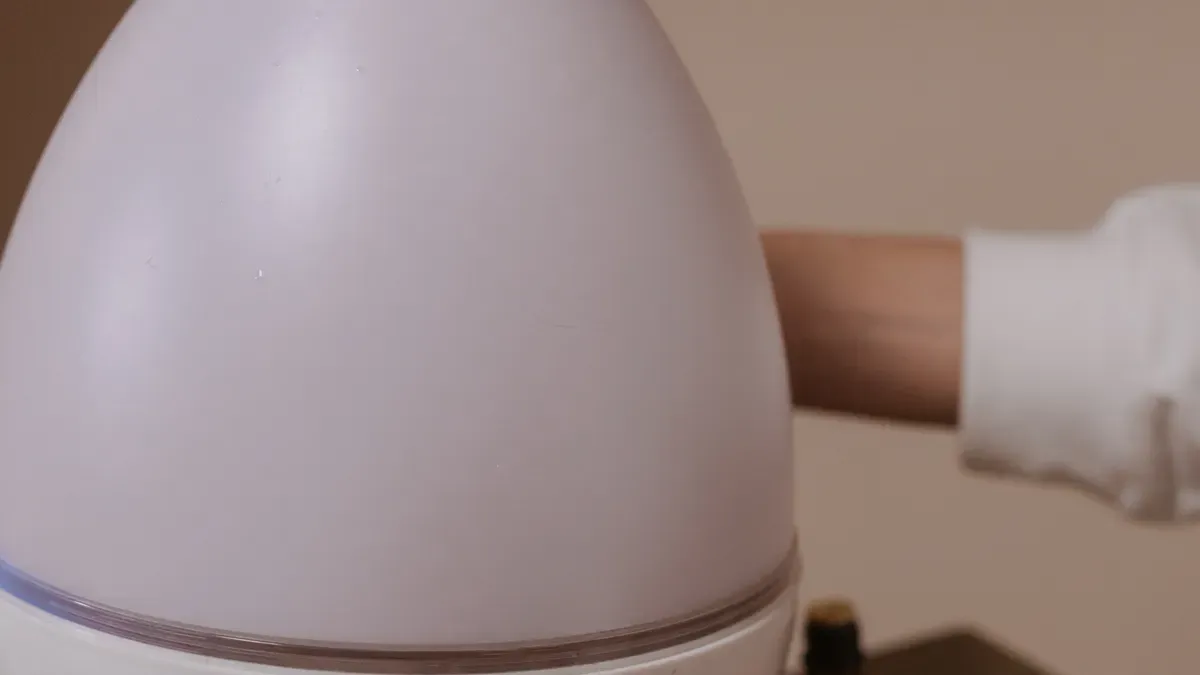
You'll see two main product categories when you shop for an aromatherapy night light supplier. Each works differently. Each suits a different customer. Knowing both helps you pick the right lineup.
What Are Plug-In Wax Warmers?
Plug-in wax warmers are humble devices, which is exactly why buyers stop scrutinising them too early. You plug one into a wall outlet. A small bulb heats a dish on top. You set a wax melt in that dish. Heat melts the wax. Fragrance fills the air. No flame, no smoke, no soot.
These warmers use different base types. The base controls which bulb fits.
| Base Type | Attachment | Common Warmer Style | Typical Bulb Spec |
|---|---|---|---|
| GU10 | Push-in, twist-lock | Top-down arch lamps | 25–50 W GU10/MR16 halogen |
| E26/E27 | Screw-in | Large lamp-style warmers | 25–40 W halogen |
| E12 candelabra | Screw-in | Nightlight-style warmers | 25 W Type B halogen |
Wattage changes the experience. A 25 W bulb gives gentle heat with a slow melt. A 35 W bulb handles daily use. A 50 W bulb melts harder wax fast. Check the socket label first. Over-wattage can overheat the socket. That causes browning or soot marks.
Safety marks matter. Look for UL or ETL listing for North American sales. Some models include a 12-hour timer. This timer stops the warmer from running all night. Another note: GU10 halogen bulbs left the EU market in September 2021. EU Regulation 2019/2020 drove that change. If you sell in Europe, ask your supplier for compliant replacements. US DOE rules treat warmer bulbs as appliance parts, so they remain available.
What Are Fragrance Lamps?
Fragrance lamps take a different route. These ceramic or glass lamps use a catalytic burner, not a bulb. You fill them with fragrance oil. Light the wick briefly, then blow it out. The burner spreads scent and neutralizes odors. No electricity. No glow. These lamps suit customers who want powerful scent without a nightlight effect.
Plug-In Wax Warmers vs. Fragrance Lamps
Which type fits your market? The answer depends on your customer. Wax warmers deliver soft light, gentle scent, and cozy ambiance. They need electricity and replacement bulbs. They suit shoppers who want a nightlight-scent combo. Fragrance lamps deliver stronger odor control without a plug. They lack the warm glow. They suit shoppers who prioritize room freshness.
Ask any supplier about both types. Request their specs, safety rules, and real-world guidance. A thorough answer means fewer returns for you.
Which Type Fits Your Market?
Your target market determines your choice. Wax warmers attract shoppers who value a warm glow. They want gentle scent, soft light, and cozy vibes. These warmers fit gift shops, home boutiques, and online lifestyle stores. Customers buy them as decor pieces. They also buy replacement wax melts. That means repeat revenue for you.
Retail display matters too. Wax warmers shine on store shelves with their visible glow. Customers stop, watch, and imagine the scent. Your online store benefits as well. A demo video sells the experience. Fragrance lamps take a different path. They rely on product photography and scent claims. Buyers choose them for function, not decoration.
Fragrance lamps attract a different buyer. This customer wants powerful odor control. They might own pets, cook heavy meals, or live with smokers. They don't need a nightlight. They need fresh air. Fragrance lamps suit kitchen stores, pet supply shops, and eco-focused retailers. These lamps use no electricity. They appeal to off-grid buyers and minimalists.
Consider your sales model. Wax warmers bring steady repeat orders. Bulbs burn out. Wax melts run out. Your customer returns to you for refills. That creates a loyal buyer. They visit your store again and again. Fragrance lamps sell once. The catalytic burner lasts years. You profit per unit, but you won't see repeat refill orders.
Price point also matters. Wax warmers usually retail at a lower price. That makes them low-commitment impulse buys. Fragrance lamps carry a premium feel. Customers treat them as long-term investments. Your margin depends on the model you choose.
Ask yourself one more question: what story does your brand tell? You sell comfort and relaxation. Choose wax warmers. You sell clean air and functionality. Choose fragrance lamps. Seasonal trends can guide you too. Wax warmers sell fast in fall and winter. Fragrance lamps move steadily year-round.
Still torn? Order samples of both types from your supplier. Place one on your desk. Use it daily. Watch what grabs your attention. That hands-on test often answers the question faster than any market report.
Related reading: the decorative night light range.
How to Choose a Reliable Aromatherapy Night Light Supplier
Product type is the decision you can make on your own. Supplier behaviour is where projects actually slip. You need a supplier who delivers on time, meets safety rules, and answers your emails. That last one sounds small. It isn't. A silent supplier will cost you sales, sleep, and maybe your brand's reputation.
Vetting Suppliers Step by Step
Start with a short list. Pull ten to fifteen candidates from trade shows, sourcing platforms, and industry referrals. Then narrow that list down with real data. Don't trust a pretty website alone. Dig into numbers that show how a supplier actually performs.
Here is a benchmark table you can use as a scorecard. It compares real suppliers in the home fragrance wholesale space.
| Supplier | Review Score | Avg. Response Time | Certifications | MOQ (Est.) | Online Export (180 days) | Reorder Rate |
|---|---|---|---|---|---|---|
| Suzhou Ramond Aroma Technology Co., Ltd. | 4.9/5.0 | ≤3h | ISO 9001, ISO14001, ISO45001, RoHS, PSE, CE | Low-Medium | US $91,000+ | <15% |
| Guangzhou True Scent Arts & Crafts Co., Ltd. | N/A | ≤5h | BSCI | High | US $46,000+ | 20% |
| Guangxi Bobai Quan Sheng Household Products Co., Ltd. | 4.7/5.0 | ≤2h | ISO 9001, FSC | Low-Medium | US $230,000+ | 18% |
| Shenzhen Dituo Electronic Co., Ltd. | 4.8/5.0 | ≤4h | CE, FCC, RoHS | Low-Medium | US $10,000+ | <15% |
| Yiwu Yueying Cultural And Creative Co., Ltd. | 4.8/5.0 | ≤2h | CE | Low-Medium | US $9,600+ | <15% |
| Guangzhou DanQ Environmental Technology Co., Ltd. | 4.8/5.0 | ≤4h | ISO 9001, CE, FCC, RoHS, DoC | Low | US $250,000+ | 25% |
| Huizhou Yixuan Electric Appliance Co., Ltd. (Nagomi) | 4.9/5.0 | ≤6h | BSCI, RoHS, CE, EMC, LVD | Low | US $40,000+ | 17% |
| Jiangsu Raymeel Home Technology Co., Ltd. | 4.2/5.0 | ≤4h | BSCI, ISO 9001, CE | Medium | US $100,000+ | 16% |
| Suzhou Runfan Home Decoration Co., Ltd. | 4.5/5.0 | ≤5h | BSCI, ISO 9001, CE | Medium | US $190,000+ | 21% |
| Guangxi Jinxing Household Products Co., Ltd. | 4.8/5.0 | ≤2h | FSC | Low-Medium | US $170,000+ | 20% |
Read the table like a buyer, not a browser. A high review score tells you other clients were happy. A fast response time tells you the supplier values your business. A strong reorder rate tells you buyers come back. That last number matters most. A 25% reorder rate, like Guangzhou DanQ shows, means one in four clients placed another order. That is a strong signal of trust.
Now score each candidate on six core areas. These areas separate a real partner from a risky bet.
- Product Quality & Consistency: Adherence to stringent quality control, including batch testing, aging tests, and post-production inspections.
- Customization Capabilities: Ability to meet design needs such as branding, packaging, bespoke circuit designs, housing modifications, and material choices.
- Minimum Order Quantity (MOQ): MOQ requirements aligned with inventory strategy and cash flow, balancing volume discounts against storage costs.
- Certifications & Compliance: Verifiable documentation for safety certifications (CE, RoHS, FCC, UL, KC), quality management (ISO 9001), and social compliance (BSCI, FSC).
- Operational Transparency: Clear production timelines, robust communication channels, and willingness to provide factory audits.
- Verification & Support: Sample testing across multiple production batches, client references, defect management policies, warranty periods, and after-sales technical support.
Give each area a score from one to five. Add the scores up. Any supplier below twenty points needs a second look. Any supplier above twenty-five points deserves a sample order.
One more step: verify the factory. Ask for a live video tour. Ask for the business license. Ask for the export record. A real manufacturer will share these without hesitation. A trading company posing as a factory will stall or dodge.
Here is a real example of a supplier that passes the test.
Notice the details. Thirteen years in business. A 10,000+ square meter factory. A 92.5% on-time delivery rate. These numbers tell a story. This supplier ships when they promise. They also offer drawing-based customization and raw material traceability. That level of transparency protects your brand.
Certifications That Matter
Certifications are not paperwork. They are your legal shield. Sell a product without the right marks, and you risk fines, recalls, and lawsuits. The rules change by region. You need to know which ones apply to your market.
For the United States, look for UL or ETL listing. These marks prove the product passed safety testing. For Europe, you need CE marking. You also need RoHS compliance. RoHS limits hazardous substances like lead and mercury. For Canada, check for cUL or CSA. For Japan, look for PSE. For Korea, ask for KC.
Quality management certifications matter too. ISO 9001 shows the factory follows a documented quality system. ISO 14001 covers environmental management. ISO 45001 covers worker safety. These three often appear together. A supplier with all three runs a tight ship.
Social compliance certifications protect your brand's reputation. BSCI and FSC are common. BSCI audits working conditions. FSC covers responsible wood sourcing. If your packaging uses wood or paper, FSC matters.
Ask for the actual certificates. Don't accept a logo on a website. Check the certificate number. Verify the issuing body. Check the expiration date. A lapsed certificate is worthless.
One warning: some suppliers claim certifications they don't hold. Always verify directly with the issuing agency.
Communication and Responsiveness
You will send hundreds of emails to your supplier. A slow reply on a sample question becomes a slow reply on a production problem. Response time is a preview of everything else.
Look at the benchmark table again. The fastest suppliers reply in two hours or less. The slowest take six hours. That gap adds up over a full production cycle. A supplier who replies in two hours can resolve ten issues in the time a six-hour supplier handles three.
Test responsiveness before you commit. Send a detailed question about bulb specs or wax melt compatibility. Watch how long they take. Watch how well they answer. A vague reply means they don't know their product. A slow reply means they don't prioritize you.
Ask about their communication channels. Do they use email, WeChat, WhatsApp, or a project management tool? Do they assign a dedicated account manager? A dedicated contact saves you from repeating yourself to a new person every week.
Time zones matter too. A supplier in China works roughly twelve hours ahead of the US East Coast. Good suppliers adjust their schedule. They answer your morning emails before their day ends. They send updates during your business hours.
Language matters as well. Clear English prevents costly mistakes. A supplier who misunderstands your packaging spec will print the wrong label. That mistake costs you money and time. Ask for a sample of their written English before you sign a contract.
Finally, test their problem-solving. Send a hypothetical issue. Say a batch arrives with cracked housings. Ask how they would handle it. A good supplier has a clear policy. They replace defective units. They cover shipping. They investigate the root cause. A weak supplier blames the shipping company and moves on.
The best aromatherapy night light supplier treats communication as a service, not a chore. They answer fast. They answer clearly. They follow up without being asked. That behavior predicts a smooth production run.
Red Flags to Avoid
You have your scorecard ready. You know which certifications to check. Now you need to spot the warning signs that scream "walk away." Some suppliers look great on paper. Their website shines. Their prices beat everyone else. Then you dig deeper and find cracks. Here are the red flags that should send you running.
They dodge your factory questions. You ask for a live video tour. They send a stock photo instead. You ask for their business license. They say they will send it later. Later never comes. A real manufacturer welcomes a factory visit. They want you to see their production line. They know seeing is believing. A trading company posing as a factory will stall, deflect, or change the subject. Trust your gut on this one. If they cannot show you where the products are made, they are not the right partner.
Their certifications do not check out. A supplier claims UL listing. You ask for the certificate number. They go quiet. Or they send a certificate with a different company name. Or the expiration date passed two years ago. Fake certifications are a real problem in this industry. Some suppliers Photoshop logos onto their marketing materials. Others borrow certificates from other factories. Always verify directly with the issuing agency. UL, ETL, CE, RoHS, ISO — every one of these has a public database. A five-minute check saves you from a legal nightmare. If a supplier gets defensive when you ask for proof, that tells you everything.
Their prices are too good to be true. You get quotes from five suppliers. Four land in the same range. One comes in at half the price. That is not a bargain. That is a warning. Rock-bottom prices usually mean cut corners. Maybe they use cheaper bulbs that burn out in a week. Maybe their wiring fails safety tests. Maybe they skip quality control entirely. You save money upfront. Then you pay for it with returns, refunds, and bad reviews. A fair price from a reliable supplier beats a cheap price from a risky one every time.
They pressure you to skip samples. You ask for a sample order before committing to bulk. They push back. They say samples take too long. They offer a discount if you order now. They claim the sample fee is non-refundable even if you place a large order. This is a classic pressure tactic. A confident supplier wants you to test their product. They know a good sample leads to a big order. A supplier who avoids samples has something to hide. Maybe their production quality does not match their marketing photos. Maybe they cannot replicate the product consistently. Never skip the sample stage. It is your cheapest insurance policy.
Their answers stay vague. You ask about bulb wattage. They say "it depends." You ask about MOQ. They say "we can discuss." You ask about lead times. They say "usually fast." Vague answers are a red flag. A professional supplier knows their specs cold. They can tell you the exact wattage, the socket type, the certification status, and the production timeline. They do not need to check with someone else for basic product questions. If they cannot answer routine questions before you pay, imagine the silence after they have your money.
They have no real reviews or references. Every supplier claims to be the best. Few can prove it. Ask for client references. Ask for recent reviews. Ask for their reorder rate. A supplier with a 25% reorder rate has clients who come back. A supplier with no reviews and no references is an unknown risk. Check sourcing platforms for verified transaction data. Look at their online export records. A supplier with $250,000 in recent exports is moving real volume. A supplier with $5,000 might be a side hustle. Do the math before you commit.
Their communication drops off. You send a detailed email. Three days pass. No reply. You follow up. Another two days. Still nothing. Then they respond with a one-line answer that ignores half your questions. This pattern will not improve after you place an order. Slow communication before the sale becomes no communication after the sale. You will chase them for production updates. You will wait weeks for tracking numbers. You will solve problems alone. Find a supplier who replies within hours, not days. The benchmark table earlier showed response times of two to six hours. Anything slower than that is a warning sign.
They resist a written contract. You want clear terms. Delivery dates. Defect policies. Warranty coverage. Payment milestones. They prefer a handshake deal. They say a contract is unnecessary. They promise everything will be fine. That promise means nothing when a shipment arrives late or defective. A written contract protects both sides. It sets expectations. It gives you recourse. A supplier who refuses to sign one is telling you they do not want accountability. Believe them and move on.
One red flag alone might be a misunderstanding. Two or more together mean you should walk away. Your brand's reputation is worth more than a cheap quote.
They cannot explain their quality control process. You ask how they test bulbs. You ask about aging tests. You ask about batch inspections. They give you a blank stare. Quality control is not optional for electrical products. A good supplier has documented procedures. They test every batch. They track defects. They investigate root causes. They can show you their QC reports. A supplier who cannot describe their own process does not have one. That puts your customers at risk.
Their sample quality does not match their marketing. You order a sample. It arrives with scratches. The bulb flickers. The plug feels loose. The packaging looks nothing like the photos. You tell them about the issues. They say the sample was "from an old batch." They promise the production run will be better. Do not believe it. The sample is your best preview of the final product. If they cannot get one unit right, they cannot get a thousand right. A supplier who sends a sloppy sample is showing you their true standards.
They have no niche focus. You sell aromatherapy products. The supplier sells everything — phone cases, kitchen gadgets, pet toys, and wax warmers. They claim to do it all. That is a red flag. A supplier who makes everything usually masters nothing. They do not know the specific safety rules for plug-in warmers. They do not understand the bulb regulations in your market. They cannot advise you on wax melt compatibility. Find a supplier who specializes in home fragrance products. Their expertise protects your business.
They avoid talking about after-sales support. The sale is just the beginning. What happens when a customer receives a broken warmer? What happens when a batch fails safety testing? What happens when you need replacement parts? A good supplier has clear answers. They offer a warranty. They replace defective units. They provide technical support. A supplier who goes silent when you mention after-sales is not a partner. They are a one-time transaction. You need someone who sticks around.
Spotting red flags takes practice. The more suppliers you vet, the faster you get. Trust your instincts. If something feels off, it probably is. A little caution now saves you from a costly mistake later.

Wrought Iron Glass Red Bird Plug-In Night Light GL-TY01
- Wrought-iron glass plug-in night light with warm glow for living areas
- Decorative housing suited to gift and home-fragrance retail
Related reading: plug-in night light OEM options and certifications.
OEM Guide for Custom Products

You have a product idea. Now you need a supplier who can build it your way. A good aromatherapy night light supplier offers real customization, not just a logo slapped on a stock item.
Customization Options Explained
Custom work goes far beyond a printed logo. You can change the glaze, the pattern, the color, and the packaging. Here is what most factories offer.
| Customization Category | Details Offered |
|---|---|
| Logo | Logo branding; burnt logo branding |
| Pattern | Custom ceramic decal pattern |
| Color | Surface colors |
| Packaging | Custom gift box & labels |
| Glaze | Custom glaze finishes; adjusted glaze formulas |
You can also request design support. Factories help with:
- Concept to 2D / 3D drawing
- Customizing shape & material
- Structure & function engineering
A custom glaze transforms a basic warmer into a signature piece. One supplier describes it well:
Understanding Minimum Order Quantities
MOQs vary by supplier and by customization level. A stock warmer might start at 500 units. A fully custom mold could push that to 3,000 or more. Ask early. Ask in writing. Your cash flow depends on it.
The OEM Process From Start to Finish
The process follows clear stages. Knowing them helps you plan.
- Initial Consultation – Define specs, market, budget, timeline, and certifications.
- Design and Proposal – Review 3D renderings, BOM, pricing, and tooling timeline.
- Sample Development – Build prototypes, test them, and iterate until approved.
- Certification and Testing – Work with labs like SGS or TUV for CE, RoHS, or UL.
- Mass Production – Run injection molding, PCB assembly, aging tests, and FQC.
- Quality Control – Apply IQC, IPQC, and FQC checks with a defect rate under 0.2%.
- Packaging and Logistics – Choose retail-ready or e-commerce packaging and shipping.
- After-Sales Support – Rely on a 1-year warranty and defect replacement.
Protecting Your Brand and Design
Your brand is your biggest asset. Protect it before you share a single drawing with a factory. Start with a non-disclosure agreement. This contract stops your supplier from sharing your designs with other buyers. Sign it before you send sketches, molds, or packaging files.
Next, settle who owns the design. You pay for the mold. You pay for the artwork. That means you own them. Get this in writing. Ask for a clause that states the tooling belongs to you. If you ever switch suppliers, you can take your mold with you. Without that clause, the factory keeps it. Some factories even reuse your mold for other clients. That puts your unique product on someone else's shelf.
Register your trademark early. File in every market where you sell. A factory cannot stop a copycat. A registered trademark can. Keep your logo files secure too. Send low-resolution proofs when you can. Share final print files only after the contract is signed.
Ask about exclusivity. Will the supplier sell your custom design to anyone else? A good partner agrees to keep your design private. They may charge more for this. That fee is worth it. Your custom warmer should never show up under a rival's label.
Put every promise in writing. A handshake deal will not protect you when a copycat appears.
Document each design revision. Date every file. Keep a paper trail of approvals. This record helps you prove ownership if a dispute arises. It also speeds up future orders.
Finally, plan your exit. Know how you will retrieve molds, files, and branding materials if the partnership ends. A clean exit keeps your design safe and your options open.
Picking the right aromatherapy night light supplier comes down to three things. Look for product expertise, solid certifications, and real OEM support. Match your product type to your market before you commit. Wax warmers suit cozy gift buyers. Fragrance lamps fit shoppers who want strong odor control. Always request samples first. Ask detailed OEM questions about molds, MOQs, and design ownership. Do not place a bulk order until you feel confident. Ready to move forward? Download the supplier checklist or request a quotation from a shortlisted supplier today.
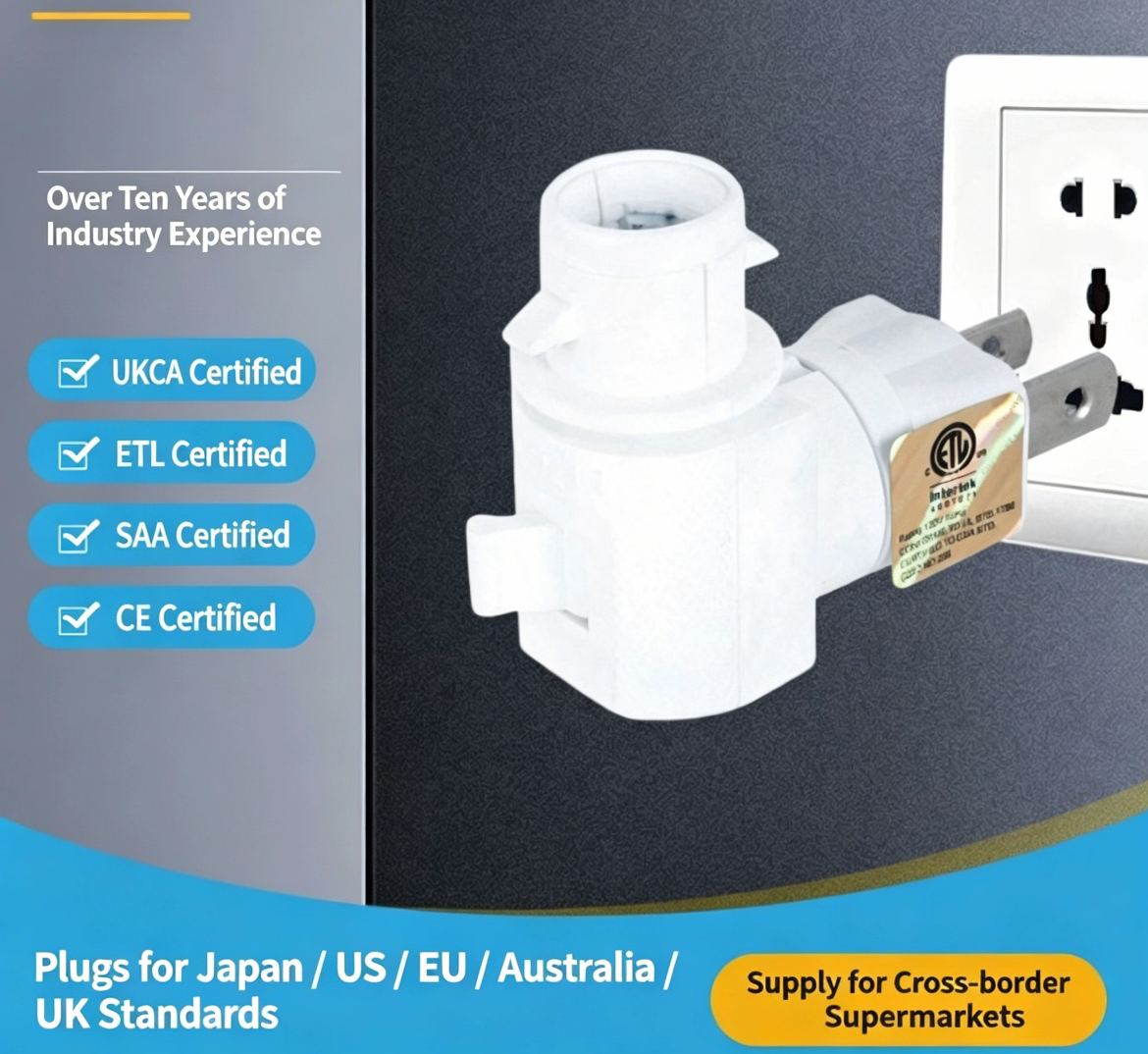
GL-073W Plug-in Lamp Holder with Toggle Switch
- Plug-in lamp holder with ETL, SAA and CE marks; blades for US, EU, UK, JP and AU
- Takes standard E12/E14 bulbs used in wax warmers
Related reading: how a night light manufacturer handles OEM and ODM.
Sources and References
Updated October 21, 2026
Ready to Source Quality LED Night Lights?
Contact Guangli today for a free quote and sample!
0users like this.